
Celtic found their attacking blueprint, but it leaves Kasper Hogh behind

The anatomy of an hour going nowhere
Parkhead was running on fumes. With an hour gone on Thursday night, Celtic were trailing 1-0 against Besiktas and hurtling toward a fourth straight defeat in this season's Europa League. The atmosphere felt drained of conviction.
Martin O'Neill's side looked stuck in neutral. Besiktas easily contained Celtic's early shape because the home side offered no vertical running to unsettle Alexander Nubel's penalty area. Every possession slowed down before reaching the final third.
The original wide pairing had stalled completely. Starting wingers Sebastian Tounekti and James Forrest were glued to the touchlines, receiving passes to feet rather than running behind the Turkish defensive line. That predictable rhythm played right into the visitors' hands.
Without runners attacking the channels, Besiktas pushed their defensive line ten yards higher. They squeezed the centre of the park and suffocated Celtic's buildup. It was sterile, cautious football that generated zero genuine panic.
The focal point of that stagnation was Kasper Hogh. Leading the line for 77 minutes, the club's £11m record signing produced an outing that laid bare Celtic's systemic disconnect. He was physically present but functionally absent.
During his entire shift, Hogh failed to register a single shot. Even more damningly, he managed just one touch inside the opposition penalty area before being replaced. For a modern centre-forward in a must-win European tie, those numbers are catastrophic.
The Danish striker arrived from Bodo/Glimt during the summer with high expectations. Yet he has now failed to find the net in 16 of his 17 appearances for the club. Effort is never his issue, but productivity has completely vanished.
Hogh spent the match wrestling with centre-backs fifty yards away from goal. While he contested aerial duels and tried to battle for loose balls, none of that physical exertion opened avenues for his teammates. Celtic needed dynamic penetration, not a stationary lightning rod.
The stark contrast in attacking fluidity was impossible to ignore. As BBC Sport reported after the match, hope in the stands was in short supply until O'Neill finally reached into his dugout. The game was crying out for a structural overhaul.
How Osmand broke Besiktas in 43 seconds
Change arrived on the hour mark. O'Neill hooked Tounekti and Forrest, throwing Callum Osmand and Camilo Duran onto the flanks. It was a double substitution that altered the geometry of the pitch within seconds.
Osmand needed just 43 seconds to show what Celtic had been missing. The 20-year-old attacker took one touch and drove the ball cleanly into the bottom corner of Nubel's net. The stadium erupted before the Besiktas backline even understood who was tracking him.
That instantaneous equaliser rewrote the momentum of the entire evening. Osmand, who arrived from Fulham, brought an aggressive directness that Forrest and Tounekti simply could not muster. He attacked space rather than waiting for the ball to arrive.
Young attackers often overthink their first European moments. Osmand did the opposite, relying on instinctive finishing and explosive pace down the left flank. He made an immediate statement that starting berths should be earned on impact, not pedigree.
The youngster remained modest about his contribution when speaking after the final whistle. He admitted that the initial chance took him slightly by surprise before he executed the finish.
"This is a great team we're playing against. Camilo [Duran] did amazing, he's such a poacher. Credit to him. It's a lot harder starting games. The team dug in, stayed strong and we got our rewards. [The goal] caught me off guard, but I'm just glad I caught it nice. I just want to come on and make something happen. So happy with tonight."
Osmand's sudden surge rattled the Turkish defence to its core. Besiktas had spent an hour comfortably stepping up against static wingers who stopped to look for support. Now they were forced to sprint back toward their own goal, opening enormous chasms in transition.
The mental shift was visible in every retreating defender's stride. Nubel suddenly had to act as a sweeper because Osmand was bending runs behind his centre-backs. The entire tempo swung violently in Celtic's favour.
Osmand does not just stretch the pitch; he displays an uncommon eye for goal in major fixtures. His presence on the left flank gave Celtic an outlet that punished Besiktas whenever they overcommitted numbers forward. That vertical threat became the catalyst for everything that followed.
The tactical shift that liberated the midfield
The real masterstroke occurred in the 77th minute. O'Neill finally admitted that Hogh's evening was over, withdrawing the Danish forward and pushing Duran through the middle. That single positional tweak unlocked the rest of Celtic's squad.
With Hogh off the pitch, Celtic stopped lofting aimless long balls into a crowded box. Duran provided mobility, darting into blind spots and forcing the Besiktas centre-backs out of their comfort zone. His movement transformed Celtic from a one-dimensional side into an unpredictable attacking unit.
The combination between the two substitutes arrived with devastating precision. Osmand slipped a delightful pass into the channel for Duran, who burst clear, showed composure to round Nubel, and slotted Celtic into the lead. It was a textbook counter-attack executed at blistering speed.
That sequence illustrated how moving Duran centrally altered the spacing across the entire front line. By vacating the static central position, he created corridors for arriving midfielders. Stiliyan Petrov pinpointed that exact transformation during his post-match breakdown on TNT Sports.
"Everything changed with the subs; Osmand coming on and Duran going through the middle. They freed up space for Nygren and Baur. It was a really positive 30 minutes."
Petrov's tactical observation cut straight to the core of the problem. When Hogh played, both Nygren and Baur found their passing lanes clogged by Besiktas midfielders sitting deep. Once Duran started roaming across the front line, Nygren and Baur suddenly had time and grass to dictate play.
Yet Celtic still had to reckon with their own defensive frailties. Orkun Kokcu punished a momentary lapse in concentration, beating the home defence with a fine strike to pull Besiktas level at 2-2. It was a sharp reminder that Celtic's European campaigns remain fraught with defensive vulnerability.
Lesser sides might have buckled after surrendering the lead so late. Instead, Celtic responded within two minutes through raw persistence and sharp anticipation. Duran smelled an opportunity where others saw a breakdown in play.
Kieran Tierney unleashed a scuffed shot from the edge of the area that looked harmless. Duran reacted instantly, deadening the ball with an assured first touch before slipping it past Nubel from close range. It was a true poacher's finish to seal an astonishing 3-2 victory.
That second strike carried historical weight for the Scottish champions. Not since Johannes Edvaldsson struck twice against Jeunesse d'Esch in September 1977 had a Celtic substitute scored a European brace. Duran entered the club's history books by providing ruthless efficiency when it mattered most.
Why the record signing must yield to tactical reality
The raw statistical disparity between Celtic's two strikers on Thursday tells an undeniable story. Comparing what Hogh produced across 77 minutes against what Duran delivered in 30 minutes reveals an unbridgeable gulf in effectiveness. The numbers expose why O'Neill cannot maintain the status quo.
- Kasper Hogh (77 minutes): zero shots, one touch inside the Besiktas box, zero goals created.
- Camilo Duran (30 minutes): two shots, two goals, four touches inside the Besiktas box, match-winning brace.
Duran took only four touches inside the opposing box to score two decisive goals. Hogh managed a lone touch in more than twice the playing time. That is not just bad luck; it is a fundamental inability to anticipate attacking patterns at European speed.
Hearts defender Craig Halkett offered a sympathetic yet unvarnished view of Hogh's current predicament on TNT Sports. He noted the heavy weight that comes with being the marquee signing during a severe dry spell.
"It'll be tough for Hogh," Halkett explained after the match. "He was the big-money signing but it's not coming off for him. As a player you need to keep your head down, keep working hard and hope it turns."
Halkett is right about the mental toll, but Celtic do not have the luxury of waiting. European football is unforgiving, and the Scottish champions were staring at elimination before their bench intervened. A record fee cannot guarantee a starting shirt when results are on the line.
O'Neill defended his selection strategy in his post-match press briefing, pointing out the gruelling physical demands placed on his squad. Celtic have navigated nine matches across 25 days, forcing the manager to rotate key personnel. He claimed that unleashing fresh legs from the bench was always part of his tactical calculation.
"Osmand came on, first touch put the ball in the net and that's really difficult, he can definitely score a goal," O'Neill told reporters. "Duran has been fabulous for us all season no matter where he plays."
When asked whether his substitutions compensated for poor team selection, O'Neill pushed back firmly. He insisted the rotation was an intentional strategy designed to exploit a tired opponent late on.
"I'm not standing up for myself, not at all," O'Neill told reporters when pressed on the benching of his top assets. "It was in design to do exactly what it did."
"We've played nine games in 25 days, some players needed a breather and you can get re-energised from coming on the field," the manager added. "I'm going to say that that was our plan and those players were going to come on the pitch at some point in the game."
O'Neill's explanation makes sense from a sports science perspective given the compressed fixture list. However, starting Hogh ahead of Duran in decisive fixtures is no longer justifiable purely on tactical output. Rotating players is wise, but persisting with an unproductive focal point damages the entire offensive structure.
Osmand has made an undeniable case to claim the starting role on the left wing. His willingness to attack defenders directly gives Celtic the vertical bite that Tounekti and Forrest lacked during that miserable opening hour. Playing him alongside Duran immediately elevates Celtic's transition threat.
The question now facing O'Neill is whether he has the ruthlessness to make this switch permanent. Benched record signings bring media noise, locker room tension, and uncomfortable scrutiny on recruitment decisions. Yet Celtic look fluid and dangerous with Duran leading the line and Osmand stretching play.
Thursday night rescued Celtic's European campaign from the brink of collapse. It also exposed a clear truth about their attacking hierarchy. If Celtic want to progress, Kasper Hogh belongs on the bench, and Camilo Duran belongs through the middle.
Read Next
- Martin O'Neill's Celtic are sleepwalking toward a domestic crisis
- Bournemouth's Bench Just Bailed Out Marco Rose's Broken Prague Rotation
- Crystal Palace pulled off an absolute robbery against Hoffenheim
- Ruben Amorim's Europa League gamble is backfiring badly at San Siro
- 🔥 Turkish Süper Lig 2025-26 — Istanbul Derby Hub
- ⚽ Scottish Premiership 2025-26 — Celtic vs Rangers Hub
Adidas Unisex Adults' UCL Club Soccer Ball
Train like a Champions League star with this pro-inspired ball.
Frequently Asked Questions
How did Kasper Hogh perform against Besiktas?
How quickly did Callum Osmand score against Besiktas?
What tactical changes did Martin O'Neill make on the hour mark?
What is Kasper Hogh's scoring record for Celtic?
Why did Celtic struggle in the first hour against Besiktas?
More Coverage

Bournemouth's Bench Just Bailed Out Marco Rose's Broken Prague Rotation
4 hours ago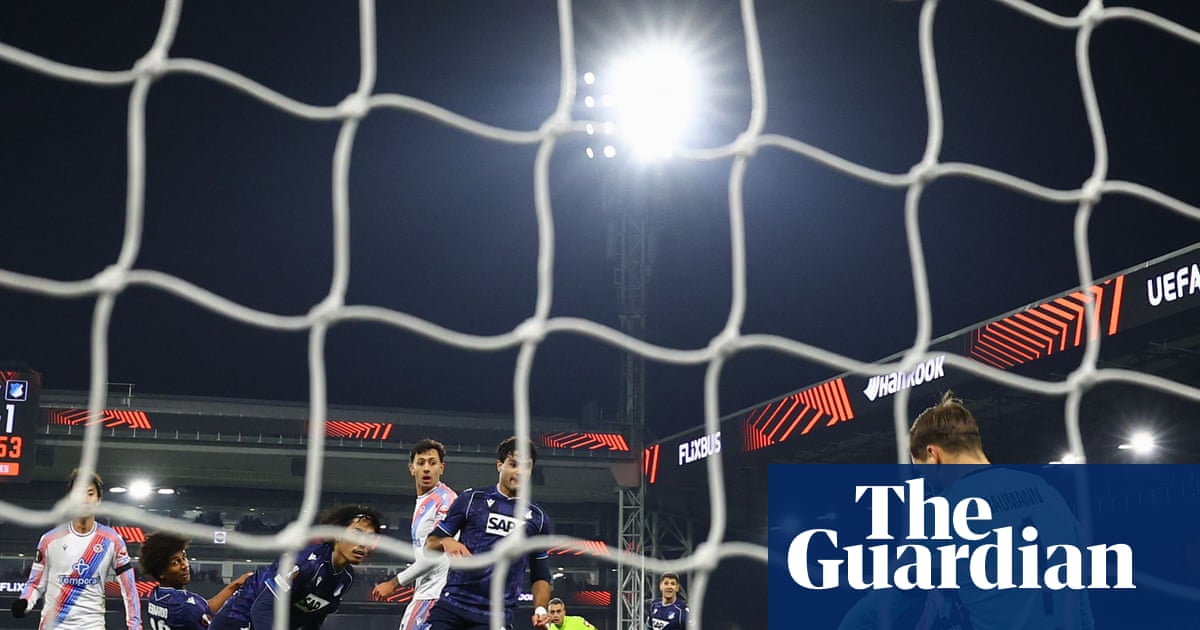
Crystal Palace pulled off an absolute robbery against Hoffenheim
4 hours ago
Ruben Amorim's Europa League gamble is backfiring badly at San Siro
6 hours ago
Newcastle players are baffled by Matthias Jaissle and nobody can blame them
14 hours ago
Liverpool spent £660m only to be exposed by their own teenagers
14 hours ago
Arsenal are about to face their toughest test of the season
22 hours agoMore Analysis
Bournemouth's Bench Just Bailed Out Marco Rose's Broken Prague Rotation
4 hours ago
Crystal Palace pulled off an absolute robbery against Hoffenheim
4 hours ago
Ruben Amorim's Europa League gamble is backfiring badly at San Siro
6 hours ago
Newcastle players are baffled by Matthias Jaissle and nobody can blame them
14 hours ago
Liverpool spent £660m only to be exposed by their own teenagers
14 hours ago