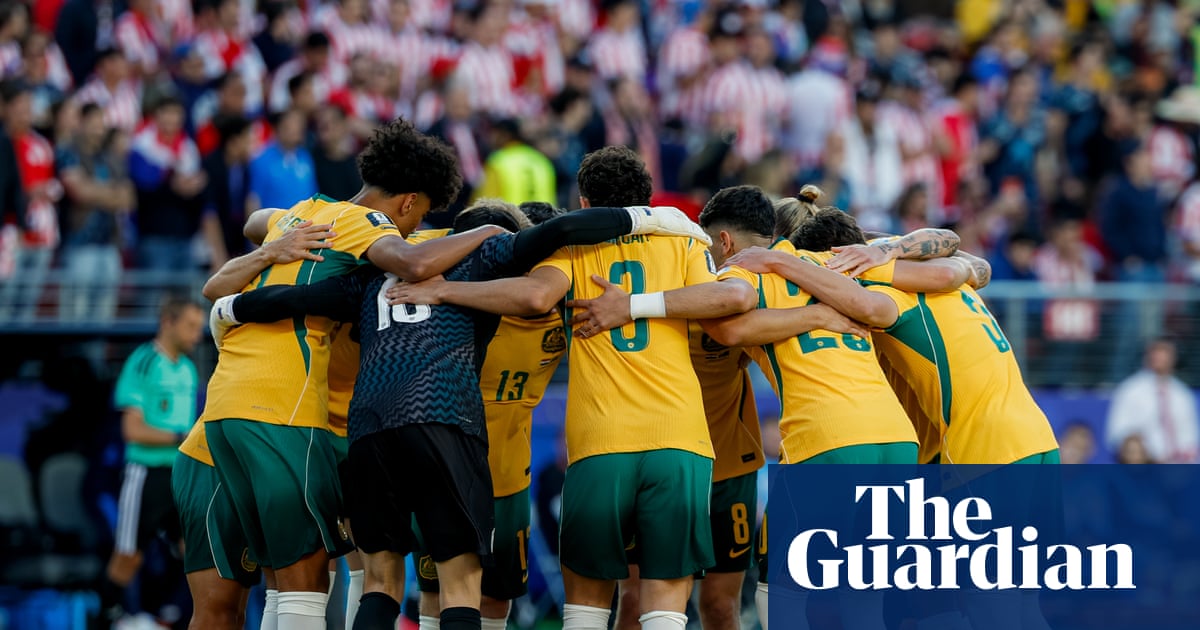
Tony Popovic has enough headaches right now. Later this week, he has to name a Socceroos squad heading into high-stakes fixtures in the Middle East.
The itinerary is demanding. Australia must travel to Doha to face Qatar before flying into Amman to tackle Jordan amid heightened security concerns across the region.
Now Popovic has to manage that trip while his squad is actively suing head office. You cannot maintain focus on away fixtures when your players are serving legal papers to your employer.
Both the Socceroos and the Matildas have launched legal action against Football Australia over missing commercial revenue. As The Guardian reported, the players are demanding answers in court.
Through their union, Professional Footballers Australia, the players are pursuing a seven-figure sum. They argue the governing body has failed to properly honour their agreed revenue share model.
The timing could hardly be worse. Instead of dialing in on two tense fixtures abroad, the men's senior team is locked in an escalating boardroom fight with the people running Australian football.
The Matildas are caught in the exact same storm. While the men prepare for Doha and Amman, the women are gearing up to host Colombia in Canberra and Geelong later this month.
The Mechanics of the 2023 Revenue Split
To understand why the players are furious, you have to look at the numbers. This is not an argument over hotel bookings or training gear.
The fight centres entirely on the collective bargaining agreement signed back in 2023. That deal gave senior national team players a guaranteed cut of the commercial income they generate.
The terms were clearly defined. National teams generate up to half of Football Australia's overall revenues, making the players the governing body's primary commercial drawcard.
In exchange, the squads secured an 18 to 20% cut of all commercial arrangements tied directly to national team activities. That includes broadcast rights, commercial sponsorships, and ticket sales.
Junior participation fees and grassroots registration revenue were excluded entirely. The players never asked for a cent from grassroots programs, and those funds remain strictly off-limits.
Instead, the agreement was built on mutual financial incentives. If Football Australia negotiated stronger commercial partnerships, both the governing body and the players would share the spoils of those bigger deals.
That collaborative spirit has completely broken down. The PFA argues that the revenue share agreement is simply not being serviced properly by Football Australia.
The players believe commercial revenue is being obscured or withheld behind closed doors. When you generate half the federation's income and suspect your agreed cut is missing, patience evaporates quickly.
Subpoenas and the NDRC Secrecy Defense
Football Australia did not wait long to respond to the legal offensive. Their initial strategy was to downplay the courtroom drama as a minor procedural footnote.
After the PFA went public by filing proceedings in the NSW Supreme Court, head office tried to reframe the entire dispute.
The governing body released a defensive statement claiming the action involved a third party and belonged in private arbitration.
“The Supreme Court’s role is limited to the subpoena process, and its involvement ends once that process is complete,” an FA spokesperson said. “As the NDRC matter is ongoing and subject to confidentiality obligations, Football Australia will not comment further.”
That response will convince nobody in the dressing room. Pointing toward the National Dispute Resolution Chamber is a familiar move to keep uncomfortable financial details hidden away from public view.
Arbitration before the NDRC is bound by strict confidentiality rules. Football Australia clearly wants this argument settled behind locked doors where commercial contracts never face public scrutiny.
The players took the fight to the NSW Supreme Court for a deliberate reason. Subpoenas force commercial entities and third parties to produce documents, bank trails, and contract details that internal arbitration cannot easily compel.
Calling a Supreme Court action a simple procedural step is pure spin. You do not drag your governing body to the state's highest court over an administrative misunderstanding.
A Growing Track Record of Expensive Settlements
This is not an isolated flare-up for Football Australia. It fits into a persistent pattern of expensive legal skirmishes and messy settlements at head office.
The federation has spent years putting out avoidable fires in courtrooms. Other parties have challenged Football Australia's administrative dealings and walked away with cash settlements.
Consider the bitter dispute with Macarthur FC. The club took legal action over claims that Football Australia misled them ahead of their A-League entry in 2020, forcing an out-of-court settlement.
More recently, the federation had to settle an unfair dismissal case with former chief football officer Ernie Merrick. Another high-profile departure, another quiet legal payout behind closed doors.
Settling out of court has become Football Australia's default defense mechanism. The administration repeatedly blunders into costly legal standoffs and uses settlement money to sweep them away.
That history is not lost on the current playing group. When national team stars see money spent resolving administrative disputes, they become far more skeptical about internal financial reporting.
Why should the players trust Football Australia's bookkeeping? The governing body has consistently proven that its administrative track record is riddled with miscalculations and confidential payouts.
The Impasse and the Looming 2027 Contract Cliff
The timing of this lawsuit is no accident. The current collective bargaining agreement is due to lapse in September next year, creating an unavoidable deadline for both sides.
Formal negotiations for a replacement agreement have not even begun. Football Australia and the union are already at war before sitting down at the bargaining table.
That delay comes on the heels of a separate labor dispute. As disclosed by AAP, an impasse between the PFA and the A-Leagues stalled domestic pay negotiations earlier this year.
That domestic stalemate hardened the union's resolve. The players learned that playing nice with administrative bodies does not yield results, so they chose an aggressive path here.
The solidarity between the Socceroos and Matildas makes this dispute uniquely potent. Football Australia cannot isolate one squad or use public relations tactics to divide the locker rooms.
Both national teams are moving in lockstep. The men and women share the same collective agreement, face the same financial opacity, and share the same union representation in court.
If Football Australia cannot resolve this seven-figure revenue share dispute, negotiations for the next CBA will be hostile from day one. Good luck agreeing on new terms when the old ones are being contested in court.
High-Pressure Windows in the Desert and on Home Soil
The counterargument from Football Australia's defenders is predictable. They will claim the players' union is creating an unnecessary distraction right before major international fixtures.
There is some truth to that. Going public with a lawsuit days before Popovic names his squad inevitably heaps pressure on the coaching staff and the players themselves.
Popovic must steer his team through Doha and Amman under immense scrutiny. Regional conflict has already heightened security concerns, making this Middle East trip demanding enough on its own.
Now every press conference in Qatar and Jordan will focus on subpoenas rather than squad selection. That is an enormous mental burden to carry into hostile away venues.
The Matildas face their own delicate balancing act. Hosting Colombia in Canberra and Geelong is a major showcase, but administrative acrimony threatens to overshadow the football on the pitch.
Yet blaming the players for the distraction lets Football Australia off the hook far too easily. Athletes do not haul their governing body into the Supreme Court on a whim.
They do it when communication breaks down and contractual promises go unfulfilled. If Football Australia had honoured the 2023 agreement transparently, there would be no subpoenas to serve.
Instead, Australian football finds itself in an all too familiar mess. When Popovic's side walks out in Doha and the Matildas take the field in Canberra, the biggest opponent will not be across the halfway line. It will be sitting in the boardroom back home.
Read Next
- Thierno Barry is flawed, chaotic, and about to take Everton into Europe
- Man United are surviving on goal difference and Carrick knows it
- Arsenal broke their Anfield curse, but Alexander Isak was clearly robbed
- A 60-point deduction for Man City is coming and it will satisfy nobody
- 🇦🇺 Australia World Cup 2026 — Socceroos Hub