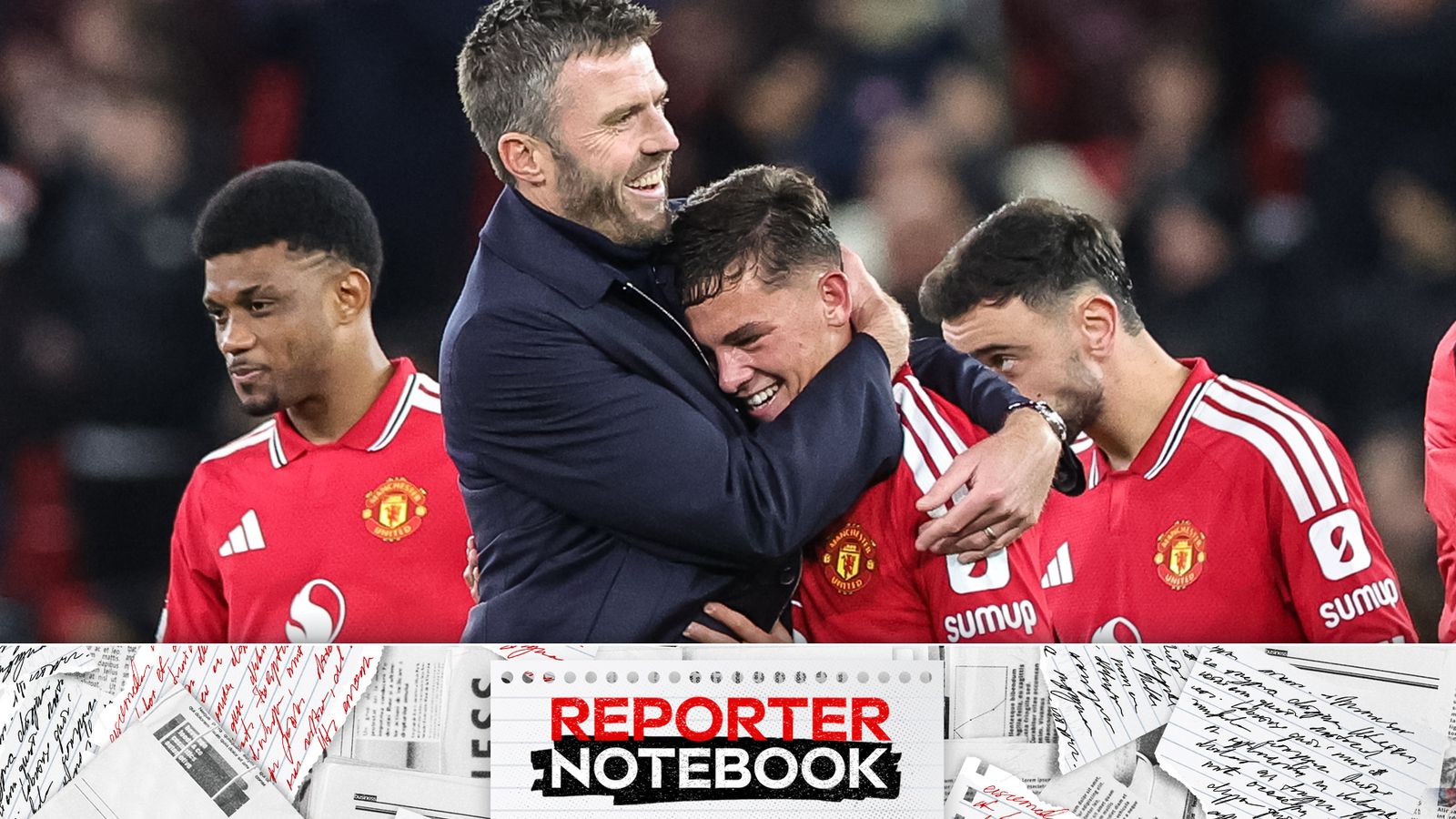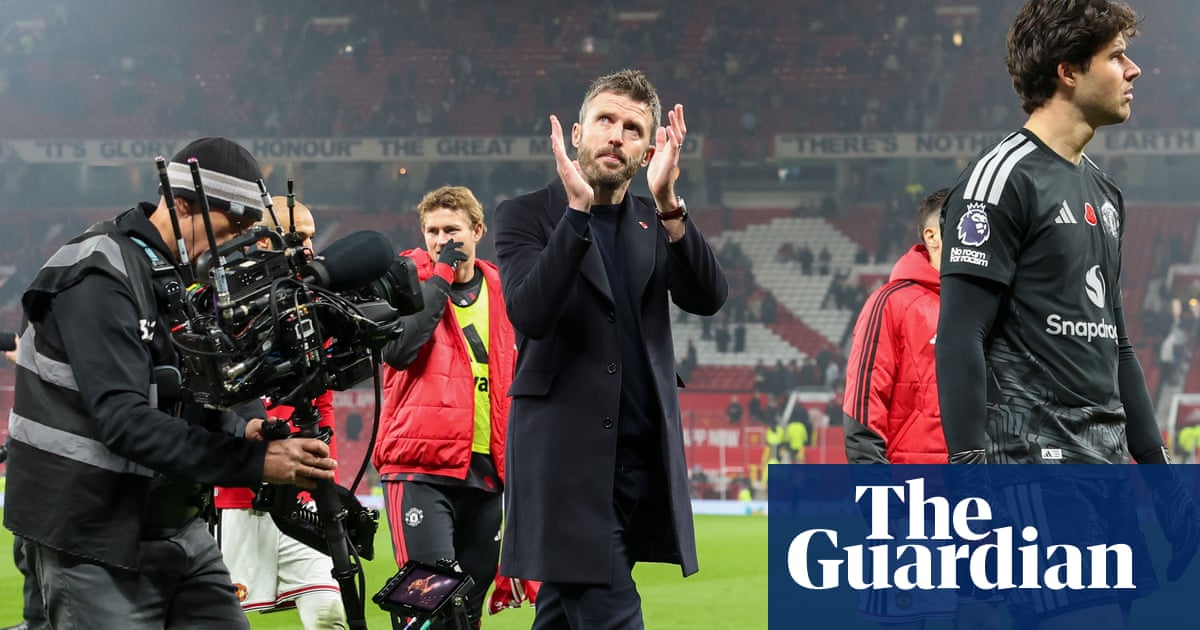
Manchester United currently occupy a spot in the Premier League relegation zone, having secured just three victories in 15 matches across all competitions. That equates to an abysmal 20 percent win rate for a squad assembled with Champions League ambitions. The league table does not lie about the severity of this structural collapse.
Following the humiliating 3-0 home defeat against Bournemouth on October 25, the boardroom intervened. Jason Wilcox and Omar Berrada met at the Carrington training ground the following morning to conduct an emergency appraisal of Michael Carrick's tenure. They granted the head coach a strict three-match probationary window against Chelsea, Roma, and Aston Villa to engineer an immediate turnaround before the November international break.
What followed across those 270 minutes was not a tactical stabilization, but a chaotic sequence of defensive implosions. Carrick leaves Wilcox with a dossier of alarming vulnerabilities rather than solutions. The underlying data reveals a team running entirely without structural discipline.
The Early Minutes: A Chronic Cognitive Deficit
Elite football matches are decided by tactical concentration in the opening exchanges. Under Carrick, United routinely start games in a state of collective paralysis. Against Aston Villa on Sunday, Carrick’s side found themselves 2-0 down within four minutes at Old Trafford.
Conceding twice inside the opening 240 seconds at home is an extraordinary indictment of pre-match tactical preparation. The defensive line was breached immediately by direct passes into the channels, with the midfield pivot nowhere to be seen. It left United chasing shadows before the home support had even settled into their seats.
This was not an isolated defensive accident. Instead, it continued an established pattern of early concessions that has derailed United's autumn campaign across multiple competitions. Carrick's players consistently fail to establish their defensive block before opponents find the net.
The chronological record of opening-stage concessions over the past month reveals an undeniable systemic defect. Three separate matches saw United concede almost immediately from kickoff:
- Atlético Madrid (Away): Pablo Barrios scored one minute into a 2-0 defeat at the Metropolitano.
- Como (Away): Nico Paz scored after two minutes in a bruising 4-1 loss.
- Aston Villa (Home): Conceded two goals in four minutes to trail 2-0 immediately.
Conceding in the first, second, and fourth minutes across three different competitions demonstrates an unforgivable lack of early-game intensity. Carrick’s rest-defense shape out of possession is fundamentally broken from the opening whistle. Opponents know that a brisk, aggressive push through the central channels will slice through United's defensive spacing before Carrick can adjust his lines.
The Three-Match Audit: Breakdown of Carrick's Audition
To evaluate whether Carrick deserved to survive, Wilcox and Berrada monitored three distinct fixtures with three distinct opponent profiles. Each match exposed the same underlying disconnect between Carrick's tactical plan and the reality on the grass. The sequence began at Stamford Bridge with an afternoon that followed a painfully familiar script.
Stamford Bridge: The Second-Half Disintegration
Against Chelsea, United actually began with controlled territorial dominance. Carrick’s side impressed throughout the opening 45 minutes, pressing in compact blocks and creating clear chances that should have altered the game state. Yet their chronic failure to convert opportunities exposed them to immediate danger after the restart.
The moment Chelsea elevated their tempo in the second half, United's tactical architecture disintegrated. Chelsea struck twice after the interval, repeatedly exploiting gaping spaces between United's full-backs and central pairing. The defensive meltdown culminated when Lisandro Martínez was sent off, surrendering a penalty that sealed the 2-0 defeat.
That trip to West London proved that Carrick’s setup cannot handle psychological adversity during matches. When initial dominance fails to produce a goal, the defensive spacing widens and panic sets in. A controlled first half was swiftly erased by a catastrophic second-half collapse.
Roma and Villa: Chaos as a Substitute for Control
Carrick's only victory in this trial run arrived against Roma at Old Trafford. That 3-2 victory, however, was built on pure tactical disarray rather than coherent football. United trailed 2-0 at the interval after a first half where they were thoroughly outplayed in midfield and outmaneuvered in wide areas.
A rousing three-goal surge in the second 45 minutes rescued three points and papered over enormous defensive cracks. Carrick urged his team to build momentum following that European victory, demanding they carry that second-half energy into Sunday's league test against Aston Villa. Instead, the team collapsed into absolute defensive anarchy against Unai Emery's side.
The resulting 4-4 draw against Villa was basketball on grass, devoid of positional discipline. United trailed by two goals on two separate occasions, falling 2-0 behind inside four minutes and entering stoppage time staring at a 4-2 deficit. Stoppage-time strikes from Joshua Zirkzee and Patrick Dorgu salvaged an unlikely point, but celebrating the draw ignored the underlying rot.
The Counterintuitive Finding: Comebacks Expose Tactical Surrender
On surface inspection, scoring seven goals across two high-octane home matches suggests a squad playing with immense fighting spirit for their manager. Casual observers see late equalizers and stirring European comebacks as signs of resilience. The underlying analytical numbers reveal a far more concerning reality.
The statistical truth is counterintuitive: United's wild late goals are symptoms of tactical failure, not tactical progress. Top-tier teams maintain control of game states; they do not require frantic stoppage-time scrambles to avoid home defeats against domestic rivals. When a team regularly trades blows in high-scoring shootouts, the manager's tactical framework has ceased to function.
Across the three-game probationary window against Chelsea, Roma, and Villa, United surrendered eight goals conceded. That equates to conceding a goal every 33.75 minutes of competitive action. No elite team can achieve long-term consistency when shipping nearly three goals per 90 minutes.
Carrick’s side relies on individual moments of improvisation in transition rather than repeatable attacking patterns. Zirkzee and Dorgu rescued a point against Villa through pure instinct and penalty-box chaos, not through tactical superiority. Relying on stoppage-time heroics to mask four conceded goals at home is a recipe for relegation.
The Boardroom Calculus and the Eddie Howe Alternative
Jason Wilcox is an analytical executive who views performance through the lens of process rather than emotional narratives. As The Guardian reported, Wilcox is conducting his formal review alongside Berrada before presenting their recommendation to Sir Jim Ratcliffe. Ratcliffe, who controls sporting policy at Old Trafford, will not tolerate relegation form.
The internal signals at Carrington are already pointing decisively toward a coaching change. There is no plan to bolster Carrick’s coaching staff to assist with tactical organization or defensive coaching. Refusing to inject fresh coaching resources into a struggling setup indicates that senior leadership has already judged the current project beyond repair.
Wilcox has already identified his ideal replacement should Carrick be relieved of his duties. Former Newcastle manager Eddie Howe is Wilcox’s favoured candidate to take over at Old Trafford. While Howe is currently taking a break from management, he would be open to considering the vacancy if approached.
Howe’s tactical identity offers the precise antidote to Carrick’s structural drift. During his tenure at Newcastle, Howe forged a side renowned for intense pressing triggers, compact central spacing, and exceptional defensive organization. Carrick’s United, by contrast, ranks among the softest teams in English football both defensively and physically.
As detailed in The Guardian's report, United have three wins in 15 fixtures across all competitions. Carrick was handed three matches to demonstrate that his squad possessed defensive coherence, tactical focus, and game-management discipline. Instead, his team conceded eight goals, picked up a red card, and found themselves 2-0 down inside four minutes.
Sir Jim Ratcliffe and Jason Wilcox do not need any further statistical evidence to make their decision. Michael Carrick was given his audition, and the numbers have rendered a devastating verdict. United cannot afford to let sentiment delay what the data already proves is inevitable.