
Scott McTominay should never have stepped on the pitch against Haiti
The Boston Cover-Up and the Cost of Desperation
When Scotland landed in the United States last June, the official bulletins from the training camp read like routine tournament bureaucracy. Scott McTominay had missed a training session at Boston Stadium due to a mild stomach bug. It was a standard deflection, designed to keep reporters quiet and opponents guessing.
The reality was terrifying. Speaking to reporters in Glasgow yesterday, as The Guardian reported, McTominay confirmed that he spent that afternoon lying sedated in an American hospital bed having an electric shock applied directly to his heart.
Cardiac cardioversion is not a minor tweak. Doctors deliver an electrical current to jolt an irregular rhythm back into sinus synchronization. It leaves the chest sore, the nervous system rattled, and the body exhausted from anesthetic drugs.
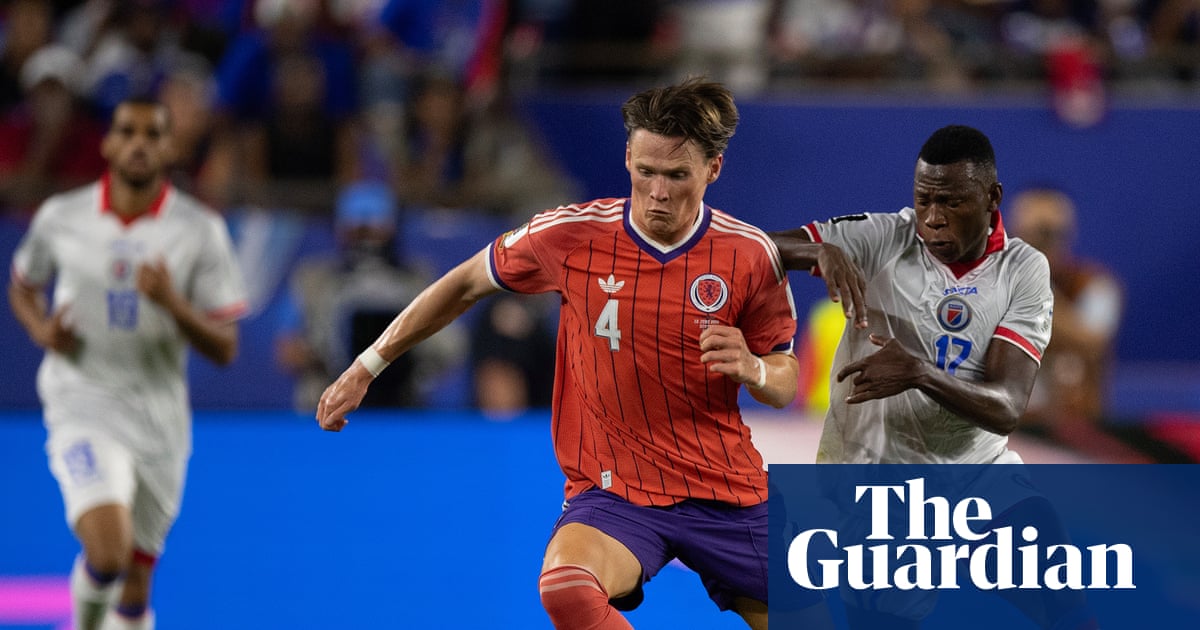
Yet just 48 hours later, McTominay lined up for Scotland in their opening World Cup fixture against Haiti. That decision was pure negligence from the Scottish setup. It revealed an international management staff gripped by panic, unable to imagine a match plan without their talisman.
The midfielder remembered the sheer disorientation of that week in Massachusetts. Sitting in a clinical room while your teammates run tactical shape drills is unsettling enough for any footballer. For an elite athlete who had built his game on aerobic power, it was a sudden nightmare.
"Whenever you are sitting in a hospital bed two days before the first game at the World Cup, about to get put to sleep it’s not ideal is it? When things like that happen it is what it is, there’s nothing you can do about it. After the World Cup I reflected on it and it’s probably the most disappointed I have been in my career."
McTominay's words highlight his professionalism, but they also expose the impossible pressure placed upon him. Elite players are wired to play through pain, knocks, and illness. It is up to doctors, managers, and governing bodies to take the decision out of their hands when an organ as vital as the heart malfunctions.
Instead, the Scottish FA chose silence and disguise. They told the public about an upset stomach while sending a sedated, cardioverted player onto the turf in Boston. It was a dangerous gamble that backfired across ninety painful minutes.
The Tactical Distortion of an Unwell Midfielder
The tactical fallout against Haiti was immediate. Anyone watching McTominay closely during that match could see a player operating at half throttle. His movement lacked its usual explosive burst, and his spatial awareness was uncharacteristically blunted.
In Steve Clarke's rigid Scottish system, McTominay was not just an extra body in midfield. He was the entire transition mechanism. Clarke relied on him to win aerial duels on defensive clearances, spin into the right half-space, and power forty yards upfield to support isolated forwards.
Against Haiti, those line-breaking runs never materialized. McTominay was forced into preservation mode from the opening whistle. He drifted into passive zones, circulated safe sideways passes, and repeatedly hesitated when pressing triggers presented themselves.
That hesitation destroyed Scotland's defensive shape. When a midfield pivot cannot press with conviction, the defensive line gets pinned deep inside its own defensive third. Haiti found pockets between the lines that should never have existed.
The physical demands of international tournament football do not forgive compromised physiology. High-intensity sprints, rapid decelerations, and contested aerial balls demand absolute cardiac output. McTominay simply did not have the physical reserve to meet those demands in the summer heat.
Scotland stumbled through the group stage and crashed out before the knockout rounds began. The public reaction across the nation was swift, angry, and unforgiving. Pundits and fans dissected Scotland's lethargy, directing harsh criticism directly at McTominay's subdued displays.
Watching from the outside, the criticism seemed logical. Here was Napoli's marquee signing playing as if stuck in wet cement. The Tartan Army felt let down by the player who had carried them through qualifying.
"The World Cup was difficult for me to be honest. I had to go and get the shock on my heart. It was two days before the Haiti game and you have prepared so well. I was in such good condition and then something like that happens. And you think: ‘How is this happening to me?’ But then you have to get on with it."
The Scottish public now knows the truth behind that sluggishness. McTominay was taking the heat for a collective tactical failure while carrying a cardiac defect that required surgical repair. Steve Clarke resigned in the wake of the tournament, his era ending in bitter disappointment.
Clarke's exit was deserved, not because he lost matches, but because his tactical structure was brittle. A healthy team does not collapse because one player needs medical rest. Clarke built a house of cards around McTominay, and when the player's heart faltered, the entire structure fell apart.
The Reconstruction in Naples and Manchester
Once the tournament ended, the true medical work began. The initial shock in Boston was merely an emergency stabilizer. By August, examinations confirmed that McTominay suffered from an ongoing irregular heartbeat that could only be fixed with invasive surgery.
In September, he traveled to Manchester to go under the knife of a specialist cardiologist. It was a delicate moment in a career that had just reached its peak with a move to Italy. Napoli's medical staff collaborated closely with the English specialists to map out an aggressive, careful rehabilitation program.
The operation forced McTominay to miss Scotland's opening four Nations League matches through September and early October. While Scotland struggled without direction in those autumn fixtures, McTominay focused entirely on his recovery. He listened to the specialists, rebuilt his conditioning, and waited for clearance.
His return for Napoli in early October silenced any doubts about his physical ceiling. Antonio Conte threw him straight back into competitive action, and McTominay responded with fury. In his first month back on the pitch, he scored five goals in all competitions.
Those five goals included decisive braces against both Bodø/Glimt and Roma. Against Roma, he demonstrated precisely why Conte fought so hard to bring him to Serie A. He timed his box arrivals to perfection, ghosting past markers to finish low into the corner.
Against Bodø/Glimt, his physical dominance returned in full view. He won second balls, dominated defensive transitions, and drove Napoli forward through the center of the pitch. The contrast between the player running in Boston and the player rampaging in Naples was stark.
Free from cardiac irregularity, McTominay looked ten pounds lighter and two yards faster. The recovery proved that his World Cup form was never a technical or mental regression. It was the predictable consequence of playing professional football with an uncorrected heart problem.
As details from the Guardian's report show, McTominay has tried to downplay the drama of the operation. He described the procedure as straightforward and praised the medical teams in Manchester and Naples for keeping him calm throughout the ordeal.
That humility is typical of the man, but we should not minimize the danger. Elite athletes running at maximum heart rate with arrhythmias risk serious, life-threatening complications. Getting through that period safely and returning to peak form is a medical triumph.
What Sébastien Pocognoli Must Build Now
Now comes the clean slate. Sébastien Pocognoli has taken over the Scottish dugout, facing the daunting task of rebuilding national confidence. On Friday, North Macedonia arrive at Hampden Park for a critical international fixture, followed swiftly by a road test against Switzerland.
This Friday marks Pocognoli's first opportunity to select McTominay. At 29 years old, the midfielder is entering his prime years as Scotland's most accomplished European player. But Pocognoli must avoid the tactical trap that ruined Steve Clarke's final months in charge.
Under Clarke, McTominay was forced to be everything at once. He was the defensive screen, the primary ball progressor, and the main goalscoring threat. That kind of tactical dependency places unsustainable physical demands on any single player.
Pocognoli needs to study how Conte uses McTominay at Napoli. In Italy, McTominay is not asked to chase shadows or build play from deep inside his own penalty box. He operates with license to attack the penalty area from deep, supported by disciplined defensive midfielders behind him.
Scotland must build a balanced system where McTominay serves as the finishing touch rather than the entire engine room. Against North Macedonia, Hampden will demand aggressive, front-foot football. Scotland need to control possession with patience instead of relying on desperate physical surges from midfield.
The Scottish FA also owes its players a higher standard of medical duty. Concealing a cardiac shock under the guise of an upset stomach cannot happen again. Player welfare must take precedence over tournament fixtures, no matter how high the stakes appear in Boston or anywhere else.
McTominay's honesty this week in Glasgow clears the air after months of bitter post-World Cup debate. He took the blame when his body was failing him. Now that his heart is healed and his form is restored, Scotland finally have their leader back.
Friday night at Hampden will show whether the national team has learned from its mistakes. If Pocognoli builds a cohesive framework around his star midfielder, Scotland can begin a new era. If they repeat old habits, they will waste the best years of a remarkable talent.
Read Next
- Scott McTominay's heart shock admission opens old Scottish World Cup wounds
- Top 10: Top Moments
- France never won Qatar, so stop pretending they have a title to defend
- Man United fans are losing their minds over Michael Carrick
- 🏴 Scotland World Cup 2026 — Tartan Army Hub
- 🇧🇷 WC 2026 Group C — Brazil, Morocco, Scotland, Haiti
- ⚽ Serie A 2025-26 — Title Race Hub (Inter, Napoli, Juve, Milan)
- ⚽ Scottish Premiership 2025-26 — Celtic vs Rangers Hub
Gildan Men's Soccer Fan Scarf - Double Layer Knit
The essential accessory for stadium presence and match-day aesthetic.
Frequently Asked Questions
What medical procedure did Scott McTominay undergo before facing Haiti?
Why did the Scottish FA claim McTominay missed training in Boston?
How did McTominay's medical issue impact his performance against Haiti?
When did Scott McTominay reveal he had a heart procedure?
What did Scott McTominay say about his World Cup experience?
More Coverage
Scott McTominay's heart shock admission opens old Scottish World Cup wounds
11 hours ago
Rangers need to buy James Penrice before AEK Athens get greedy
6 days, 14 hours ago
Scotland fight for survival while Northern Ireland chase historic promotion
1 week ago
Scotland fans are losing it after throwing away lead against Slovenia
1 month ago
Sebastien Pocognoli is running out of time to fix Scotland's broken system
1 month ago
Scotland won in Skopje but the Tartan Army is already arguing in the pub
1 month agoMore Analysis
Scott McTominay's heart shock admission opens old Scottish World Cup wounds
11 hours ago
Rangers need to buy James Penrice before AEK Athens get greedy
6 days, 14 hours ago
Scotland fight for survival while Northern Ireland chase historic promotion
1 week ago
Scotland fans are losing it after throwing away lead against Slovenia
1 month ago
Sebastien Pocognoli is running out of time to fix Scotland's broken system
1 month ago