Attendance Over Stardom
Thomas Tuchel does not care about individual highlights. He does not care who trended on social media last Saturday. The German coach views international football through a utilitarian lens, where tactical repetition on the grass always trumps individual star power.
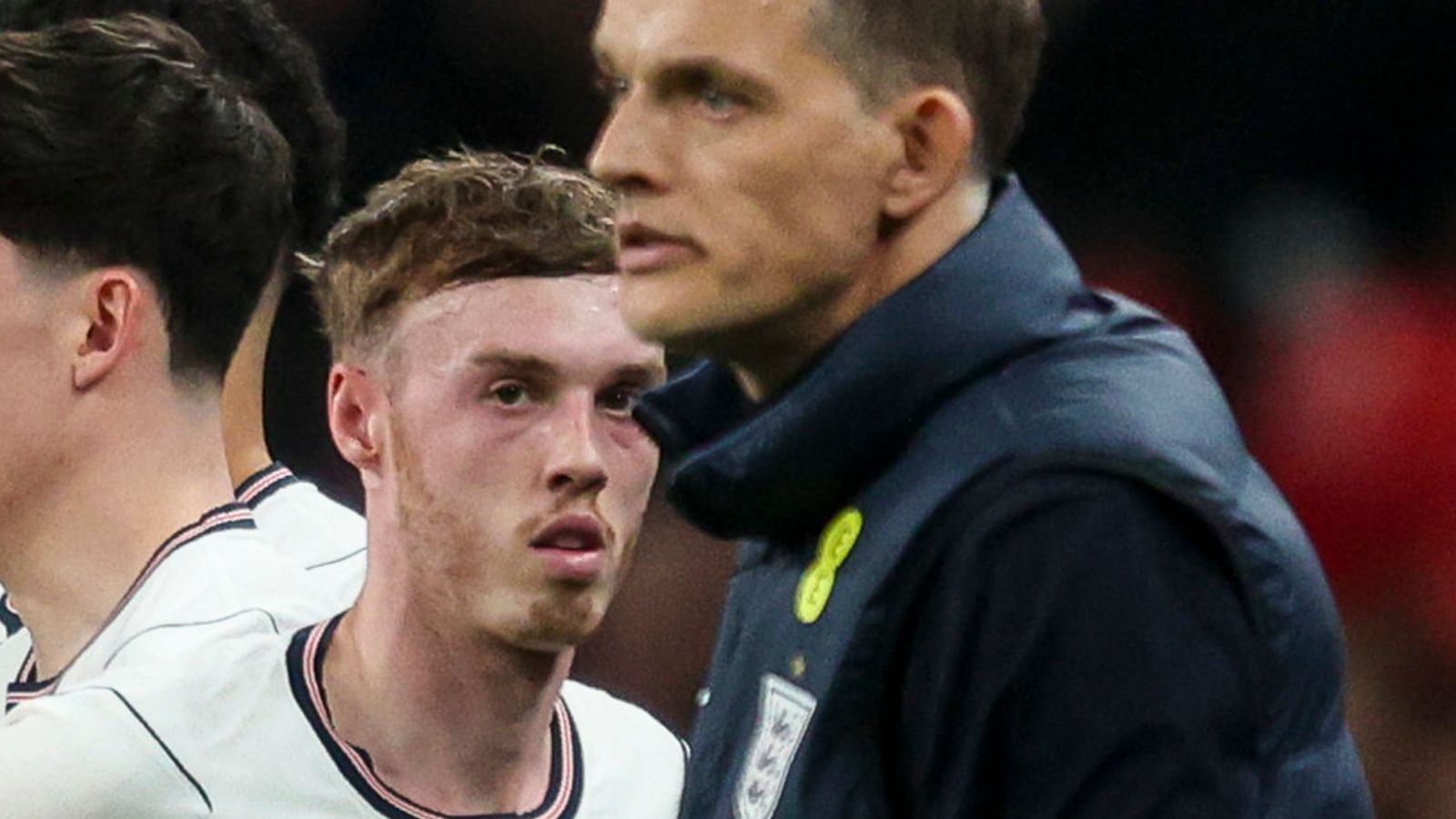
The exclusion of Cole Palmer from England's 26-man squad for this month's Nations League matches against Croatia and Spain is a cold, calculated move. Palmer is completely healthy. As Sky Sports reported, England medical staff checked directly with Chelsea and confirmed the playmaker is fit and ready to play this weekend.
Leaving him out looks baffling given his club form. Palmer has produced six goal involvements across nine Premier League games for Chelsea this season. He remains one of the sharpest attacking minds in English football, capable of unlocking packed defenses with a sudden pause or a disguised pass.
Yet Tuchel sees an attendance record that frustrates him. Across the manager's tenure, Palmer has been unavailable for selection due to injury three times and has withdrawn from a further two squads. In Tuchel's setup, an absent superstar is far less useful than a dependable starter who runs through every drill.
"It's always the ones who are in camp, the ones who don't withdraw. The ones who walk the talk, and come to camp and show it matters and put the quality in. That's what we will always reward."
Tuchel insisted the decision is not personal, but the subtext is obvious. Kobbie Mainoo suffered the same fate after withdrawing from the previous squad and was also left out. Tuchel wants reliability over reputation, leaving top talent at home to make his point.
This philosophy has clear logic for a manager with limited time. When players pull out with minor knocks, tactical preparation suffers before the squad even completes a full training session.
Tuchel made headlines back in September when he publicly noted that Palmer misses too many opportunities to impress him. That was a direct warning shot that Palmer and his club camp failed to heed.
Now the bill has arrived. Palmer will spend the international break watching from London while his teammates fight for a Nations League quarter-final spot. That is a stinging reality check for England's sharpest playmaker.
The Tactical Squeeze Behind Harry Kane
Tuchel can afford this hardline stance because England are overflowing with attacking midfielders. The senior setup is not starved of talent between the lines. It has an outright surplus.
Jude Bellingham, Morgan Gibbs-White, Eberechi Eze, and Morgan Rogers retained their spots after an impressive October camp. England defeated Croatia and Czech Republic twice, falling narrowly only to Spain. Tuchel trusted them then, and he trusts them now.
"It's enough No 10s and we stick with the guys who were in camp," Tuchel stated bluntly. He does not view Palmer as irreplaceable. In his setup, players like Rogers and Gibbs-White offer defensive running that Palmer often bypasses.
Look at how Rogers and Gibbs-White work without the ball. They hunt possession in central channels and track back diligently. That discipline protects the midfield pairing and keeps England compact when play breaks down.
The inclusion of 19-year-old Josh King highlights Tuchel's demand for versatility. King was part of the pre-World Cup training group and arrives as an adaptable attacking piece. Tuchel explained that King can play across both wings and cover four distinct positions.
Palmer, by contrast, demands an attacking unit built around his personal tempo. He thrives when allowed to wander across the final third and dictate the speed of play. When he plays, the entire attacking structure bends to his rhythm.
Without him, England move the ball with a simpler cadence. Possession recycles cleanly through Declan Rice and Elliot Anderson before shifting wide. The attack becomes far more rigid, but also far more defensively secure.
- Jude Bellingham acts as the primary driving force and physical box threat behind Harry Kane.
- Morgan Rogers and Eberechi Eze attack the half-spaces, providing vertical progression on the turn.
- Morgan Gibbs-White supplies frantic pressing energy and rapid transitional passing.
- Josh King and Anthony Gordon provide wide pace to stretch opposing backlines.
Younger additions like Myles Lewis-Skelly and Jobe Bellingham in midfield, alongside teenage attacker Rio Ngumoha, underline the manager's commitment to freshness. Tuchel wants hunger rather than comfort. If an established star skips camp, a hungry alternative will take his place.
The Tests Against Croatia and Spain
The stakes for this window are immediate. England head into their final two Nations League A3 fixtures knowing exactly what is required. A single point against Croatia on Thursday, November 12 will punch their ticket to the competition's quarter-finals.
Croatia will not make that task simple. Even away from home, they remain a stubborn defensive unit that thrives on disrupting tempo. They will happily surrender wide spaces and challenge England to break down a low block.
That matchup will test Tuchel's selection immediately. Without Palmer's vision, England must rely on Trent Alexander-Arnold and Lewis Hall for wide delivery. Unlocking a packed defense will demand patience.
If Croatia pack the middle, England risk drifting into harmless perimeter possession. Harry Kane will drop deep to link play with Bellingham and Eze, but finding space behind a stubborn backline will be grinding work.
Three days later on Sunday, November 15, England face a dramatically tougher examination against Spain. The reigning world champions edged England in their previous clash and remain the tactical benchmark in international football. Spain control tempo and press with suffocating intensity.
Against Spain, England will spend long stretches without the ball. Defensive concentration will be tested on every single phase of play. That is why Tuchel prioritised work-rate over creative freedom when picking his attacking unit.
As detailed in Tuchel's squad announcement, the England boss believes this squad built something extraordinary last month. He trusts this collective unit to hold its defensive shape against elite opposition.
Yet defending for ninety minutes against Spain is a grueling task. If England fall behind, they will need genuine improvisation to unlock the game. That is where Palmer's absence could quickly become an agonizing regret.
The Pitfalls of Managerial Dogmatism
Here is where Tuchel's strict policy runs into uncomfortable reality. International football is not club football. You do not get eight months of daily training sessions to drill pressing mechanics into second nature.
International management is an exercise in compromise. At this level, major matches are routinely decided by moments of individual brilliance rather than pristine tactical shape. When a tight knockout tie freezes, tactical schemes rarely break the deadlock.
That is when an inventive creator becomes priceless. Palmer has shown repeatedly for Chelsea that he can create a goal out of nothing. Freezing him out over past injury withdrawals feels stubbornly dogmatic.
"I said last time, he misses too many opportunities to impress. The players who were in camp built something extraordinary throughout these two-and-a-half weeks and that's why the credit goes to them, the trust is for them."
Rewarding camp attendance sounds disciplined in theory, but elite tournament football requires pragmatism. When your best technician is fit and playing at an elite level, you find a way to incorporate him. You do not banish him to send a disciplinary message.
Tuchel tried to soften the blow at the end of his press conference, insisting the door remains open. But everyone in English football understands that actions carry far more weight than press conference platitudes.
Dropping Kobbie Mainoo alongside Palmer sends an unmistakable warning across the dressing room. Tuchel is demanding absolute commitment, treating injury withdrawals as personal disruptions. That heavy-handed management might forge unity, but it risks alienating match-winners.
If England clinch qualification against Croatia and compete with Spain, Tuchel will feel completely vindicated. Pundits will praise his authority, framing the decision to sideline Palmer as a triumph of collective culture.
If England struggle for goals, Tuchel will face immediate criticism. The English media does not forgive self-inflicted handicaps, especially when an in-form talisman sits at home. Leaving your most gifted creator on the sofa leaves zero margin for error.
Tuchel has staked his authority on attendance over individual brilliance. Over the next ten days against Croatia and Spain, we will discover whether his strict discipline builds a tournament contender or simply handcuffs England's finest playmaker.
Read Next
- Why Thomas Tuchel is right to keep Cole Palmer on the outside
- Harry Kane signs Bayern extension to 2029 as durability silences critics
- Scotland fight for survival while Northern Ireland chase historic promotion
- Katie McCabe's Chelsea move revealed in shock FifPro shortlist
- 🏴 England World Cup 2026 — Three Lions Hub
- 🏆 UEFA Nations League Final Four 2026 Hub — June 4-8, Lisbon