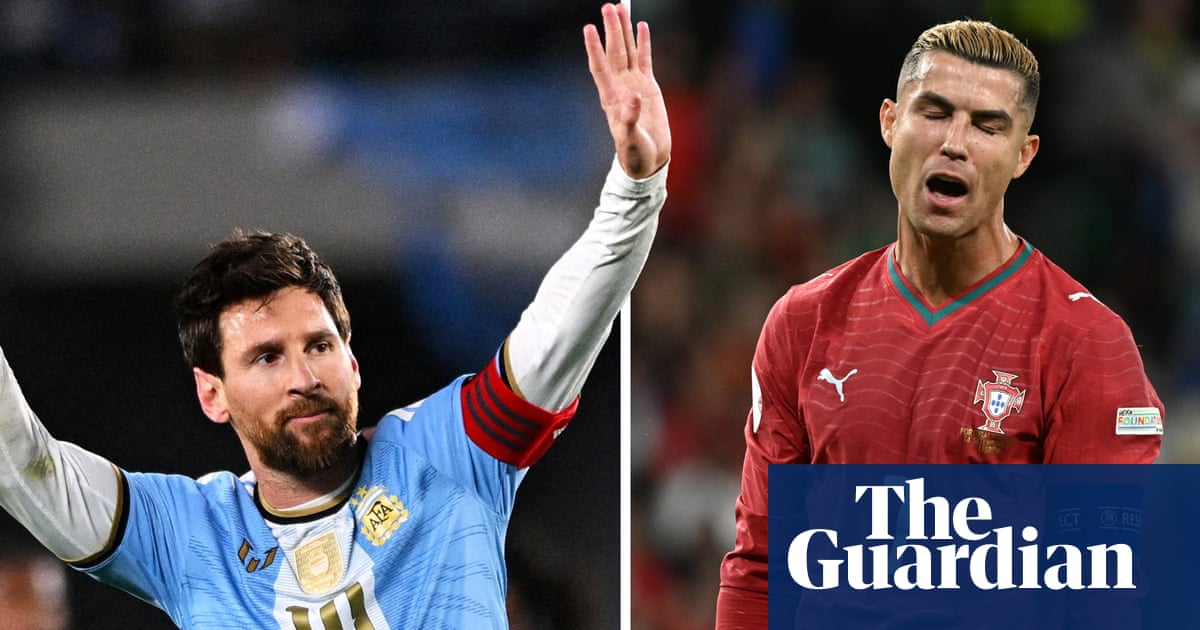
Pour yourself a Fernet and sit down, because somebody in Buenos Aires needs to say the quiet part out loud. Watching Lionel Messi lift that golden trophy in Qatar was the greatest collective sporting high of our lifetimes. It was pure cinematic magic, capped off by a heart-stopping 4-2 penalty shootout against France that shaved a decade off every supporter's life expectancy.
That was four years ago. Four years is an eternity in modern football.
Now Argentina roll into the 2026 World Cup with a massive bullseye painted on their backs, carrying the heaviest crown on earth. But anyone expecting the 2022 vintage of number ten is living in fantasy land. Nostalgia is wonderful for selling commemorative jerseys, yet it is utterly deadly on a football pitch.
The Ghost of Lusail Isn't Walking Through That Door
Let us be brutally honest about Qatar: Messi was thirty-five years old and played like a sorcerer possessed by Diego Maradona, dragging opponents through hell by sheer willpower. Remember that filthy reverse pass to Nahuel Molina against the Netherlands? That was pure genius operating at maximum RPM.
Fast forward to the present day, and the calendar has caught up. At thirty-nine, biology always collects its debts.
Messi has spent the last few seasons in Major League Soccer, lighting up stadiums with Inter Miami while carefully managing his minutes. He still possesses that divine left foot that can drop a fifty-yard pass onto a dinner plate, and he can still freeze a goalkeeper with a casual glance. But the burst is gone, the recovery pace has evaporated, and he now spends large stretches of matches operating in energy-saving mode.
You cannot press elite international sides when your primary playmaker walks eight kilometers a match. In 2022, Scaloni built a rabid defensive wall around him to absorb that deficit. Attempting that same tactical math four years later against athletic monsters is asking for trouble.

The Graveyard of Defending Champions
International football history is littered with the corpses of reigning champions who mistook loyalty for strategy. Every single time a manager treats a World Cup defense like an old boys' reunion, the tournament punishes them without mercy.
Just look at the cautionary tales over the last quarter-century:
- France arrived in 2002 with an injured Zinedine Zidane, played like statues, and flew home after the group stage with zero goals to their name.
- Marcello Lippi dragged the creaking heroes of 2006 back to South Africa in 2010, only to finish bottom of a group behind New Zealand and Slovakia.
- Spain showed up in Brazil in 2014 clinging to the exact same tiki-taka veterans, right before Robin van Persie and Arjen Robben dismantled them 5-1 in Salvador.
- Germany kept running out their 2014 core in Russia in 2018 until South Korea booted them straight into the Atlantic Ocean.
Notice the common thread? Every one of those managers fell in love with a memory.
They looked at aging icons and saw what they used to be instead of what was right in front of their eyes. If Lionel Scaloni treats the 2026 tournament as an honorary send-off tour for the greatest to ever kick a ball, Argentina will end up on that exact same scrapheap.
The Miami Blueprint and the New Engine Room
Here is the great irony: Argentina already know how to win without leaning on Messi for ninety minutes of heroism. We saw the preview in the 2024 Copa America final in Miami.
When Messi went down with that nasty ankle injury and limped off sobbing in the sixty-sixth minute, the entire nation held its breath. People expected the team to fold like cheap lawn furniture. Instead, the Albiceleste rolled up their sleeves, locked down Colombia, and found a winner in the 112th minute thanks to Lautaro Martínez.
That extra-time triumph was an epiphany. It proved that this squad is not just Messi plus ten hired security guards.
The core of this team is entering their prime, and they are terrifying in their own right. Julián Álvarez chases down center-backs like an unhinged golden retriever, while Lautaro Martínez bangs in goals for Inter Milan with ruthless efficiency. Meanwhile, Alexis Mac Allister dictates the tempo of elite European midfields with the calm precision of a Swiss watchmaker.
Add Enzo Fernández spraying diagonal balls, plus Cristian Romero and Lisandro Martínez waiting to snap opposing attackers in half, and you have a fearsome unit. This is an elite football team that can suffocate opponents through work rate alone.
The Ruthless Math of Father Time
That brings us to the most uncomfortable argument at the bar: the tactical cost of accommodation. When Messi starts, the tactical ripple effect is immediate and punishing.
Rodrigo De Paul is a terrific midfielder, but when Leo is on the pitch, De Paul spends half his shift acting as a personal bodyguard. He covers double the ground, plugs gaps on the right flank, and burns out by the seventieth minute. Meanwhile, opposing managers immediately notice that the right wing is unguarded and instruct their fullbacks to bomb forward with impunity.
Against mid-tier opposition in qualifying, you can survive those structural flaws. Against a ruthless, transition-heavy European powerhouse, that tactical imbalance is a suicide note.
This is where Scaloni faces the ultimate test of managerial courage. It is easy to be ruthless when dropping a fringe winger who showed up late to breakfast, but an entirely different beast to bench the national messiah when a knockout match gets chaotic.
If Scaloni refuses to make those hard calls, he actively hurts the team. We saw hints of hesitation in qualifying when Argentina looked slow, predictable, and stubbornly static trying to funnel every single attacking phase through an exhausted talisman.
Treating Messi with respect does not mean giving him unconditional ninety-minute walkabouts. It means placing him in positions where his remaining gifts can actually strike the fatal blow.
Think about how the San Antonio Spurs handled Manu Ginobili in the twilight of his career. Gregg Popovich did not ask him to run the offense for forty minutes every night. He brought him off the bench to shred tired second units for eighteen lethal minutes, maximizing his genius while protecting his body.
Imagine Messi coming on in the sixtieth minute of a World Cup knockout match against tired legs. Picture him standing over a free kick with thirty minutes on the clock, completely fresh while opposing defenders are gasping for oxygen. That is terrifying.
That is how you win tournaments in the modern era. You adapt, you shed sentimentality, and you play to the strengths of the squad you actually have right now.
Argentina have the talent to go back-to-back and join the mythical 1958-1962 Brazil squad in the history books. The players are hungry, the defensive spine is ferocious, and the tactical identity is clear. But if the Albiceleste want to survive the brutal grind of 2026, they must accept reality: the captain is no longer Superman, and the sooner they stop asking him to fly, the better off they will be.
Read Next
- Celtic have a Europa League lifeline, but Torreense will test their flaws
- Forty years ago today, Aberdeen fans gave us football's coldest take
- Stephen Kingsley injury leaves depleted Hearts defense in total disarray
- Why November 6 is European football's most unforgiving date
- 🏆 World Cup 2026 — Full Coverage Hub
- 🇦🇷 Argentina World Cup 2026 — Defending Champions Hub