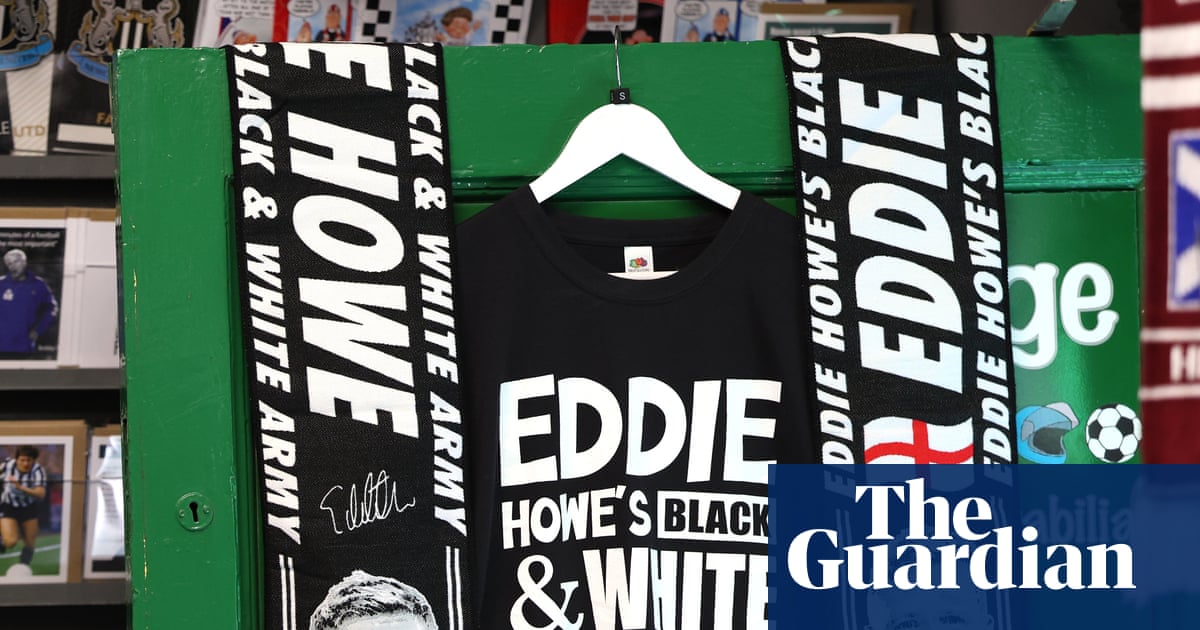
From Bruce Springsteen to the exit door
Remember when David Hopkinson sat on a stool at Shearer's Bar in September 2025 sipping zero-alcohol lager and comparing Eddie Howe to Bruce Springsteen? Newcastle United's newly minted chief executive literally called Howe 'the Boss' and insisted the club would give him whatever he wanted. Flash forward to late July 2026, and the house of cards has completely collapsed. Howe has departed St James' Park, leaving behind a 12th-place finish and a fan base suffering from collective whiplash.
It feels like a decade ago that Howe was parading the Carabao Cup around Wembley in March 2025, ending a domestic trophy drought stretching back to 1955. That night felt like the dawn of a legitimate new power in English football. Instead, it was the peak before a staggering, head-first dive off a cliff. The moment Alexander Isak decided he wanted out three months after that Wembley triumph, the entire blueprint unravelled with terrifying speed.
The dominoes fall on Tyneside
Losing a superstar is tough for any club, but Newcastle's response to Isak's exit was pure amateur hour. The recruitment team panicked, dumping massive money on rushed replacements who looked completely lost in the Premier League. The fluid, sharp-cutting attack that defined Howe's early success turned into a sluggish slog. Newcastle traded vision and incision for pure pace and athleticism, and the tactical compromise doomed them from day one.
By the time the Champions League campaign rolled around, the wheels weren't just wobbly — they were rolling down the A1. Watching Newcastle surrender lead after lead became a weekly ritual. They couldn't hold possession, they couldn't control transitions, and the press that once suffocated opponents looked utterly gassed by November. A heavy aggregate beating from Barcelona exposed just how far the Magpies had fallen from the elite table.
Sleepless nights and Matfen Hall summits
Behind closed doors, the pressure was clearly eating Howe alive. Reports of endless sleepless nights filtered out as the board's unwavering support began to curdle. When Hopkinson faced the media again in March 2026, the 'Springsteen' comparisons were completely gone. Asked directly if Howe was guaranteed to be in charge next season, the CEO suddenly became the master of vague, corporate non-answers.
The writing was plastered across the wall by spring. A high-stakes summit at Matfen Hall in Northumberland brought Howe face-to-face with the club's Saudi Arabian ownership. While public statements claimed the meeting was positive, you don't call emergency summits at luxury country estates when things are going according to plan. Howe presented tactical overhauls and future visions, but the reality on the pitch — finishing 12th in the Premier League — rendered every powerpoint presentation useless.
A flawed legacy and an uncertain future
Let's not rewrite history: Howe did incredible things for Newcastle. Transforming Joelinton from a punchline into a midfield destroyer and turning Jacob Murphy into a vital contributor are coaching achievements that belong on his mantle. But his fatal flaw was an total inability to adapt once his core system was solved by opponents. When plan A failed, plan B was just running plan A faster until everyone pulled a hamstring.
Now, Matthias Jaissle steps into the void to clean up the wreckage. Howe leaves with his Carabao Cup medal, plenty of goodwill from the Gallowgate, and the bitter knowledge that five years of building was wiped out by 12 months of poor recruitment and stubborn tactics. It is a cautionary tale for the modern era: in elite football, you're only ever one bad transfer window away from the scrapheap.