Put the beer down and listen to me for five seconds. If I hear one more person at the counter say France are walking into the 2026 World Cup to defend their title, I am pulling the fire alarm. France are not defending anything.
Did everyone collectively black out during that December night in Lusail? Lionel Messi lifted the gold trophy, Gonzalo Montiel buried the winning spot-kick, and Argentina spent four straight days dancing on top of emergency vehicles in Buenos Aires. France lost that final.
They fell short in the most absurd, heart-stopping match ever played. They were dead and buried for 80 minutes before Kylian Mbappé scored twice in 97 seconds to drag the scoreline to a wild 3-3 draw. But when the dust settled on the penalty shootout, the crown stayed in South America.
Yet you can understand why casual fans keep making that mistake. Les Bleus swagger into every single tournament looking like the reigning monarchs of the sport. Their talent pool is so deep it feels downright illegal.
The Clairefontaine conveyor belt has no brakes
Most nations spend an entire decade crying into their pints when a golden generation ages out. Look at Belgium clinging to the ghost of Eden Hazard, or Italy missing consecutive tournaments because they cannot produce a reliable striker. France simply does not have that problem.
Their development system runs like a state-funded cheat code. If an elite starter blows out a knee on Tuesday, Didier Deschamps calls up a 21-year-old from Paris Saint-Germain or Real Madrid who runs a 10.4-second 100-meter sprint and plays like a seasoned veteran.
Consider the midfield renovation after Paul Pogba and N'Golo Kanté faded from the spotlight. Ordinary countries would stumble through a five-year rebuilding phase filled with embarrassing draws in chilly eastern European capitals. France plugged in Aurélien Tchouaméni and Eduardo Camavinga without missing a single beat.
Now look at the back line. William Saliba has spent seasons locking down the best attackers in England, while Ibrahima Konaté and Jules Koundé provide elite recovery pace across the back. Behind them, Warren Zaïre-Emery and Michael Olise have arrived to terrorize fullbacks with dizzying dribbling and lethal crossing.
It is almost disgusting how easy they make it look. You could build a secondary French starting eleven entirely out of twenty-somethings who missed the final roster, and that B-team would still reach the World Cup quarterfinals.

The pragmatism that makes your eyes bleed
Here is the dirty secret that French supporters argue about over cigarettes and espresso: Les Bleus are often miserable to watch. Despite fielding an absurd collection of attacking Ferraris, Deschamps drives this team like a beige minivan with a spare tire.
Cast your mind back to Euro 2024. France crawled through the knockout stages like a zombie dragging its legs through mud. They went four consecutive matches without scoring a single goal from open play, relying on own goals, deflected strikes, and pure defensive stubbornness.
Deschamps does not care about your aesthetic purity or internet highlight reels. The man won the World Cup as a defensive water-carrier in 1998, and he manages with the cold calculation of an insurance adjuster. His entire method boils down to choking the life out of the opposition and waiting for a solitary mistake.
That approach won him a trophy in 2018 and brought him within an outstretched toe-poke of repeating in 2022. But it creates immense frustration when France face a disciplined low block. When opponents refuse to commit numbers forward, France frequently look completely starved of ideas.
The international retirement of Antoine Griezmann throws another massive wrench into this machinery. Griezmann was the connective tissue holding the entire Deschamps era together. He was the only superstar willing to sprint forty yards backwards, crunch an opposing playmaker, and immediately thread a thirty-yard diagonal pass.
Replacing that level of tactical discipline is a brutal challenge. Without Griezmann operating as the central processor, France risk splitting into two isolated halves: seven players hunkered down in their own box, and three attackers stranded on an island.
The Kylian Mbappé gravitational pull
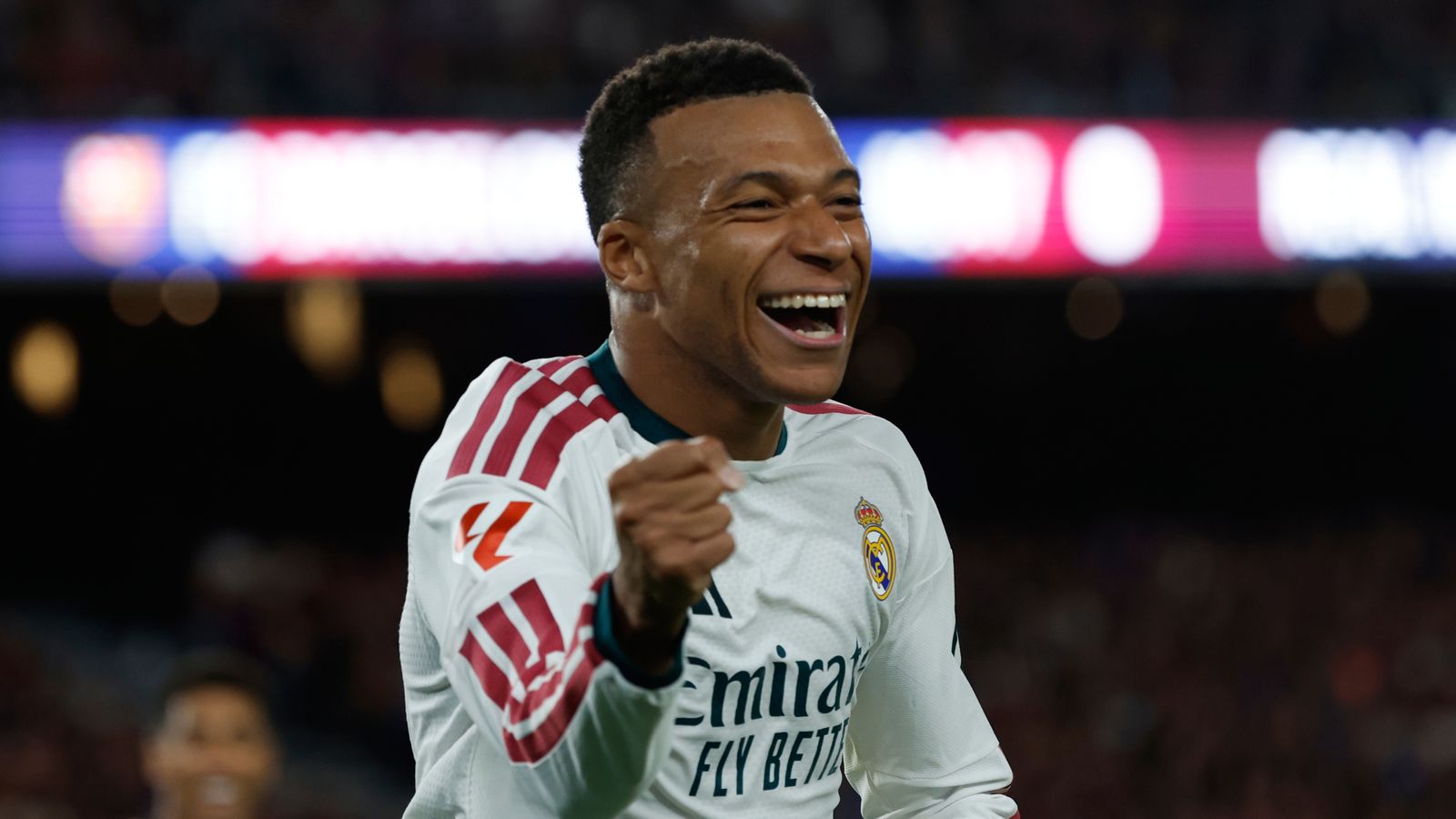
Of course, structural problems matter a whole lot less when you possess the ultimate cheat code. Kylian Mbappé on the international stage is an absolute force of nature.
The man already sits on 12 goals across two World Cup tournaments. He turns into an apex predator the moment the anthem ends and the stadium lights flare up. While other superstars wither under the pressure of knockout football, Mbappé treats high-stakes matches like an arcade game.
Give him three yards of space in transition, and opposing defenders are basically running backwards in wet cement. His second-half explosion in Lusail was breathtaking theater, dragging a lifeless squad into extra time through pure individual brilliance.
Yet that brilliance extracts a heavy tactical tax. Mbappé offers virtually zero defensive work when the opposition has the ball. He ambles near the center circle conserving energy while his left-back gets roasted in a two-on-one overlap.
Elite opponents will not let you carry a passenger off the ball for ninety minutes. If the French midfield cannot cover those gaping corridors, sharp counter-attacking teams will carve them apart.
The forty-eight team gauntlet and the penalty curse
The tournament in North America introduces a completely new layer of chaos. With 48 teams squeezed into the bracket, contenders must survive an extra knockout match in the round of 32 just to reach the customary deep stages.
That extra hurdle invites pure tournament madness. One freak deflection, one early red card, or one scorching afternoon on an unfamiliar pitch can end a four-year cycle before the party even starts.
Then you have to talk about the penalty spot. France possess one of the most agonizing, tragic relationships with penalty shootouts in modern sports.
They lost the 2006 World Cup final to Italy after David Trezeguet rattled the crossbar. They collapsed against Switzerland at Euro 2020 when Yann Sommer denied Mbappé's decisive strike. Then came the shootout collapse in Qatar, where French nerves evaporated while Emi Martínez launched his psychological warfare.
If a quarterfinal in Texas goes to penalties after 120 minutes of suffocating heat, does anyone in Paris actually feel confident? Recent history tells us the answer is a resounding no.
Nor should anyone ignore the historic French talent for internal combustions. This is the country that gave us the Knysna bus strike in 2010 and bitter player-family brawls in VIP suites. When Les Bleus derail, they do not merely lose; they produce five-act operatic meltdowns.
Deschamps has kept the lid on that pressure cooker through sheer personal authority for over a decade. But locker-room tranquility in French football is always an armed truce. A couple of benched stars leaking complaints to Parisian radio stations can turn a camp toxic overnight.
Hunters are much scarier than champions
So erase the defending champion tag from your memory banks. France are not coming to protect silverware that currently resides in an Argentine display case.
In reality, that makes them infinitely more dangerous. Defending champions carry the heavy anchor of complacency, terrified of failing to match past heights.
France arrive with boundless talent and a ferocious score to settle. They still carry the scars from Lusail, where absolute greatness slipped through their fingers by mere inches.
Deschamps will probably put us to sleep during the group matches, and Mbappé will terrify defenses once the stakes peak. They are not guarding a throne. They are coming to smash the doors down.
Read Next
- Real Madrid are about to turn the La Liga title race upside down
- Mbappe and Mourinho just blew the title race wide open at Camp Nou
- Sunday League Survival Kit: 4 Budget Football Essentials That Actually Hold Up
- On This Day in Football: October 26
- 🏆 World Cup 2026 — Full Coverage Hub
- 🇫🇷 France World Cup 2026 — Les Bleus Hub