
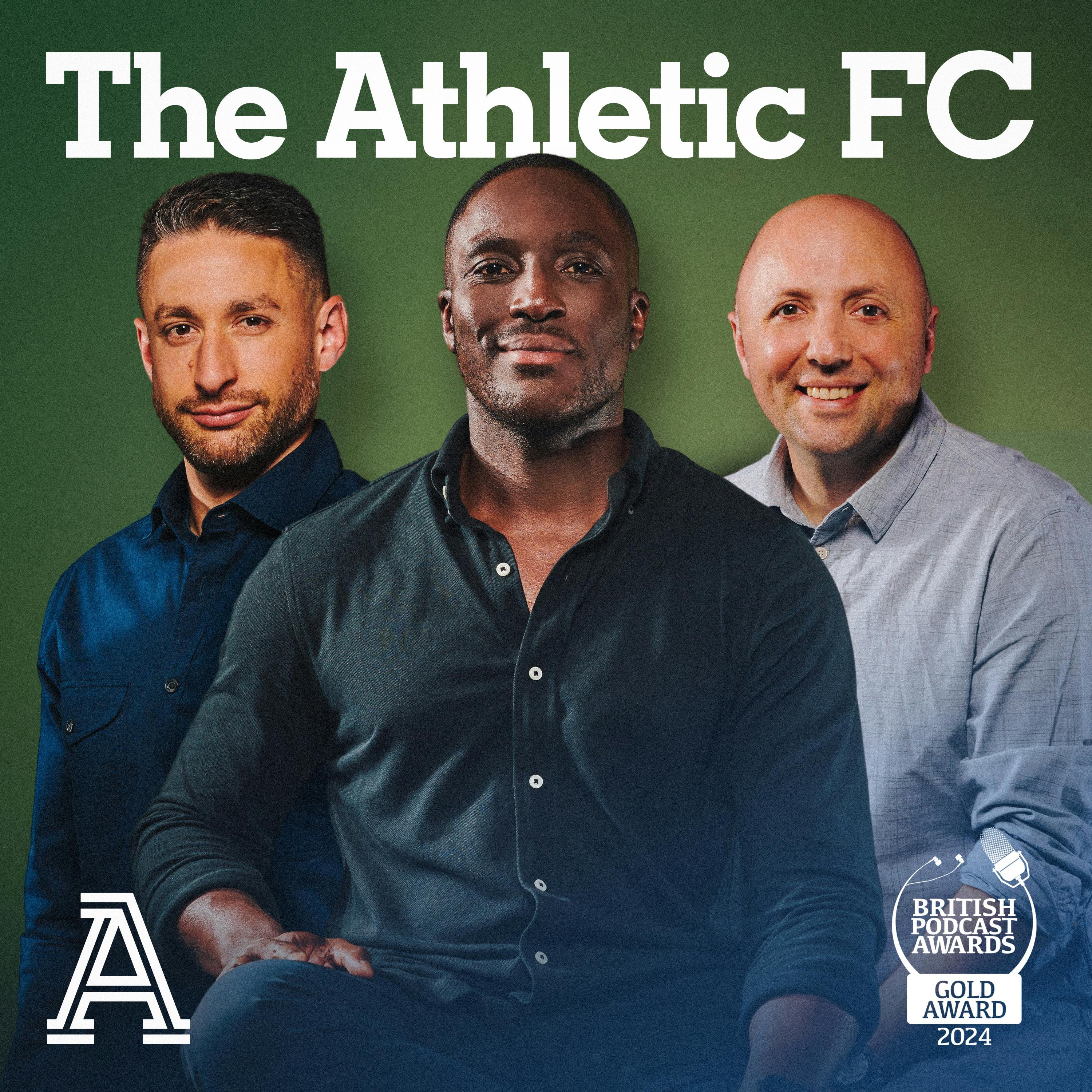
Champions League boom + Garry Cook on Manchesterism
🎧 Listen to Original Episode →1. Executive Overview: Core Theses & Key Revelations
The latest episode of The Athletic FC Podcast featuring senior news reporter Matt Slater, former England international Rob Green, US-based senior writer Adam Crofton, host Kate Mason, and former Manchester City Chief Executive Gary Cook represents a seminal moment in football journalism. Far from a routine matchweek review, the broadcast delivers an unprecedented, dual-track dissection of modern football’s two defining structural forces: the institutionalization of an implicit European Super League through UEFA’s expanded Champions League format, and the emergence of "Manchesterism"—a pioneer model of state-backed, municipal-integrated sports capitalism that transformed a mid-tier English football club into a global civic-urban enterprise.
Through the analytical commentary of Slater, Green, and Crofton, combined with the unvarnished historical revelations of Cook, the discussion lays bare the hidden mechanics driving the global game. Two central theses emerge from this extensive exchange:
Thesis 1: The 36-Team "Swiss Model" is an Ideological Victory for European Super-Clubs. UEFA's revamped 36-team single-table competition is structurally engineered to eliminate early competitive jeopardy for continental giants while maximizing media inventory. By expanding the fixture list from 125 to 189 matches (a 51.2% inventory increase) and permitting 24 of 36 teams to advance beyond the league phase, UEFA has effectively capitulated to the perpetual threat of a European Super League. As Matt Slater observes, continental elites systematically deploy the Super League card as leverage whenever commercial or structural concessions are sought. The result is a broadcast-optimized spectacle where marquee fixtures—such as Real Madrid vs. Inter Milan or PSG vs. Barcelona—serve as high-visibility non-binding showpieces rather than high-stakes knockout contests.
Thesis 2: "Manchesterism" Redefined Sports Ownership from Weekend Entertainment to Urban Asset Acceleration. Gary Cook’s insider testimony reveals that the 2008 takeover of Manchester City by Sheikh Mansour bin Zayed Al Nahyan was pitched and executed not as an investment in a weekend football team, but as a long-term urban equity partnership with the City of Manchester. By forging a tight coalition between municipal leaders (Sir Howard Bernstein, Sir Richard Leese), regional political figures (Andy Burnham), economic architects (Lord Jim O'Neill), and corporate strategists, Manchester City pioneered a blueprint where transport infrastructure, real estate corridors, health, education, and digital media converge around a state-of-the-art sports campus. Football was converted into the primary engine for post-industrial municipal economic growth.
| Strategic Pillar | Champions League Expansion ("Swiss Model") | "Manchesterism" Civic Infrastructure Model |
|---|---|---|
| Primary Objective | Maximize broadcast inventory & insulate elite clubs from competitive drop-off. | Leverage football capital to drive urban regeneration, real estate value, and global city branding. |
| Key Mechanism | Expanded 36-team league phase (189 total games); 24/36 safety net qualification. | Direct municipal coalition (Council + State Wealth); integrated stadium, transport, and campus network. |
| Commercial Monetization | Transatlantic broadcast push (CBS, Golazo Show); new global corporate sponsors (Budweiser, Hyundai). | Asymmetric marketing (Tevez poster generating $120M+ media value); global derby expansion (Beijing/NY). |
| Systemic Consequence | Dilution of group-stage jeopardy; widening revenue gap between European elite and domestic leagues. | Establishment of multi-asset sports quarters; replication in legacy cities (e.g., Knighthead at Birmingham City). |
2. Context & Background: The Landscape Leading to This Conversation
To fully appreciate the gravity of the revelations shared during the episode, one must contextualize the macroeconomic and governance headwinds facing European football over the past two decades. The sport is navigating a profound structural realignment driven by the divergence between flatlining domestic broadcast markets and the explosive growth of international, multi-territory tournament rights.
For over thirty years, European football's competitive architecture rested on a delicate equilibrium between domestic league dominance and UEFA's flagship knockout competitions. However, as Matt Slater highlights, domestic media rights—most notably the Premier League's domestic packages—have entered a phase of structural stagnation. On a per-game yield basis, domestic broadcasting revenues have effectively flatlined or declined. To maintain exponential revenue growth, top-tier European clubs forced UEFA to restructure international club competitions, unlocking fresh inventory that could be monetized in high-growth foreign markets, specifically the United States and Asia.
Simultaneously, the threat of a breakaway European Super League (ESL) has functioned as an ongoing mechanism of coercion. Ever since the aborted April 2021 breakaway attempt, UEFA’s regulatory and competition design teams have operated under the persistent shadow of elite defection. The 2024 reform of the UEFA Champions League, adopting what was popularized as the "Swiss Model," represents the direct policy outcome of this leverage. By replacing the traditional eight groups of four with a single 36-team league table, UEFA delivered precisely what elite European clubs demanded: more guaranteed fixtures against peer institutions without the terrifying hazard of early group-stage elimination.
Concurrently, the historical trajectory of Manchester City since August 2008 offers the empirical baseline for how sovereign wealth and institutional capital reshaped football governance. Prior to the Abu Dhabi United Group’s acquisition, Premier League ownership was dominated by traditional benefactors or leveraged buyouts (such as the Glazer family’s acquisition of Manchester United). Gary Cook’s tenure as CEO coincided with a paradigm shift. Manchester City abandoned traditional club management in favor of a holistic urban development strategy, aligning club capital directly with the public policy goals of the Manchester City Council. Understanding this background is essential to contextualizing how club management evolved from stadium gate receipts and localized sponsorship into global asset management and municipal master-planning.
3. Deep-Dive Thematic Breakdown
3.1 The 36-Team League Phase: Structural Mechanics and the Misnomer of the "Swiss Model"
A central technical revelation of the discussion is Matt Slater’s incisive deconstruction of the "Swiss Model" label. In games theory and tournament design—most notably in international chess—a genuine Swiss-system tournament dynamically pairs competitors after each round based on their ongoing win-loss records. Winners play winners, and losers play losers, ensuring continuous competitive calibration across successive rounds.
As Slater points out, UEFA’s implementation is a fundamental misnomer. To accommodate broadcast scheduling, television rights sales, and complex stadium logistics, UEFA discarded dynamic round-by-round re-draws in favor of a rigid, pre-determined schedule. Each of the 36 participating clubs is allocated eight fixtures against eight distinct opponents, selected via a computerized draw from four seeded pots. The standings are aggregated into a single mega-table, but the actual matchups do not adjust dynamically based on live tournament performance.
This structural compromise was engineered specifically to solve broadcast predictability while dramatically expanding match volume. Total matches expanded from 125 under the traditional 32-team, 6-game group stage format to 189 in the new 36-team format—a 51.2% increase in total match inventory. While UEFA marketed this expansion as a commercial triumph, the underlying mathematics reveal a system designed to strip away jeopardy for elite clubs.
3.2 The Insulation of Elite Competition: How Expanded Qualification Eradicates Early Jeopardy
The competitive consequences of this expanded structure were forcefully articulated by Rob Green and Adam Crofton. Under the previous format, a top-tier club drawing a difficult group faced a tangible risk of finishing third or fourth, resulting in premature elimination or demotion to the Europa League (as experienced by Manchester United under Erik ten Hag or Barcelona in successive seasons).
In the 36-team single table, the mathematical threshold for survival is exceptionally low. The top eight teams qualify automatically for the Round of 16, while teams finishing 9th through 24th enter a two-legged play-off round to secure the remaining eight knockout berths. Mathematically, 24 out of 36 clubs (66.7% of the entire field) remain alive in the competition after the eight-game league phase conclusion.
Rob Green notes the psychological shift this creates among super-clubs during high-profile early fixtures. When Real Madrid face Inter Milan, or Liverpool play Atletico Madrid in matchweeks one or two, the outcome carries minimal existential threat. Whether Team A beats Team B or settles for a draw, both squads possess a statistical certainty of finishing within the top 24. As Green succinctly observed, these marquee clashes function as high-budget exhibition games where players can virtually "shake hands and say see you later in March."
Adam Crofton reinforced this reality by pointing out the extreme concentration of genuine title contenders in contemporary European football. Crofton noted that the realistic winner of the competition is bounded by a narrow band of six or seven hyper-capitalized clubs: Arsenal, Manchester City, Barcelona, Real Madrid, Bayern Munich, and Paris Saint-Germain. Because the expanded format virtually guarantees all seven clubs reach the knockout rounds regardless of early stumbles, the league phase operates as a multi-month television commercial preceding the true competition in April.
3.3 Inventory Expansion and Transatlantic Monetization: The CBS Playbook and US Market Ambitions
While purists lament the erosion of mid-week jeopardy, the economic calculus behind UEFA’s reform is proving wildly successful in terms of top-line revenue generation and international audience growth. Matt Slater highlighted recent findings from Nielsen Sports indicating that viewing figures and digital consumption metrics have surged globally.
The primary battleground for this expansion is the United States broadcast market. Adam Crofton detailed how American broadcaster CBS has transformed Champions League coverage through two distinct innovations:
- The "Golazo Show" and Viral Social Content: CBS built an entertainment-first studio environment featuring studio talent that generates billions of short-form video impressions across TikTok, Instagram, and X. Digital engagement metrics grew by 50% to 60% year-over-year, introducing the European game to a younger, digitally native demographic.
- Linear Television Reach: The 2024 UEFA Champions League final on CBS attracted 3.1 million English-language viewers in the US—the largest audience for a UEFA final in American broadcasting history, more than doubling the viewership recorded in 2019.
However, both Slater and Crofton highlighted the physical and schedule constraints governing transatlantic expansion. Because European mid-week matches kick off at 15:00 and 18:00 Eastern Standard Time, broadcast viewership in North America relies heavily on workplace double-screening, lunchtime pub gatherings, and afternoon school dismissal windows. Crofton theorized that if tournament organizers truly wished to maximize US commercial revenues, they would advocate moving select marquee Champions League fixtures or knockout rounds to weekend time slots.
Slater immediately identified the systemic friction such a move would trigger: a full-scale "nuclear war" between UEFA and domestic league bodies (the Premier League, La Liga, Serie A, and the Bundesliga), which guard their weekend domestic broadcasting windows with fierce protectionism.
Furthermore, the commercial realignment is reflected in corporate sponsorship turnover. Standard long-term sponsors such as Heineken—an iconic pillar of Champions League branding for over three decades—are being supplemented or replaced by global conglomerates including Anheuser-Busch InBev (Budweiser), Hyundai, Haier, and Fanatics. UEFA is leveraging its 51.2% inventory surge to write longer-term, higher-yield global partner contracts.
3.4 "Manchesterism" Unpacked: The Municipal-Corporate Nexus of Urban Regeneration
The podcast’s second major narrative arc transitions from European competition design to the internal mechanics of club transformation, delivered through the first-hand account of former Manchester City CEO Gary Cook. Cook’s testimony provides a definitive breakdown of "Manchesterism"—a governance paradigm that fundamentally redefined sports management.
When Abu Dhabi United Group acquired Manchester City in August 2008, the conventional sports business model prescribed spending money on marquee squad transfers to maximize matchday gate revenues and traditional commercial deals. Cook revealed that during initial pitches to Sheikh Mansour’s inner circle, the core value proposition was framed around urban redevelopment rather than sports entertainment:
"During the selling process to Sheikh Mansour, we were selling an investment in the Manchester economy, not a football team that was going to play every weekend at three o'clock."
This strategic thesis hinged on transforming East Manchester—specifically the underdeveloped brownfield site surrounding the City of Manchester Stadium (originally built for the 2002 Commonwealth Games)—into a major commercial, educational, and transportation corridor linking Eastlands directly to Manchester city center. To execute this vision, Cook and club executive leadership constructed an unprecedented operational alliance involving key public figures:
- Sir Howard Bernstein: Chief Executive of Manchester City Council and the master strategist behind post-1996 Manchester urban renewal.
- Sir Richard Leese: Leader of Manchester City Council, who facilitated long-term land assembly and planning permissions.
- Lord Jim O'Neill: Prominent economist and pioneer of regional devolution policy, who provided macro-economic modeling for civic asset leverage.
- Andy Burnham: Former Cabinet Minister and Mayor of Greater Manchester, who spearheaded integrated transport infrastructure (Metrolink extensions) connecting urban populations to industrial and athletic hubs.
By positioning Manchester City as the primary private sector funder of public infrastructure, education, transport, and community housing, Abu Dhabi secured unmatchable political goodwill, expedited planning permissions, and permanent civic integration. The football club became the vanguard asset of a multi-billion-pound urban equity portfolio.
Furthermore, Cook explained how this civic infrastructure strategy directly solved elite player recruitment. In 2008, Manchester City lacked the century-old prestige of Real Madrid, Barcelona, or Manchester United. To compete for world-class talent, City constructed the Etihad Campus—an all-encompassing, state-of-the-art training complex physically connected to the main stadium. This facility guaranteed prospective signings that they would train in an operational environment superior to any rival globally. Infrastructure became the primary driver of athletic competitive advantage.
3.5 Asymmetric Brand Warfare: The Tevez Billboard, Global Derbies, and Psychological Disruption
Gary Cook’s account of Manchester City’s rise contained dramatic insider details regarding the psychological warfare deployed to dismantle Manchester United’s regional and global dominance. Central to this strategy was the infamous July 2009 "Welcome to Manchester" billboard campaign celebrating the signing of Argentine forward Carlos Tevez following his departure from Manchester United.
Cook revealed that the campaign was brought to his desk by advertising agency Anomaly, whom Cook had previously engaged during his tenure managing the Michael Jordan brand at Nike. Recognizing the immediate disruptive potential, Cook approved the deployment of the sky-blue billboard in Deansgate—the heart of Manchester city center.
The campaign’s commercial return was staggering: Cook confirmed that the single billboard generated over $120 million in audited media value within six months. Beyond media metrics, the campaign inflicted permanent psychological disruption on Manchester United, famously prompting Sir Alex Ferguson to label City "the noisy neighbors." Cook recounted a memorable exchange at a Sir Bobby Charlton charity dinner where Ferguson directly confronted him over the billboard—a moment that signaled a permanent shift in the regional power balance.
Simultaneously, Cook detailed early forward-looking discussions with former Manchester United CEO David Gill regarding the global commercialization of the Manchester Derby. Long before European clubs routinely scheduled international summer tours, Cook and Gill debated hosting competitive or exhibition Manchester Derbies in major international metropolises such as Beijing and New York:
"David Gill and I used to sit and talk about should we play the Derby in Beijing or New York as part of a 'let's build Manchester' strategy."
Although Gill operated with corporate caution to protect United’s established global brand, Cook pushed aggressively for joint international exposure. These historical conversations served as the conceptual precursor to the Premier League’s contentious "39th game" proposal and established the modern template for high-yield international pre-season exhibition tournaments.
3.6 Scalability and Replicability: Transferring the Civic Sports Model to Post-Industrial Cities
The final thematic thread analyzed by Cook is whether the "Manchesterism" paradigm can be replicated in other post-industrial cities lacking sovereign wealth backing. Citing his recent tenure as CEO of Birmingham City under Knighthead Capital (led by American investor Tom Wagner), Cook argued that the civic-sports integration model is inherently scalable.
At Birmingham City, Knighthead Capital implemented a blueprint directly adapted from Eastlands: purchasing a 60-acre industrial site in East Birmingham to construct "Knighthead Park"—a multi-use sports quarter combining a new 62,000-seat stadium, elite training facilities, commercial real estate, and academic partnerships with the University of Birmingham.
Cook asserted that modern sports capital must view football clubs not as isolated sports entities, but as catalyst assets capable of unlocking broader municipal growth in transport, health, education, and digital media. Whether in Manchester, Birmingham, or international markets in Saudi Arabia and the United States, the future of sports ownership belongs to entities capable of integrating athletic performance into broader urban infrastructure projects.
4. Speaker Perspectives & Analytical Contrast
The power of the podcast episode stems from the sharp analytical contrast between its participants. Each speaker evaluates the evolution of European football through a distinct professional lens, creating a multi-dimensional commentary on the sport's commercial and structural trajectory.
| Speaker | Professional Role | Analytical Focus & Core Thesis | Key Quote / Strategic Insight |
|---|---|---|---|
| Matt Slater | Senior News & Investigations Reporter | Macroeconomics of sports governance, regulatory mechanics, and Super League leverage dynamics. | "The big clubs in particular will keep playing the Super League card as a threat every time they want something." |
| Gary Cook | Former CEO, Manchester City & Birmingham City | Executive leadership, municipal urban equity partnerships, asymmetric marketing, and brand expansion. | "We were selling an investment in the Manchester economy, not a football team that was going to play every weekend at three o'clock." |
| Rob Green | Former England International & Pundit | Athlete mindset, squad management, and the erosion of match urgency in expanded tournament phases. | "Those games don't particularly matter... those are the ones where you feel like the guys are going to shake hands and say see you later in March." |
| Adam Crofton | Senior Sports Writer (US-Based) | Transatlantic broadcasting dynamics, American market penetration, and competitive title race realism. | "I look at Arsenal, Manchester City, Barcelona, Real Madrid, Bayern Munich, PSG, and it's hard to imagine another team than that wins the Champions League." |
| Kate Mason | Podcast Host & Lead Journalist | Editorial framing, structural synthesis, and pressing guests on governance contradictions. | Drives the central line of inquiry: Is the new Champions League format simply the European Super League operating in plain sight? |
Slater vs. Cook: Institutional Realism vs. Executive Disruption
A compelling intellectual tension exists between Matt Slater and Gary Cook. Slater approaches football through the critical lens of an investigative reporter, highlighting how elite clubs manipulate competition structures to lock in guaranteed revenue streams while short-changing match jeopardy. Cook, speaking as an executive practitioner, views these same dynamics through the lens of enterprise creation. Where Slater sees structural flaws and leverage plays, Cook sees rational corporate strategy, brand equity growth, and necessary urban investment.
Green vs. Crofton: On-Field Reality vs. Broadcast Spectacle
Rob Green provides the essential player perspective, detailing how squad rotation and low-stakes qualification math alter player intensity during early Champions League fixtures. Adam Crofton complements this by analyzing how American media networks transform these lower-jeopardy fixtures into viral television products. While Green observes that players view early group games as non-binding encounters, Crofton demonstrates that US audiences consume them eagerly through social clips and studio entertainment, proving that commercial growth can decouple from competitive stakes.
5. Strategic & Industry Implications
The insights articulated across this landmark broadcast illuminate several macro trends that will dictate the future trajectory of global sports business over the next decade.
5.1 The permanent Bifurcation of European Football
The expansion of the Champions League to 189 matches, combined with the automatic distribution of broadcast revenues to top-seeded clubs, accelerates the financial polarization of European football. As domestic broadcast rights in leagues like the Premier League, Serie A, and La Liga reach saturation, the revenue gap between Champions League regulars and non-participating clubs will widen exponentially. The 36-team league phase functions as a pseudo-closed league, ensuring that continental giants generate sufficient international media revenue to maintain overwhelming squad cost advantages over domestic rivals.
5.2 The Rise of Municipal-State Multi-Asset Portfolios
Gary Cook’s blueprint for "Manchesterism" has been codified into standard operating procedure for sovereign wealth funds and private equity firms entering European sports. Modern sports investment is no longer evaluated on localized operational yield. Instead, acquisitions are underwritten against urban redevelopment opportunities: real estate development, arena construction, municipal transport partnerships, and commercial district revitalizations. Clubs are institutional anchors for broader civic asset portfolios.
5.3 Transatlantic Schedule Imperialism and Regulatory Battles
As US broadcast revenues become paramount for UEFA and elite clubs, pressure will inevitably build to schedule marquee European fixtures during prime American television hours. This will drive tournament organizers to propose weekend Champions League matchweeks or stage competitive matches internationally. Such moves will trigger intense legal and regulatory battles with domestic league operators, player unions (FIFPRO) concerned over workload fatigue, and traditional domestic fanbases defending local matchday schedules.
6. Looking Ahead: Unresolved Questions & Next Milestones
As the European football ecosystem adapts to UEFA's new competitive format and the continued expansion of municipal-integrated club ownership, key metrics and upcoming regulatory milestones will determine the long-term sustainability of these transformations.
Key Industry Metrics to Monitor
- League Phase Viewership Retention (Matchweeks 5–8): Will broadcast ratings hold firm during late-stage league phase matches once top-tier clubs have already secured their positions in the top 24 qualification zone?
- US Media Rights Re-Tender Yields: Will UEFA’s next US broadcast rights package achieve significant percentage increases, validating the CBS production strategy and transatlantic match time slots?
- Player Fatigue and Legal Litigation: How will FIFPRO and domestic player unions progress with legal challenges against FIFA and UEFA regarding fixture calendar congestion, given the addition of 64 total Champions League games?
- Municipal Yield on Civic Sports Quarters: Will post-industrial city redevelopments—such as Knighthead Park in Birmingham—deliver audited local tax base growth and job creation comparable to Manchester's Eastlands transformation?
Conclusion: The New Governance Reality
The Athletic FC podcast episode serves as a vital historical record of European football's ongoing transition. By exposing the financial mechanisms of UEFA’s expanded competition and detailing the municipal master-planning behind Manchester City’s rise, the discussion demonstrates that elite football has permanently outgrown its origins as a weekend sport. It is now a highly sophisticated, hyper-capitalized intersection of global broadcast entertainment, sovereign geopolitical strategy, and urban real estate development.
💬 Key Quotes & Speaker Breakdown
European Super League
"The big clubs in particular will keep playing the Super League card as a threat every time they want something. That is the story of the Champions League's changes through the years."
Manchester City takeover
"During the selling process to Sheikh Mansour, we were selling an investment in the Manchester economy, not a football team that was going to play every weekend at three o'clock."
Carlos Tevez transfer
"The 'Welcome to Manchester' poster came across my desk and it was brought upon me by a company called Anomaly. We decided to go with it because the media value that it created exceeded 120 million dollars within six months."
Champions League format
"The games that they've gone for, the ones that they want in the group stage, every week there is two games that you know are box office. Those games don't particularly matter so much whether team A beats team B or whether it's a draw; those are the ones where you feel like the guys are going to shake hands and say see you later in March."
"The Swiss model is the most misnaming of all time. The tables are always moving anyway, that's not what they do; they use this pot system. I don't think there's much jeopardy there."
"The likelihood of [smaller teams] going any further is almost non-existent. Them playing Manchester United is their final. It's changed the narrative a little bit."
Champions League title race
"I look at Arsenal, Manchester City, Barcelona, Real Madrid, Bayern Munich, PSG, and it's hard to imagine another team than that wins the Champions League this season."
Premier League TV rights
"Domestic deals have been flat for a while now and in fact on a per game basis they've been falling. That scenario has already happened."
Manchester Derby global expansion
"David Gill and I used to sit and talk about should we play the Derby in Beijing or New York as part of a 'let's build Manchester' strategy."
Champions League broadcasting
"It would be great for a network like CBS if there was a couple of game weeks or some of the knockout rounds at the weekend. That would be like nuclear war with the Premier League and Serie A and La Liga as well."
Champions League commercialization
"When they went to this new model, they went from 125 total games to 189. So, there was actually 50% more games. Everything should go up, so we should always remember that they've got a lot more games to sell."