The illusion of Brentford's unbeaten opening four matches
Four matches into the Premier League campaign, Brentford sit in seventh place with 1 win and 3 draws. On paper, head coach Keith Andrews has stabilized the squad following his appointment. Yet behind that undefeated start lies a team operating on razor-thin tactical margins.
In their midweek fixture, Brentford traveled to League One side Reading for a Carabao Cup third-round tie. What should have been a routine evening for a top-flight side turned into a desperate survival act. Brentford barely escaped with a 2-1 victory to reach the 4th round.
Fabio Carvalho returned from injury to score the second-half winner, saving his side from a humiliating domestic cup exit. But before Carvalho salvaged the result, Reading had repeatedly exposed Brentford's central defensive block. They got lucky.
The turning point arrived in the first half when Reading defender Paudie O'Connor scored a spectacular overhead kick. Referee Tom Nield promptly disallowed the goal for a high boot, leaving Reading manager Leam Richardson infuriated on the touchline.
Richardson offered a scathing assessment of the decision that cost his side a lead against Premier League opposition.
"possibly in the top three [wrong] decisions that I've seen in my career - and I've seen thousands of games and played in hundreds"
He had a point. Without video review technology available at this stage of the competition, Nield's controversial whistle stood as the final verdict.
Brentford survived not because of tactical dominance, but because a lower-league team was denied a legitimate equalizer. Reading controlled the tempo for extended stretches, exposing how easily Brentford lose grip on matches when pressed physically.
Relying on dubious refereeing calls against League One opponents is an alarming warning sign. Top-flight sides will not be as forgiving when Brentford surrender control of the penalty area. That approach will fail.
Keith Andrews on how VAR has paralyzed match officials
Following the narrow win at Reading, Keith Andrews focused his post-match comments on the deteriorating state of English officiating. He argued that video assistant technology has stripped match officials of their confidence and decision-making instincts.
As reported by BBC Sport, Andrews believes referees have stopped making primary calls in both boxes because they expect technology to bail them out.
Andrews offered a candid critique of how the dynamic between players and referees has eroded over recent years.
"We've gone away from allowing them to officiate and allowing them to make mistakes and I think it is a real shame."
The Brentford boss remembered his own playing career, where mutual respect allowed open dialogue between players and officials on the field. That organic relationship has vanished under the modern review protocol. It is a major loss.
He noted that officials are now being asked to reclaim on-pitch authority, but they lack the habits required after years of technological dependency. Referees were trained to delay whistles and rely on monitors, breaking their natural match management rhythm.
When referees hesitate, spatial control on the pitch breaks down completely. Linesmen hold flags low on tight calls, leaving defenders stranded as attackers continue their runs.
For a team like Brentford that relies on disciplined distances between defensive lines, refereeing uncertainty creates panic in transition. When match officials lose authority, organized mid-blocks quickly turn into chaotic goal-line scrambles. Chaos takes over.
The Manchester derby error and the loss of refereeing authority
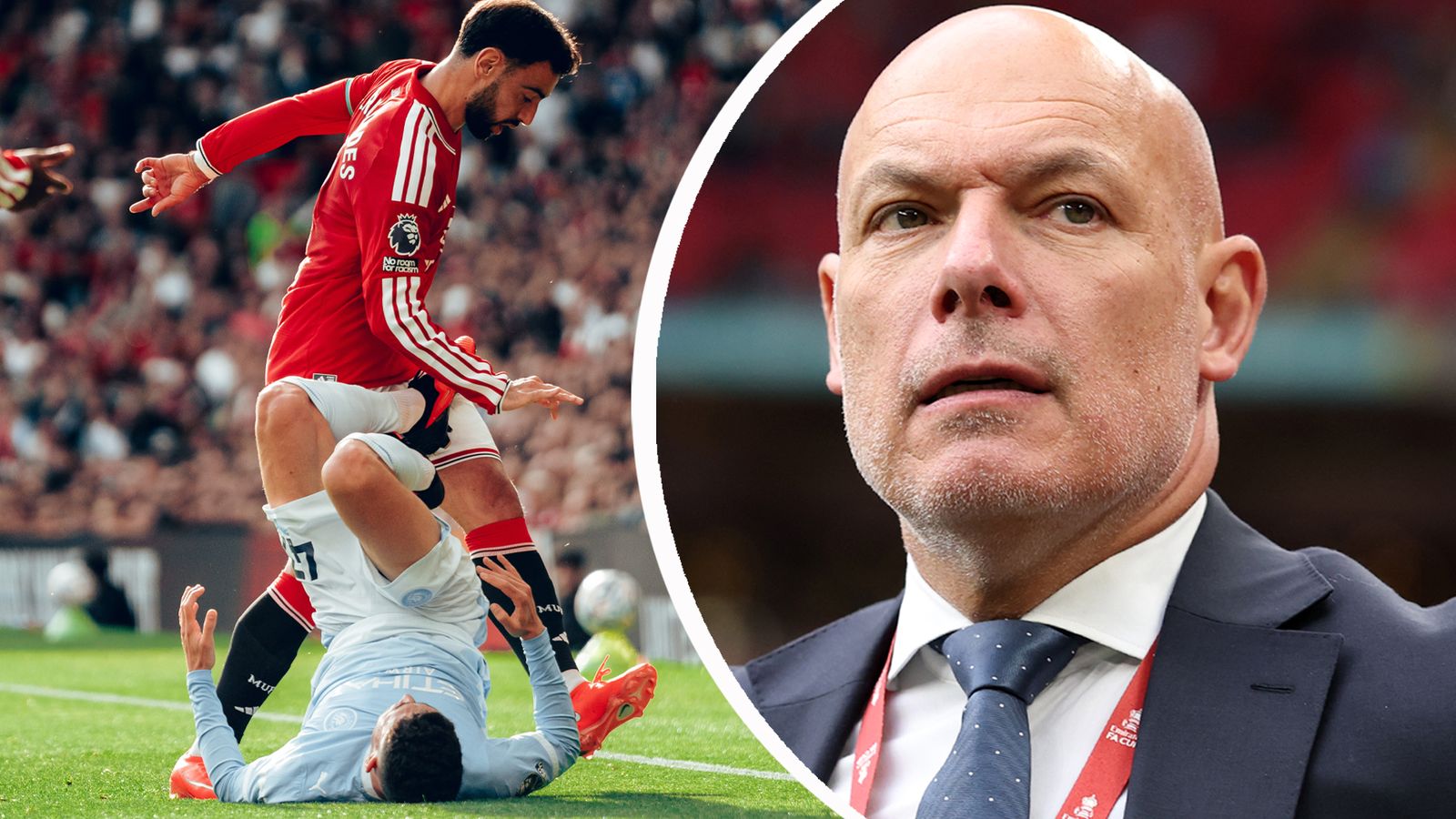
Andrews' post-match reaction was directly influenced by the high-profile refereeing mistake during Sunday's Manchester derby. Manchester City earned a win over Manchester United at Old Trafford through a late Erling Haaland goal, but the sequence sparked fury across the league.
City midfielder Enzo Fernandez was in an offside position when he dived centrally to attempt a header right before Haaland finished the play. Despite Fernandez actively interfering with play from an illegal position, the goal was allowed to stand. That was a mistake.
The decision prompted immediate criticism, forcing refereeing governing bodies to acknowledge the blunder. Pro Ref chief Howard Webb publicly admitted to an error of judgement in allowing Haaland's goal.
Webb confirmed that video reviewers failed to evaluate whether Fernandez interfered with United's defenders from his offside position. Andrews did not hold back when asked about the incident, calling the failure pretty alarming.
Andrews admitted: "The first thing was whether Erling Haaland was offside and then obviously Enzo Fernandez was. It's a shame."
As detailed in the BBC match report, errors of this scale damage tactical clarity for defending teams across the entire league. When linesmen refrain from flagging obvious offsides, central defenders naturally drop deeper out of caution.
That extra retreat expands the vertical gap between the back four and the central midfield pivot. Opposing midfielders exploit that open turf to set up unhindered shooting opportunities around the box.
When officials fail to enforce offside rules consistently, defensive shape collapses into reactive recovery runs. Mid-table teams suffer most, as they lack the individual recovery pace to fix spatial errors.
Fabio Carvalho's return and Brentford's tactical dilemma
While refereeing debates dominate post-match press conferences, Andrews must address growing structural flaws inside his own team. The return of Fabio Carvalho provides vital attacking quality, but it also introduces a tactical dilemma.
Carvalho proved his value at Reading by scoring the decisive second-half goal with a sharp finish in the half-space. His vision and clever movement give Brentford a creative outlet that was missing during their early league draws.
However, Carvalho's roaming style creates defensive vulnerabilities along Brentford's left flank. When Carvalho drifts inward to join the attack, he leaves his full-back isolated against overlapping runs. Flaws emerge fast.
Reading repeatedly targeted that wide channel during the first half, whipping crosses directly into Brentford's six-yard box. Premier League opponents with elite wingers will punish that lack of defensive cover far more ruthlessly.
Brentford's current defensive structure displays clear warning signs when subjected to sustained pressure:
- The defensive line drops inside its own penalty area, giving away control of second balls around the box.
- Full-backs hesitate to step out toward wide players, granting opponents easy crossing opportunities.
- The central midfield pair gets overworked trying to cover wide transitions, leaving central channels uncovered.
Surrendering territorial control while relying on goal-line clearances is unviable over a 38-game campaign. Brentford are allowing far too many opposition box entries every match, ranking among the bottom teams in the Premier League for defensive passivity. The numbers look grim.
Why Brentford's unbeaten streak will snap in their next league test
Let us cut straight to the core issue without sugarcoating the analysis. Brentford's unbeaten record is a fragile statistical illusion waiting to shatter under sustained pressure. The streak will end.
They have survived on opponent finishing errors, heroic goal-line blocks, and lucky calls like Nield's whistle at Reading. Their compact block is dropping deeper with every passing fixture, leaving them pinned inside their own final third for 60 minutes a game.
Keith Andrews wants referees to be human and be allowed to make mistakes without constant technological interference. But human error goes both ways, and Brentford have benefited from key calls during this opening month.
When refereeing calls inevitably go against them, their deep defensive stance will offer zero protection. Premier League attacking lines move too fast and pass too cleanly to be contained inside a crowded six-yard box indefinitely.
Carvalho's defensive gaps will be targeted, their central midfield pair will be overrun, and their low block will be breached early. The narrow escape against Reading showed that Brentford are operating on borrowed time. Time is running out.
Expect Brentford to suffer their first Premier League defeat of the season in their next league match. The notebook does not lie: teams that retreat into survival mode this early always pay the price. The fall is coming.
Read Next