Manchester United are now eight games without a win across all competitions. That single statistic defines a full-blown emergency. This is officially their worst-ever start to a Premier League campaign, leaving the club parked directly above the relegation zone.
Sunday afternoon at Old Trafford removed any remaining room for nuance. Bournemouth arrived, dictated terms from kickoff, and walked away with a dominant 3-0 victory. It was a clinic in modern transitional spacing against a side that appeared utterly hollowed out.
Eight matches without a victory is unacceptable for any top-flight squad. At Manchester United, it represents a total breakdown of order. When results plummet this steeply, tactical dysfunction and locker-room politics quickly feed off one another.
The 180-Minute Defensive Collapse
Context matters when dissecting an eight-match slide. The real damage occurred over four brutal days that completely exposed United's defensive frailties. Across two matches and 180 minutes of football, United suffered seven goals conceded while scoring just once.
On Wednesday, Carrick took his side to Italy for a Champions League fixture against Como. They were dismantled 4-1, repeatedly carved open in the wide channels by simple third-man runs. It was a tactical mauling that raised immediate alarms about United's spacing in defensive transitions.
Four days later, Bournemouth copied the exact same blueprint. Rather than correcting the defensive shape, United conceded three unanswered goals on home soil. Andoni Iraola's side did not need complicated passing sequences; they simply waited for United's midfield to overcommit, recovered the second ball, and attacked the vacant space behind the fullbacks.
The defensive discipline has vanished entirely. Opposition teams no longer need sustained possession to hurt this side. Two or three crisp forward passes are currently enough to put opposing attackers one-on-one against United's central defenders.
Conceding seven times in two fixtures under 96 hours is damning. For a coach whose early reputation was built on composure and defensive solidity, watching his side bleed goals without resistance is a fatal indictment.
The Cost of Benching Bruno Fernandes
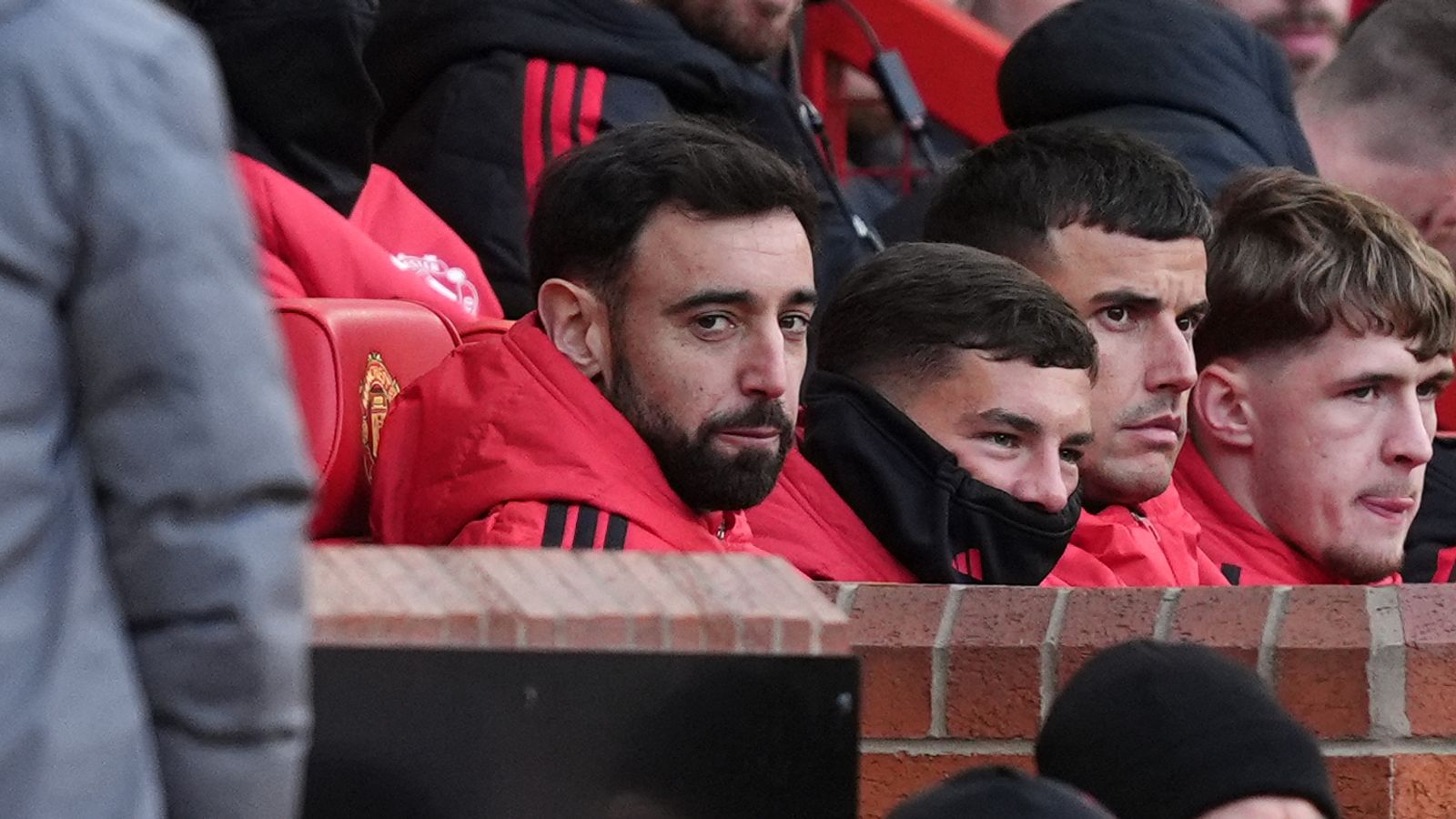
Tactical failure on the pitch is often a symptom of fractured authority off it. The most telling data point from Sunday was not recorded on the stat sheet, but on the team sheet: zero minutes played for club captain Bruno Fernandes.
Fernandes was dropped to the bench after openly criticising Carrick's tactics in the wake of the Como debacle. Carrick made a disciplinary stand. Yet leaving his primary creative outlet unused for all 90 minutes against Bournemouth backfired completely.
Tactical Dissent and the Captain's Silence
United lacked direction in the final third without their Portuguese playmaker. Central progression ground to an immediate halt. When Bournemouth dropped into a compact mid-block, United circulated the ball laterally without any player willing to attempt an incisive forward pass.
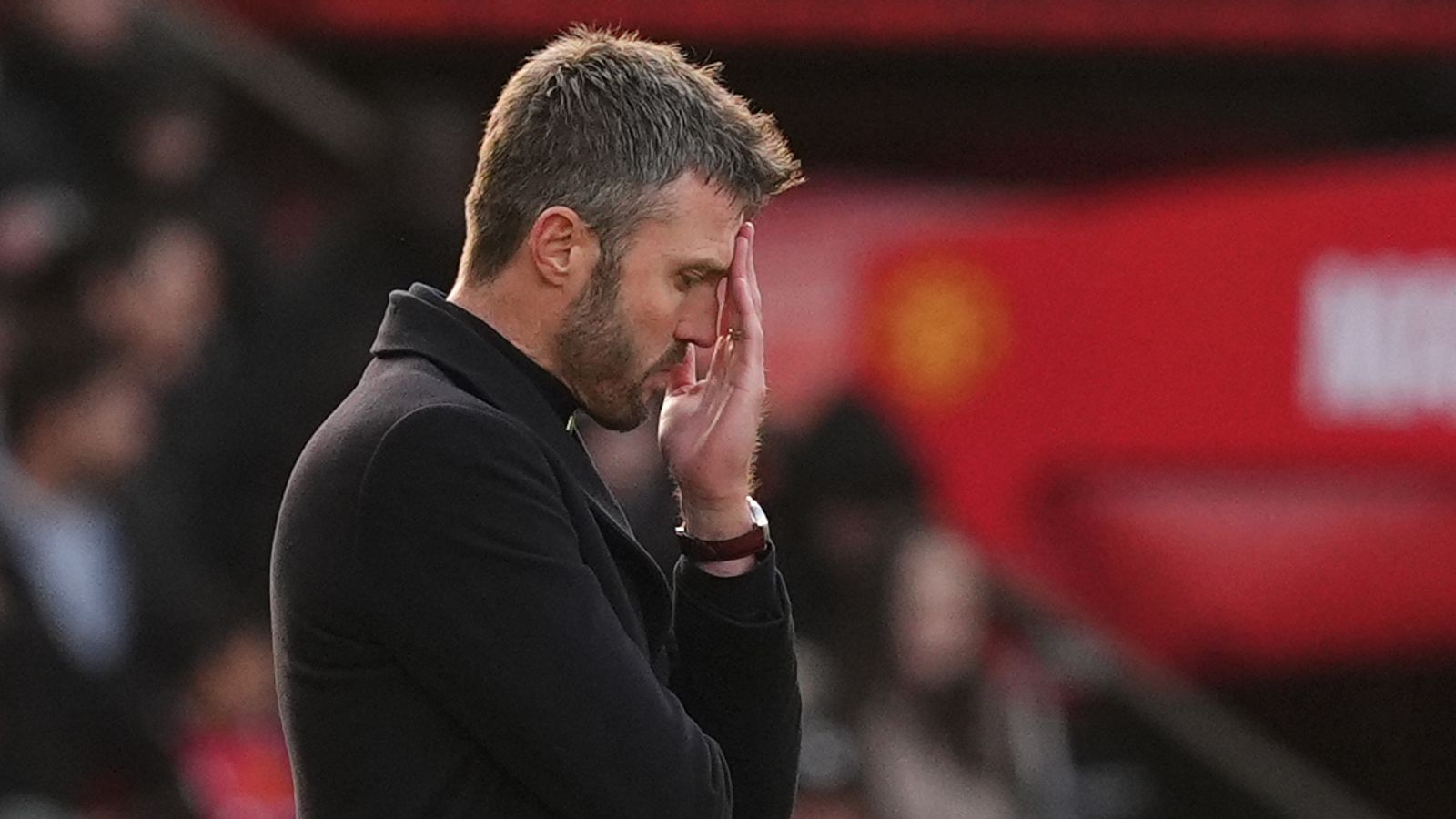
Carrick chose rigid authority over pragmatism. As the match drifted away in the second half, the decision to keep Fernandes sitting on the bench became an open act of defiance. As Sky Sports analyst Jamie Carragher argued, the dynamic inside the dressing room has reached a point of no return.
"It's become untenable. Carrick wants to be changed. He doesn't want to be sat in the dugout with those players. Can you imagine going into the training ground tomorrow with Bruno Fernandes after not bringing him on? It's a rancid dressing room. He wants to be put out of his misery tonight."
The manager boxed himself into a corner. If you bench your captain to send a disciplinary message, your team must execute the alternative plan flawlessly. Failing to score while losing by three at home rendered that gamble an unmitigated disaster.
A divided dressing room always reveals itself in work rate and recovery sprints. During Bournemouth's third goal, United players tracked back with heavy legs and slumped shoulders. The communication between lines was nonexistent.
The Post-Amorim Hangover and Tactical Stagnation
To understand how United reached the brink of the relegation zone, one must examine the timeline of Carrick's appointment. Carrick arrived midway through last season as the replacement for Ruben Amorim, tasked with steadying a volatile squad. He exceeded initial expectations, steering United into Champions League qualification through a disciplined run of form.
That initial success created a false sense of security. Interim bounces frequently mask fundamental squad deficiencies. When a temporary appointment turns permanent, structural problems always resurface once the emotional surge dissipates.
Gary Neville flagged this exact dilemma during his post-match commentary on Sky Sports. Neville pointed out that the hierarchy took the convenient route rather than pursuing an established elite tactician after Amorim's departure.
"I did think last season that the club should have gone for the best manager they could have got and not given the job to Michael Carrick because I felt this might happen. But this has gone very, very sour very quickly and the club is a mess."
Under Amorim, United attempted an ambitious positional setup that collapsed under tactical rigidity and inconsistent pressing. Carrick initially simplified things, lowering the defensive block and playing direct on the counter. But eight games without a win proves that reverting to basic defensive shapes only buys a coach a few months.
Once opponents adapted to Carrick's conservative setup, United had no secondary gears. They cannot press high effectively because their forward line lacks intensity. They cannot sit deep and absorb pressure because their defensive line lacks collective awareness. They are trapped between two incompatible footballing identities.
The numbers from this campaign verify the regression. Last spring, United found ways to grind out narrow one-goal victories to salvage a European spot. This autumn, they cannot keep clean sheets, and they generate virtually nothing when chasing a deficit.
The Old Trafford Paradox: Chanting for the Condemned
The most counterintuitive scene of Sunday afternoon occurred during stoppage time. Bournemouth were celebrating their third goal, sealing an emphatic 3-0 scoreline. Yet from the Stretford End, the supporters began loudly singing Michael Carrick's name.
Home crowds do not normally chant the name of a manager whose side sits just above the relegation places after eight games without a win. This was not an endorsement of Carrick's tactical system. It was an open protest against the players and the boardroom hierarchy.
Carrick remains a revered figure at Old Trafford from his decorated playing career. When he walked toward the stands after the final whistle, delivering a prolonged, solitary applause, the supporters responded warmly. It carried all the hallmarks of a final farewell.
Neville's assessment captured the strange mood inside the stadium. As Neville noted on his podcast, the decision to dismiss Carrick will likely disgust many match-going fans who lay the blame on the dressing room and ownership. Yet as Neville admitted, making a change has become an unavoidable reality.
A club cannot dismiss an entire squad of twenty-five players. They cannot easily replace an entire sporting department in late October either. In professional football, the manager always serves as the designated fall guy when the numbers turn catastrophic.
The Statistical Inevitability of Carrick's Exit
Elite football management is fundamentally an odds game. When a team sits just above the bottom three in late October with an eight-match winless streak, historical precedent gives a head coach almost zero chance of survival. The board faces a stark statistical choice between sentiment and Premier League status.
United's defensive structure has collapsed, their captain is in open conflict with the manager, and their attacking metrics have cratered. The 3-0 loss to Bournemouth was not an isolated blip; it was the logical culmination of a steady, multi-week decline.
Carrick stepped into the dugout with goodwill and delivered Champions League football against the odds last spring. But top-flight football moves without sentiment. When the numbers turn this toxic, the conclusion is inevitable.