Tactical dominance in Trondheim
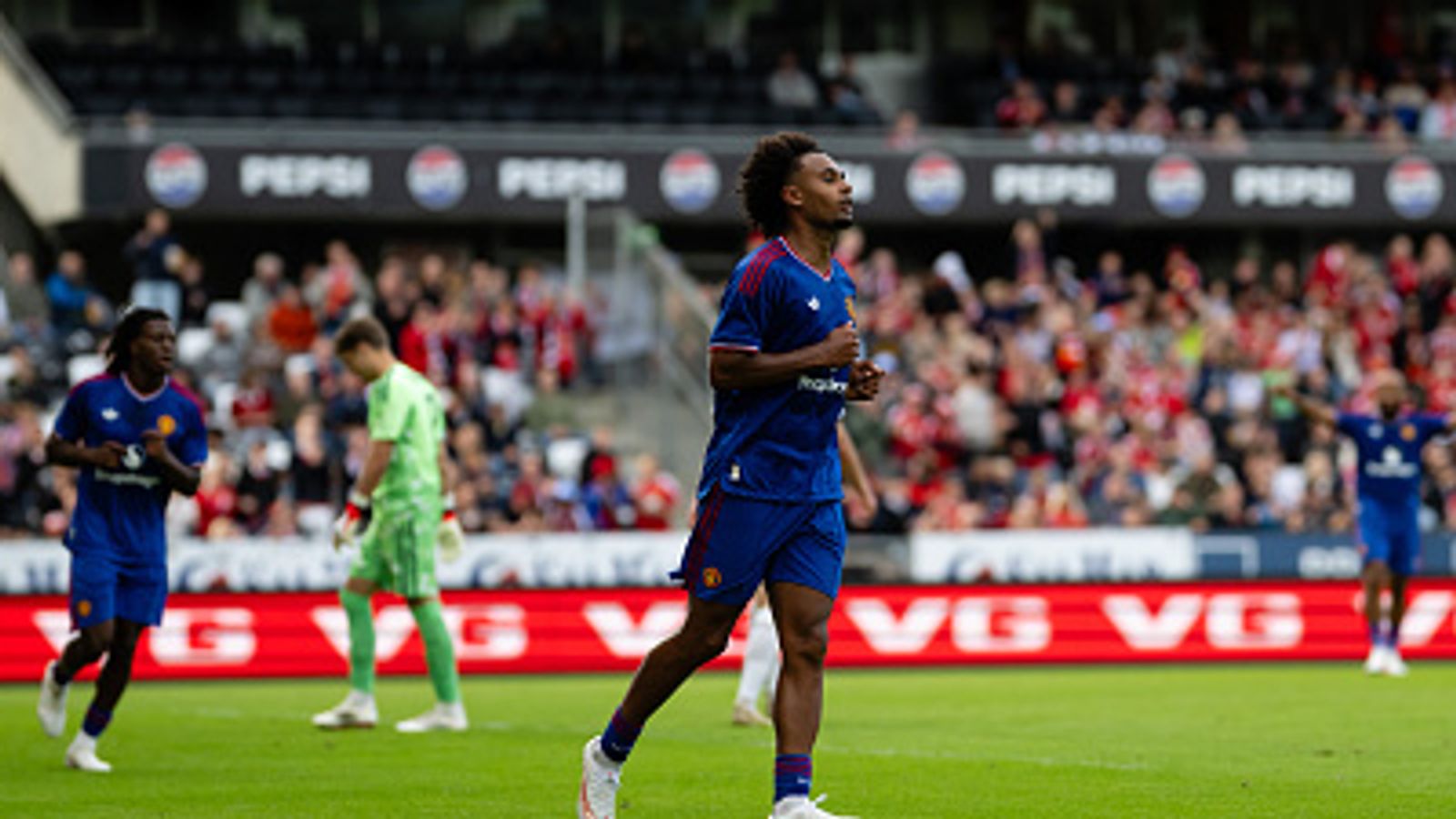
Pre-season friendlies rarely produce definitive tactical blueprints, yet the 5-0 demolition of Rosenborg provides a necessary snapshot of where Manchester United sits under Michael Carrick. Fielding a strong initial XI against an opponent already 13 games deep into their domestic campaign, United demonstrated a clinical edge that frequently disappeared last term.
The mechanics of this performance relied heavily on the output of the youth contingent. While established names provided the foundation, the integration of academy talents like Shea Lacey shifted the attacking geometry of the match in real time.
The Zirkzee factor
Joshua Zirkzee’s involvement was the headline for those tracking long-term squad development. Scoring a specialized finish that required both composure and spatial awareness inside the final third, Zirkzee demonstrated exactly why the club moved for his profile this summer. As The Daily Mail reported, his ability to link play while maintaining a goal-scoring threat is precisely the variation United lacked in previous cycles.
Lacey’s own contribution to the scoreline proved that the attacking transition is becoming more fluid. By exploiting the half-spaces Rosenborg left exposed during defensive recoveries, United managed to keep the pitch stretched, preventing the Norwegian side from settling into their usual low-block rhythm.
Critical observations and structural flaws
Despite the emphatic 5-0 scoreline, the defensive integrity remains a question mark heading into the competitive season. Rosenborg managed to bypass the press on three separate occasions in the first half, exposing the gap between the defensive line and the midfield pivot.
A more disciplined opponent would have exploited the space left by aggressive fullbacks. Against a side like Rosenborg, these lapses were corrected by individual defensive recoveries, but a high-pressing team in the Premier League will punish those gaps with ruthless efficiency. Carrick’s reliance on a fluid formation requires better defensive tracking from the wide forwards, an element that was occasionally missing during the second half as fatigue set in.
What this means for the depth chart
United looked far more comfortable in possession than they did during many fixtures in the last campaign. The verticality of the passing lanes improved, with the ball moving through the center more often than relying on predictable wide circulation. Watching the live match updates proved that the tactical instruction focused on quick-turn transitions rather than possession for its own sake.
The squad depth is clearly being tested, and the performance of the academy players suggests they are not just filling numbers but are genuinely pushing for rotation minutes. Carrick appears to be building a vertical identity, one that treats every transition as an opportunity for an incisive pass rather than a reset.
The verdict
While one must temper enthusiasm given the nature of a pre-season friendly, the structural intent of this roster is clearer than it has been in years. The combination of Zirkzee’s technical pivot play and Lacey’s direct running creates a multifaceted threat that defenses will struggle to track when both are on the pitch.
Manchester United will continue to find success if they maintain this aggressive verticality. Expect the side to struggle against teams with elite defensive structure that can soak up pressure, but against mid-table opposition, this setup is lethal. I predict United finishes in the top four this coming season, provided these young attackers see at least 1,200 minutes of top-flight rotation.
Read Next
- Manchester United's youth-led dismantling of Rosenborg reveals a tactical shift
- Ruben Amorim's quiet nod to Michael Carrick reveals Man United's new transfer blueprint
- Manchester United's pre-season routing of Rosenborg offers Michael Carrick clear clues
- Joshua Zirkzee's brilliance cannot hide Erik ten Hag's persistent structural flaws