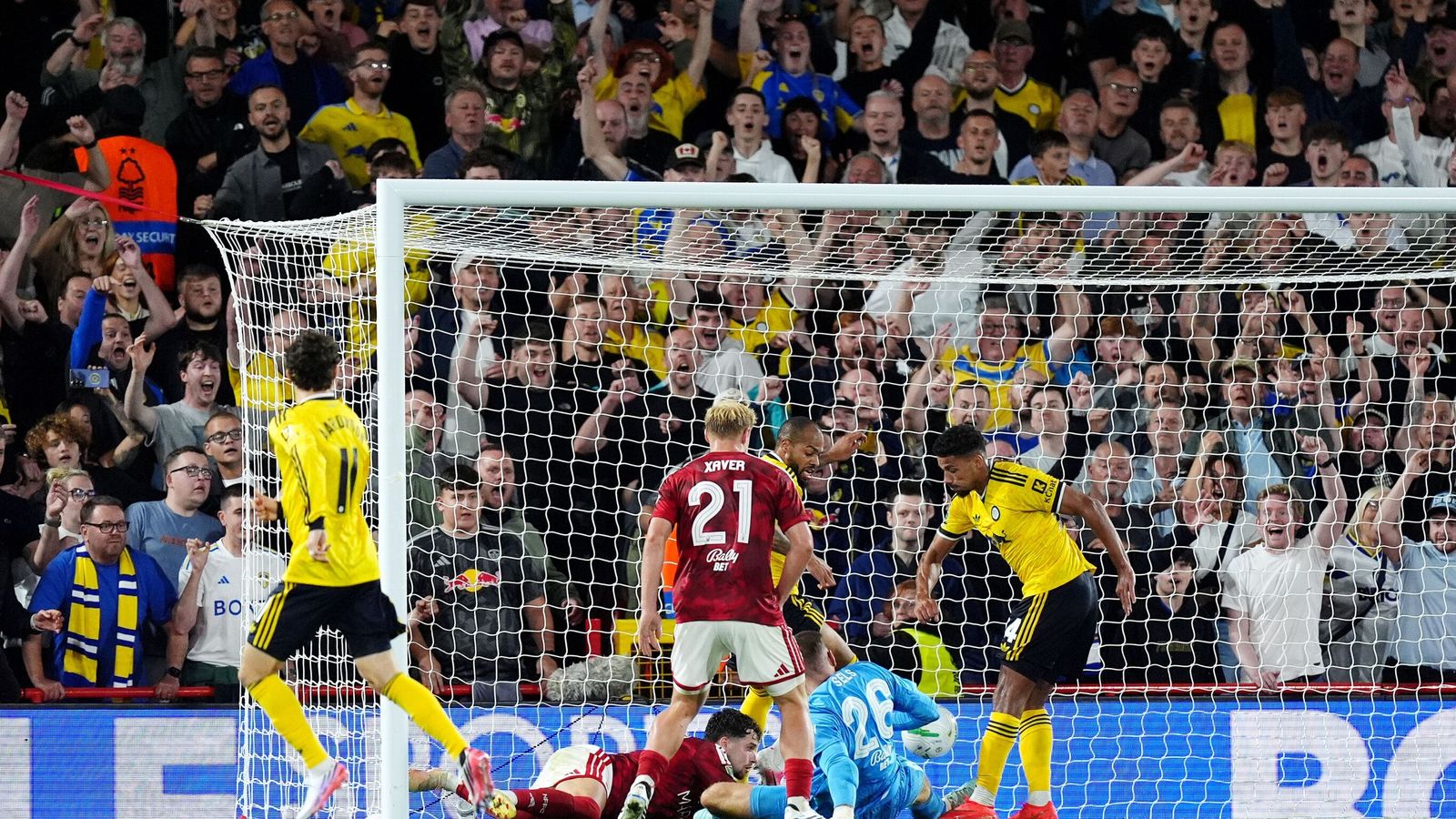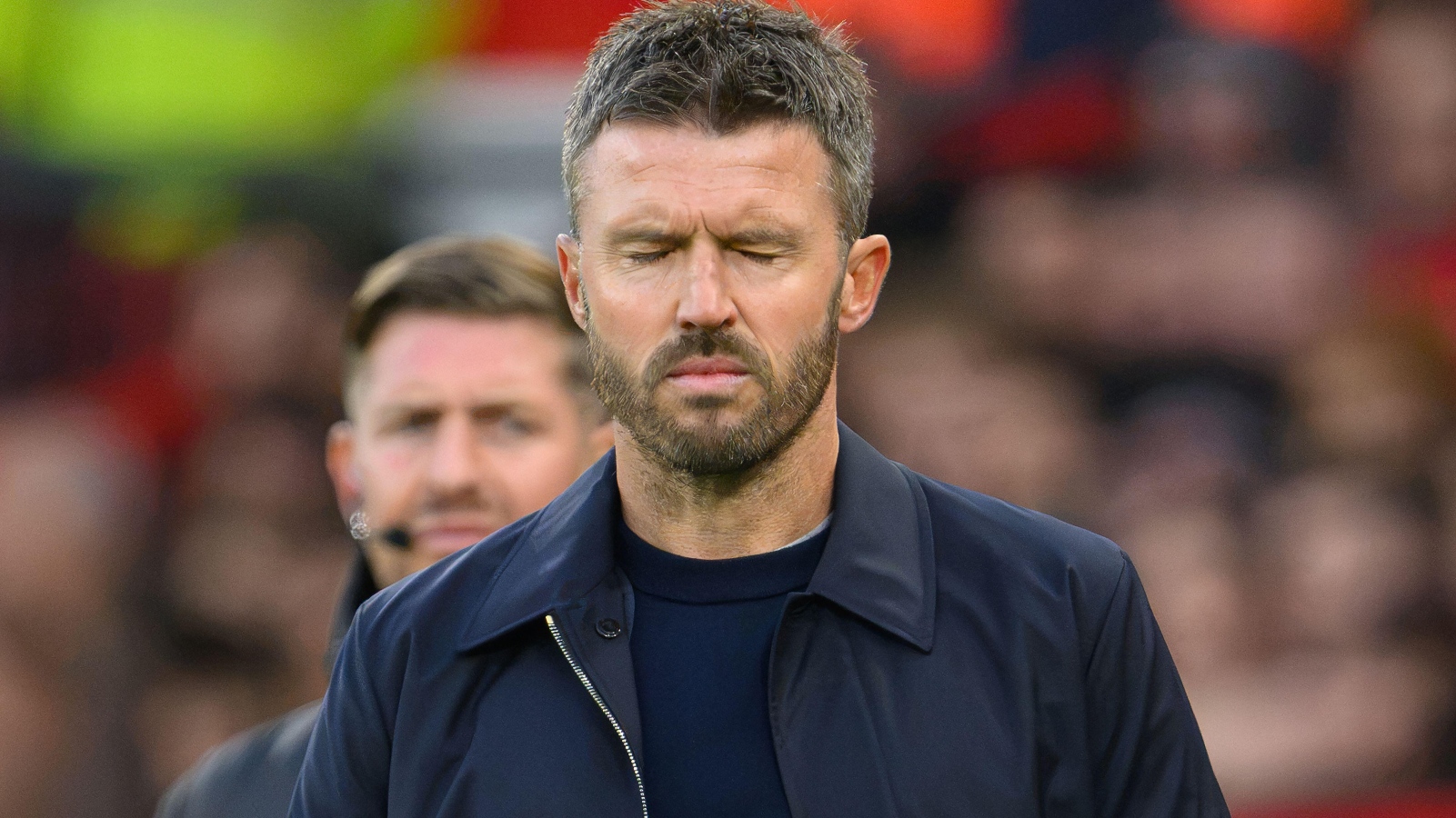
In only three of the past ten Premier League campaigns has English football reached the first day of November without a single managerial sacking. On paper, this looks like unprecedented boardroom patience. It is nothing of the sort.
Instead, the current calm is merely the statistical byproduct of wild off-season churn. Eleven top-flight clubs entered the 2026-27 campaign led by managers appointed during calendar year 2026. Only five clubs in the entire division have kept the same boss for more than two years.
When over half the league is still unpacking tactical whiteboards, executives hesitate to pull the trigger immediately. But with roughly a quarter of the season completed and an international break looming, that artificial pause is expiring.
According to latest Oddschecker sack race tracking, Michael Carrick remains the odds-on favourite to go first. Staring at the betting market misses the tactical reality developing below the surface.
The table lies constantly in autumn. The underlying expected goals and tracking metrics reveal an entirely different hierarchy of competence and impending doom.
The Nottingham Forest anomaly: 14.7 xG and zero finishing touch
Oliver Glasner is walking a tightrope over a pit of Greek fire. Nottingham Forest owner Evangelos Marinakis sacked four managers across the previous twelve months, including dismissals executed two minutes before contract break clauses expired.
Now Glasner finds Forest trapped inside the relegation places. The gut reaction of an impatient hierarchy is to sack the coach.
That would be a catastrophic misreading of football variance. Through Saturday's fixtures, Forest have generated 14.7 expected goals.
That is the fourth-highest attacking output in the entire Premier League. Glasner’s tactical system is manufacturing high-percentage opportunities at an upper-table rate.
Yet Forest have scored just six league goals. Not once in any match this season have they equalled their single-game xG tally, let alone exceeded it.
The analytical drop-off between shot creation and shot execution tells the real story. Forest’s expected goals on target (xGOT)—measuring post-shot location and velocity—collapses down to 7.4 xGOT.
Their finishing is actively destroying their own build-up play. When post-shot quality is roughly half of pre-shot chance value, the blame sits with the strikers, not the bench.
The finishing floor and the Marinakis factor
Forest are currently squandering nearly one full goal per match compared to their underlying expectation. Put that in historical perspective.
Across all 96 clubs competing in Europe's big five leagues last season, not a single side underperformed their xG by more than 0.5 goals per match. Forest are doubling that historical floor of bad finishing.
Glasner attempted to deflect after their recent defeat at Brentford. He pointed toward squad conditioning.
"We are outrun by the opposition in every single game. We have to change it."
Tactically, Glasner's public diagnosis is wide of the mark. Tracking numbers from Fotmob show Forest were indeed outrun in their last five league outings, but they are not outrun every single week.
More importantly, physical distance does not correlate with points nearly as tightly as expected goal differentials. Forest under Glasner are creating far better chances than under any of the four managers Marinakis fired last season.
Firing a manager when their team sits fourth in chance creation is pure self-sabotage. The finishing will regress to the mean.
Sunderland's brutal calendar masking genuine progress
Régis Le Bris occupies the twentieth spot in the table, and Opta predicts Sunderland will stay anchored to the bottom. But raw points totals in early November ignore the brutal asymmetry of early fixture lists.
Sunderland have already navigated games against five of the current top seven clubs. Only Liverpool have faced a schedule of equivalent difficulty.
Context completely transforms how we evaluate Le Bris. Despite that gauntlet, Sunderland arrived at the weekend within one expected point of Chelsea, Tottenham, and Manchester United.
Their recent 3-1 defeat at Coventry looks like a routine drubbing in the classified results. The shot map tells an entirely different tale.
Sunderland dominated the match statistically, winning the expected goals battle by 1.8 to 0.7. They controlled territorial space, penetrated the defensive block, and conceded on low-probability breaks.
Like Forest, Sunderland suffer from severe finishing inefficiency. They have converted 6.2 goals fewer than expected so far this campaign.
Their structural shape is sound. The tactical spacing allows them to compete against far wealthier squads.
The genuine danger for Le Bris is not his tactical design, but the merciless calendar ahead. Sunderland's next five fixtures feature Chelsea, Aston Villa, Tottenham, Liverpool, and Newcastle.
A manager operating with minimal squad depth can only withstand that degree of fixture loading for so long. If Sunderland’s board panics over expected losses against top-four opposition, they will make an irreversible tactical mistake.
Crystal Palace and the real tactical rot
While Forest and Sunderland suffer from finishing variance, Crystal Palace are disintegrating at a structural level. Pierre Sage is on thin ice, and the numbers fully justify his precarious standing.
Palace are not merely underperforming their chances. They are hemorrhaging control in every phase of play.
Defensively, Palace rank second-worst in the Premier League for total expected goals conceded. Strip away set-piece penalties, and Sage’s team sits dead last across the entire division.
That represents a baffling drop-off for a manager whose Lens side conceded the fourth-fewest expected goals in Ligue 1 last term. In England, Sage’s zonal structure has looked utterly porous.
Lethargic sprinting and a fragile back three
Some leeway exists for personnel disruption. Sage has been forced to field seven different combinations in his back three following injuries and Axel Disasi’s three-match suspension.
Good coaching overcomes defensive rotation through coherent spacing. Palace, however, look bewildered whenever opponents transition through the middle third.
Their physical data is equally alarming. Tracking metrics show Palace register just 96.9 sprints per match.
That is the lowest sprint volume in the entire Premier League. They do not close down space, they do not press triggers with intensity, and they fail to track runners.
Roberto De Zerbi’s Tottenham recently dismantled Palace with total territorial control. Even against ten men, Palace appeared entirely passive and structurally detached.
Sage faces Liverpool next before winnable fixtures against Coventry and Hull. If chairman Steve Parish is going to twist, doing so before the international break avoids wasting those critical survival six-pointers on an exhausted tactical model.
The verdict: Misreading variance at the top and bottom
The broader Premier League managerial picture shows a profound disconnect between process and perception. As highlighted in The Guardian's tactical breakdown, early stability is masking profound structural friction across the bottom half.
Michael Carrick sits atop the bookmakers' sack race despite ranking in the top half of divisional tenure. Meanwhile, managers like Marco Rose survived six-game winless starts at Bournemouth before rebounding with six consecutive victories.
Patience works when the underlying metrics validate the tactical framework. It fails when managers construct defensive systems with league-worst concession rates and bottom-tier running intensity.
Evangelos Marinakis will likely look at Forest’s six goals and reach for the eject button. If he does, he will sack a coach who has solved Forest's chance-creation puzzle.
Steve Parish faces the opposite reality. Palace’s expected goals against and historically low sprint counts demonstrate a team whose tactical baseline has collapsed.
Football executives frequently fire the manager who is about to experience positive statistical regression while retaining the manager whose team is fundamentally broken. When the first axe falls in the 2026-27 season, it should land at Selhurst Park, not the City Ground.