From Etihad Dominance to Basingstoke Magistrates' Court
Four years ago, Raheem Sterling was operating at the absolute peak of English football. He was attacking back posts, timing late blind-side runs, and collecting domestic silverware under Pep Guardiola. On Tuesday afternoon, the 31-year-old winger stood inside Basingstoke Magistrates' Court pleading guilty to dangerous driving and drug possession.
The contrast could not be starker for a player who once defined the sharpest attack in Europe. As BBC News reported, Sterling admitted to driving his Lamborghini Urus dangerously across multiple major roads before crashing into motorway barriers. It is a sobering turning point for a career that has drifted off course for two straight seasons.
For tactical observers, Sterling's prime was defined by relentless spatial awareness and sudden acceleration. He did not just run fast; he manipulated full-backs with precise double-moves inside the penalty box. Today, those explosive bursts on the pitch feel distant compared to the reality of his court appearance in Hampshire.
Sterling's football journey started with raw brilliance at Liverpool before his high-profile move to Manchester in 2015. At Manchester City, he transformed into one of the most prolific wingers in Premier League history. Now, at 31, he finds himself without a clear footballing home and facing legal consequences.
The downfall did not happen overnight, but this court appearance anchors his decline in stark terms. When a player relies so heavily on sharp bursts and split-second decisions, loss of rhythm off the field quickly impacts everything on it. His guilty plea in Basingstoke marks the lowest point of his professional life.
The May Crash and the Legal Reality in Hampshire
The events leading to Tuesday's court hearing stem from a single-vehicle incident on the morning of 28 May 2026. Sterling drove his Lamborghini Urus dangerously along the M25, the M3, the A327, and Minley Road. His reckless run ended when he struck the motorway barriers on the M3 southbound near the Minley interchange.
When emergency services and police arrived at the crash site, they uncovered further details. As court details revealed, Sterling was in possession of six canisters of nitrous oxide, classified as a Class C drug. He also failed to provide a specimen for analysis following the crash.
Hampshire Police had initially arrested Sterling on suspicion of drug-driving two days after the May crash. Formal charges of dangerous driving and possession for wrongful inhalation followed on 26 August. When he appeared at Basingstoke Magistrates' Court, Sterling offered no defense and entered guilty pleas to all charges.
Fortunately, authorities confirmed no other vehicles were involved in the collision and no injuries were sustained. However, the severity of driving dangerously across four major road networks cannot be minimized. For a public figure awarded an MBE in 2021, the legal fallout will be significant.
Sterling received his MBE in the Queen's Birthday Honours for his vocal work against racial inequality in sport. That honor reflected his standing as a leader for both club and country. Standing in a magistrates' court facing drug possession and dangerous driving charges severely damages that hard-earned legacy.
The On-Field Breakdown: From Stamford Bridge to Feyenoord
To understand how Sterling arrived at this point, one must look at his turbulent path over the last four years. In the summer of 2022, Chelsea signed Sterling from Manchester City expecting a proven champion to lead their front line. Instead, his time at Stamford Bridge produced inconsistent performances amidst constant managerial changes.
Across four years under contract at Chelsea, Sterling accumulated just 59 league appearances. That total includes a season-long loan spell at Arsenal where he struggled to break into Mikel Arteta's starting eleven. The sharp cutting edge that once yielded 20 goals a season for City simply vanished.
Tactically, Sterling's game began to fray when his first-step quickness lost its lethal edge. At City, Guardiola insulated him with overloads, allowing Sterling to isolate full-backs in 1v1 situations or tap in low crosses at the far post. Without that structured system, Sterling often turned into traffic or misread central passing lanes.
By January 2026, Chelsea severed ties, allowing Sterling to seek a fresh start abroad with Dutch side Feyenoord. Moving to the Eredivisie was meant to rebuild his confidence away from the intense spotlight of the Premier League. Instead, his stint in the Netherlands proved short and largely unproductive.
Sterling managed just eight appearances for Feyenoord during his brief spell earlier this year. He struggled to adapt to the physical demands of Dutch football and failed to lock down a regular starting spot. By the time he returned to England in May, his career was effectively stalled.
Deconstructing the Tactical Rise and Fall
During his peak under Pep Guardiola, Sterling was one of the most effective off-the-ball movers in world football. His primary weapon was the third-man run from the right flank into the six-yard box. Guardiola designed positional structures specifically to isolate Sterling against isolated full-backs or free him for back-post tap-ins.
At Manchester City, his efficiency was extraordinary because he rarely needed more than two touches to finish an attack. He ranked consistently in the top percentiles for touches in the penalty area and expected goals per 90 minutes. That tactical clarity masked minor technical flaws in his ball possession and final delivery.
Once Sterling moved to Chelsea in 2022, that structured support system dissolved completely. Chelsea's chaotic tactical environment forced Sterling to create off-the-dribble from wide areas without overlapping support. Exposed without Guardiola's rigid spatial spacing, Sterling's dribble completion rates plummeted and turnovers spiked.
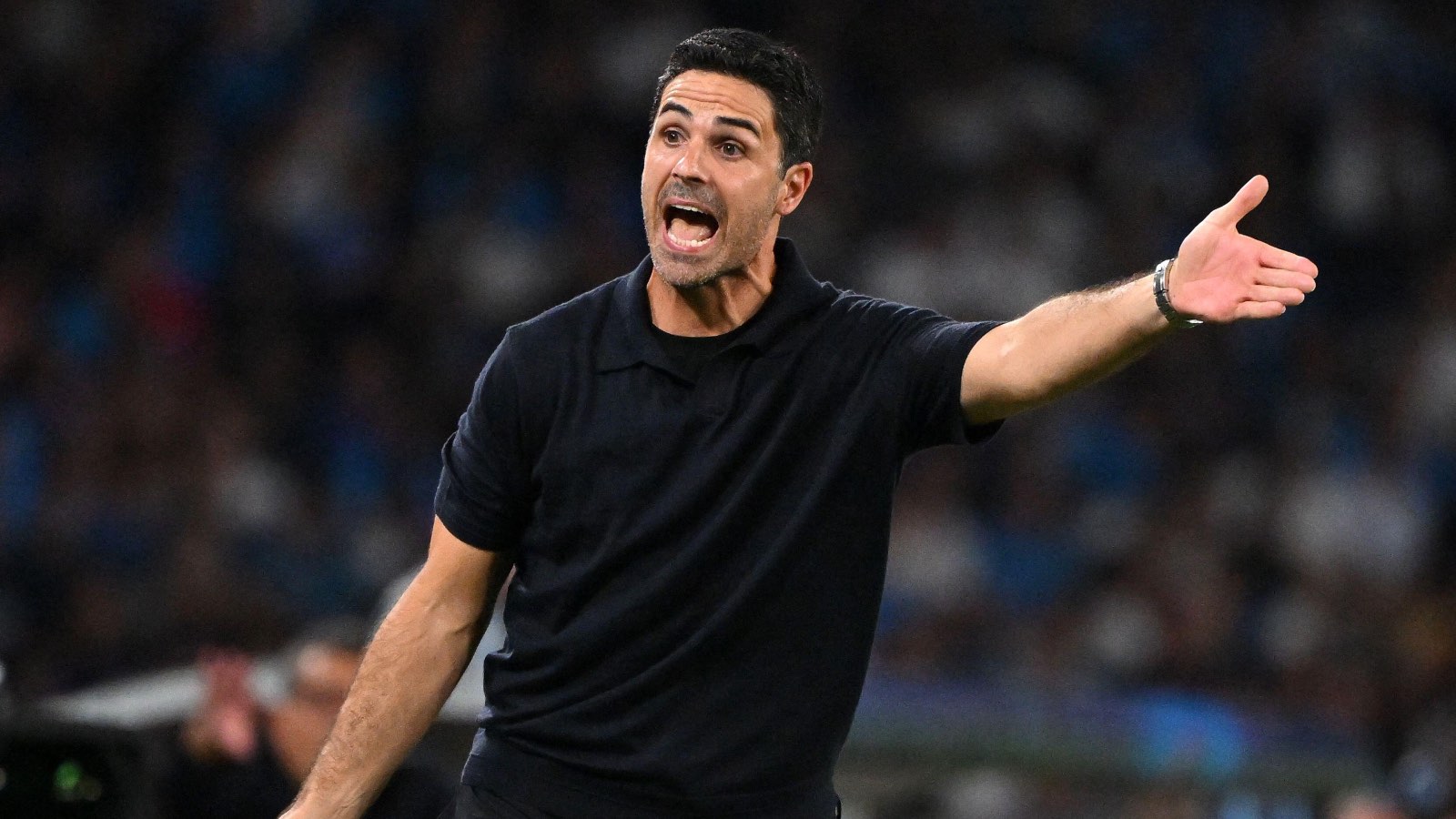
His brief loan spell at Arsenal under Mikel Arteta further highlighted his tactical limitations. Arteta attempted to use Sterling as rotational depth across both flanks, but Sterling could not replicate Gabriel Martinelli's defensive work rate or Bukayo Saka's half-space playmaking. He looked like a player caught between systems, lacking both rhythm and physical burst.
International Legacy and Fading Recall Hopes
It is easy to forget just how vital Sterling once was to the England national team. He earned 82 caps for his country, serving as Gareth Southgate's primary transitional threat during Euro 2020. His sharp runs behind opposition lines were England's main weapon throughout that tournament run to the final.
However, Sterling's international career halted abruptly after the 2022 World Cup in Qatar. That tournament marked his final cap for England as younger, more dynamic wingers pushed past him in the national squad hierarchy. Without regular club minutes, his chances of an international recall completely evaporated.
At 31 years old, most elite wingers are adapting their movement to compensate for slight physical drops. Players learn to operate as inverted playmakers or secondary strikers to preserve their tactical value. Sterling, however, has failed to evolve his game beyond his traditional isolated wide role.
When a winger loses half a yard of pace without adding elite vision or central distribution, their utility shrinks rapidly. Teams in top leagues hesitate to invest in wide attackers who cannot unbalance low blocks. Sterling's tactical stagnation on the pitch mirrored his growing instability off it.
Winning four Premier League titles with Manchester City puts Sterling in rare company among modern English players. Yet history remembers how careers end just as much as how they peaked. His legacy now carries the stain of this conviction alongside his trophy count.
What Lies Ahead: Legal Consequences and Career Outlook
With his guilty plea registered in Basingstoke, Sterling now awaits formal sentencing from the court. A dangerous driving conviction alongside drug possession carries strict penalties, including mandatory driving bans and potential community service or fines. As Hampshire Police confirmed, the legal resolution will dictate whether any club considers offering him a playing contract.
From a football perspective, finding a high-level club willing to take a chance on Sterling appears increasingly unlikely. Modern recruitment models rely heavily on physical metrics, pressing efficiency, and off-field discipline. Sterling currently checks none of those boxes for ambitious European clubs.
Any club evaluating Sterling must weigh his vast experience against two years of minimal match sharpness and serious legal baggage. Lower-tier leagues or overseas destinations might offer a lifeline, but even those moves require total dedication. Right now, Sterling must focus on resolving his personal affairs before thinking about boot laces.
Critical evaluation of his recent years reveals a player who allowed his standards to slip across the board. Professional football at the highest level requires absolute focus and physical conditioning. Crashing a luxury sports car while carrying illegal canisters shows a disturbing lapse in judgment.
My confident prediction is that Sterling's top-level European career ends right here. Following his court sentencing in Hampshire, no elite club will take the financial or reputational risk on an out-of-form 31-year-old winger. He may eventually find minutes in minor leagues, but his days in the Premier League and England squad are permanently finished.
Read Next
- Xabi Alonso Is Overthinking Chelsea and Hull City Just Proved It
- Why Arsenal's perfect start hides genuine warning signs ahead of Ipswich
- Mikel Arteta is adopting Sir Alex Ferguson's playbook at Arsenal
- Roberto De Zerbi's Tottenham goal drought faces ultimate test at Anfield
- ⚽ Eredivisie 2025-26 — PSV, Ajax, Feyenoord Title Race Hub