
Sixty years on, England’s 1966 icons expose the soul lost in modern football
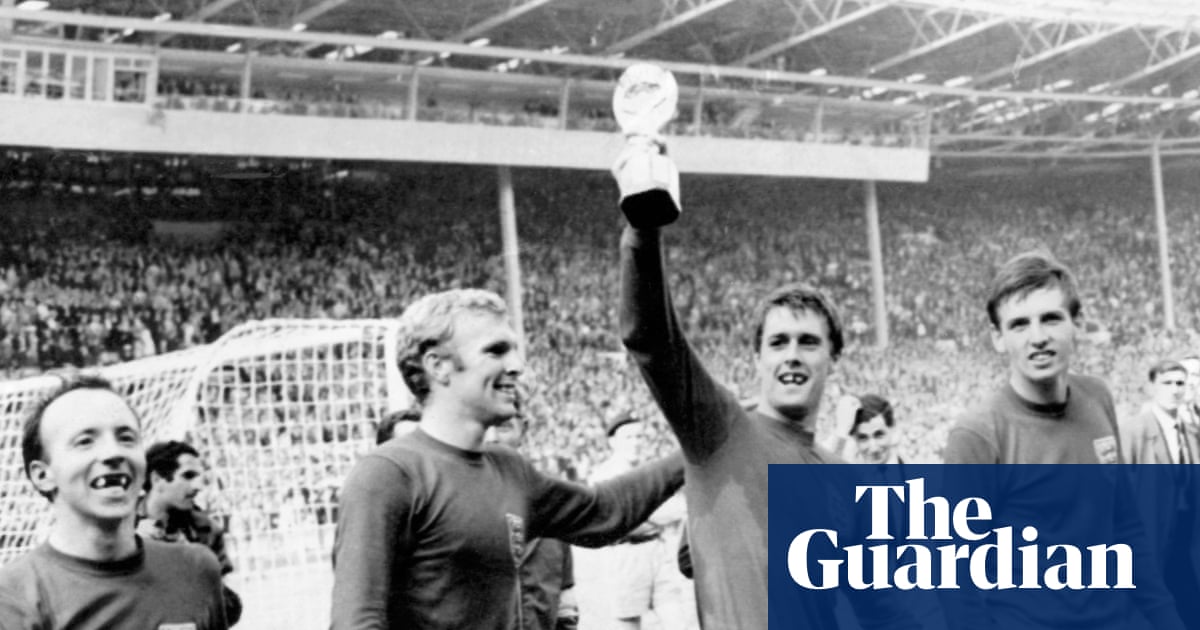
The wage slip that built a World Cup
Sixty years ago today, Alf Ramsey's England hoisted the Jules Rimet trophy at Wembley. It remains the singular high-water mark of English football, an achievement etched into the national psyche. Yet the distance between 1966 and 2026 isn't measured merely by six decades of international heartbreak or tactical evolution from the 4-4-2 wingless wonders to modern positional play.
The true gulf lies in the fundamental relationship between the players and the people who watched them. After Geoff Hurst struck his hat-trick and Bobby Moore climbed the Wembley steps, there were no mega-yachts waiting in Ibiza or algorithmic branding strategies. The men who won the world's ultimate prize returned to a reality where elite sport was barely separated from ordinary life.
To understand the 'Boys of 66' is to look at a generation of footballers who operated in a world completely unrecognizable to today's Premier League elite. Many of Ramsey's squad relied on after-dinner speaking engagements and appearances at working men’s clubs just to supplement their income once their playing days wound down. They were world champions, yet their financial trajectory mirrored that of the tradesmen, miners, and clerks who filled the terraces.
The myth of modern accessibility
Today’s elite game sells an illusion of intimacy through polished social media feeds, curated backstage vlogs, and pre-approved post-match soundbites. We see more content than ever, yet we know less about the actual individuals than fans did six decades ago. Modern stars exist behind velvet ropes, managed by PR teams designed to neutralize personality and protect commercial assets.
In 1966, accessibility wasn't a corporate campaign strategy—it was simply life. England's champions lived in standard terraced housing on ordinary residential streets. They drank in the local pub, took the same buses to training, and interacted with supporters without a security detail forming a human wall. That grounding reflected directly in how they played: with an unvarnished, humble intensity born out of genuine shared identity with the terrace crowd.
Compare that to the modern elite landscape where an elite teenager signs a six-figure weekly wage before completing a full season of senior football. The economic disparity creates an inevitable social distance. Modern players operate in an insulated sphere, insulated from the economic realities of the fans who spend substantial portions of their income just to secure a seat.
What the commercial machine cost us
It is easy to romanticize the past while ignoring the severe flaws of football's bygone eras. Pitch surfaces resembled bogs by November, medical care was rudimentary at best, and the maximum wage system heavily exploited players for decades before the Bosman ruling and hyper-commercialization swung the pendulum entirely to the opposite extreme.
However, in solving the financial mistreatment of players, football managed to sell its soul to global capital. The humble nature of the 1966 team wasn't an act or a media strategy; it was the natural product of their environment. They played with a pragmatic grit because failure meant returning to ordinary working-class struggles, not retiring to a private compound at age thirty.
As The Guardian noted on the 60th anniversary, the privilege of knowing those players stemmed from their fundamental modesty. They achieved immortal sporting glory without absorbing the self-importance that defines contemporary global icons.
The tactical and human reality
On the pitch, Ramsey's side broke the tactical mold by doing away with traditional wingers, relying instead on relentless pressing, central compactness, and engine-room stamina from Alan Ball and Nobby Stiles. It was a victory built on disciplined work rate rather than individual superstar moments. That tactical cohesion matched their social reality—a collective unit where no individual was placed above the team structure.
Modern tactical systems under managers like Pep Guardiola demand similar spatial discipline, but the human context has radically shifted. Today's system-player is an optimized asset executing micro-instructions in hyper-analyzed spaces. The 1966 team executed Ramsey's plan with a raw, pragmatic instinct honed on uneven turf and shared struggle.
When we look back at the images of Bobby Moore carried on his teammates' shoulders, we aren't just looking at a victory photo. We are looking at a snapshot of a lost culture. The working men’s club circuits and humble post-career side hustles were not tragic footnotes—they were evidence of a time when world champions still walked among us as peers rather than distant celebrities.
A gap that will never close
English football will continue to chase that elusive second World Cup trophy, pouring hundreds of millions into academy infrastructures, sports science, and elite analytics. The tactics will grow sharper, the players faster, and the commercial revenues larger.
Yet no matter who eventually lifts the trophy for England in the modern era, the nature of the celebration will never mirror July 30, 1966. The disconnect between elite athletes and the public is now a permanent structural feature of the global game. We have gained unmatched athletic excellence and tactical sophistication, but in the trade-off, we permanently surrendered the unpretentious warmth that made the Boys of '66 truly immortal.
Read Next
- Why Mikel Arteta's tactical shift makes Arsenal title favorites over City
- Why Michael Cox’s 'The Mixer' Might Actually Make You Smarter About Tactics
- Newcastle's trip to Bristol City is more than a pre-season tune-up
- Chelsea's transfer strategy pivot is either genius or pure panic
- 🏴 England World Cup 2026 — Three Lions Hub
The Club: How the English Premier League Became the Wildest, Richest, Most Disruptive Force in Sports
The definitive inside story of the Premier League's global takeover.
Frequently Asked Questions
How did the financial status of the 1966 England team compare to fans?
Why does the author feel modern football lacks the soul of 1966?
What is the difference between player accessibility then and now?
What were the disadvantages of football in the 1960s?
How has the economic rise of players impacted their relationship with fans?
More Coverage

Liverpool and Manchester United are walking straight into a Sunday trap
3 hours ago
Hiring an absolute lunatic is the only move Manchester United have left
11 hours ago
Liverpool's January transfer scramble is all about fixing summer mistakes
15 hours ago
Conte and Hurzeler linked as Carrick nears the brink at Man United
15 hours ago
Bukayo Saka ruled out for up to eight weeks with torn quad
15 hours ago
October 24 has a bizarre habit of destroying football giants
19 hours agoMore Analysis
October 24 has a bizarre habit of destroying football giants
19 hours ago
Arteta must finally change his system to get the best out of Gyokeres
1 day, 15 hours ago
Michael Carrick will not survive until Manchester United host Roma
2 days, 6 hours ago
Why Watford only needed two English players to beat the EFL quota
3 days, 8 hours ago
Liverpool look thrilling under Iraola, but their defense is a massive worry
3 days, 10 hours ago