The Tactical Evolution
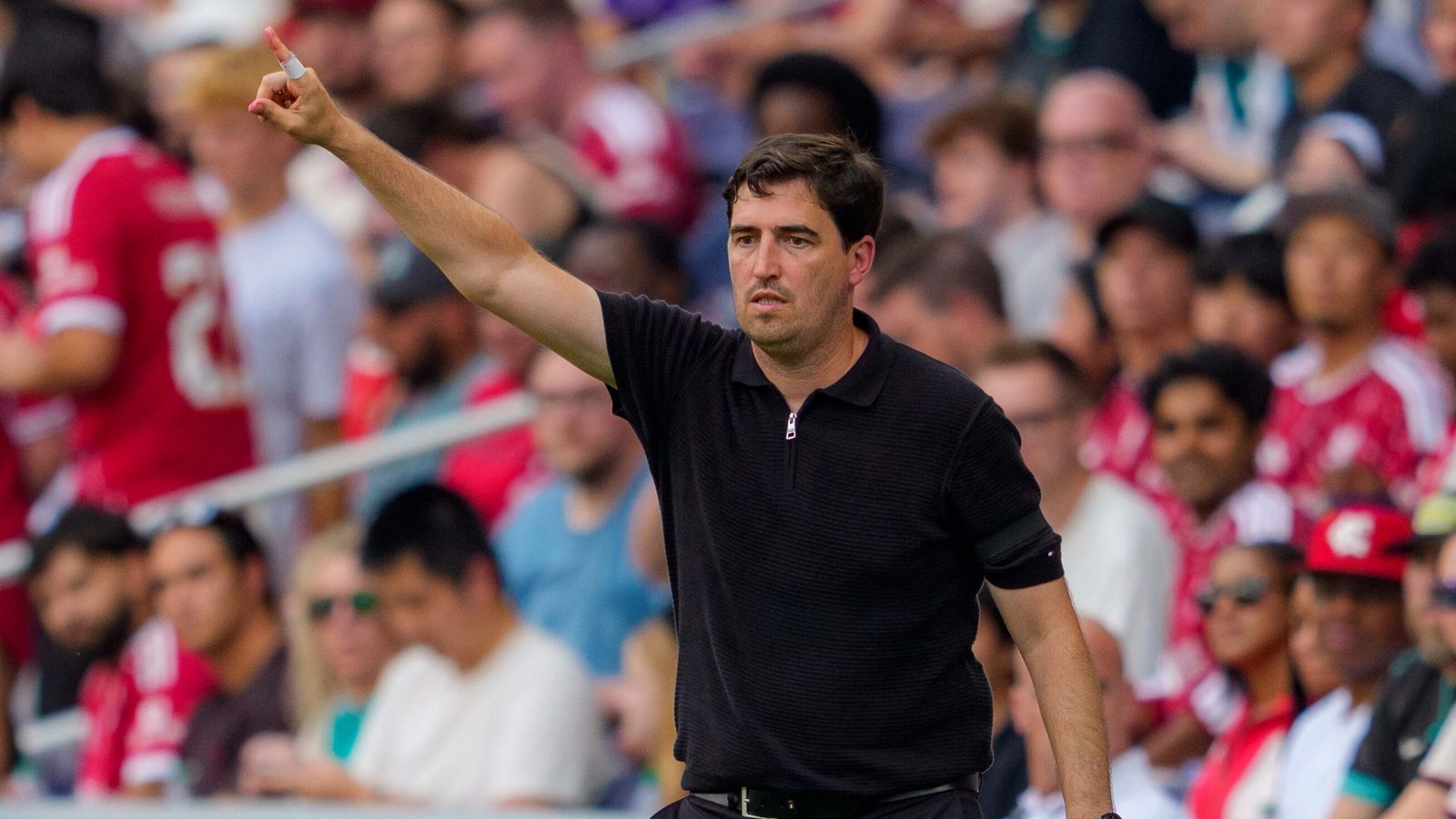
Andoni Iraola’s arrival at the top level of English football signaled a departure from stagnant possession-based play. His methods prioritize high-octane pressure and verticality that forces opponents into errors immediately.
As reported by Sky Sports, the transition from his tenure at Bournemouth to managing elite talent has been defined by specific tactical markers. Here are the ten defining aspects of his current approach.
1. The High-Press Trigger
Iraola’s central tenet is the aggressive press applied the moment the ball is lost. He forces opponents into panicked clearances by bunching attacking midfielders in the half-spaces.
This ranks first because it is the non-negotiable foundation of his defensive work. Without this constant pressure, his backline would be far too exposed to long balls.
2. Vertically Inclined Transitions
Unlike managers who circulate the ball to kill time, Iraola demands immediate forward runs. Once possession is regained, the primary instruction is to isolate wingers against retreating fullbacks.
This approach moves him above peers who rely on slow build-up play. It is inherently riskier, yet it generates high-quality chances per possession.
3. Integration of Youth Talent
Iraola’s debut at Liverpool showed a willingness to gamble on academy graduates over expensive veterans. He views the training ground as an extension of the matchday squad.
Seeing young players execute his intricate pressing patterns suggests he doesn't value reputation over tactical discipline. This makes him a favorite among front offices.
4. Rigid Fullback Recovery
Iraola mandates that his wide defenders remain deep enough to form a back three during sustained attacks. This prevents the classic counter-attacking trap that catches out managers who push both fullbacks too high.
It’s the most disciplined element of his system, balancing his desire for offense with necessary caution. It prevents the team from being stretched too thin.
5. The Half-Space Overload
By crowding the central channels, Iraola forces opposing midfields to collapse inward. This creates space on the flanks for overlapping runs or early crosses.
He ranks here because this is the most aesthetically pleasing part of his game model. Defenses struggle to track both the central runners and the drifting wingers simultaneously.
6. Mid-Match Adjustments
Iraola is rarely content with his starting setup if the opponent manages to find a rhythm. He frequently tweaks his holding midfielder's positioning to account for opposing pivots.
Flexibility is his greatest trait when a plan fails. He doesn't hold onto a failing system out of ego.
7. Defensive Personnel Reliance
His insistence on specific ball-playing center-halves remains a point of contention. As noted in recent analysis, failing to secure a marquee defender forces him into sub-optimal pairings.
This is his primary flaw, as the system relies on individual speed in recovery. If his defenders lack pace, his high line becomes a liability.
8. Set-Piece Aggression
Under Iraola, every dead-ball situation is an attacking opportunity. He utilizes a series of rapid, interweaving runs inside the box to confuse zone-marking schemes.
It’s a secondary weapon that separates him from managers who view set-pieces as mere resets. He treats them like game-winning plays.
9. GK Ball Distribution
The goalkeeper is the starting point of every attack in his scheme. He demands his keeper act as a sweeper-distributor to bypass the first line of an opposing press.
High-risk, high-reward, it occasionally leads to errors under pressure. However, it is essential for breaking down low-block defenses.
10. Fatigue Management
Iraola’s system demands extreme physical output from his players throughout the 90 minutes. By the final quarter of the match, he frequently empties the bench to keep the intensity levels unsustainable for the opposition.
He rounds out the list for his understanding of human physiology. He knows the system breaks if the engine stops running for even one period.
The Big Picture
Iraola has successfully mapped a blueprint for high-intensity football that demands constant cognitive engagement from his squad. While his reliance on specific defensive profiles leaves him vulnerable, the chaotic production of his offense suggests the trade-off is worth the risk.
Honorable Mentions
His commitment to pre-match scouting remains elite, often identifying the exact player who will crumble under a man-marking assignment. Similarly, his refusal to settle for a draw—even against superior opponents—has solidified his reputation as one of the most proactive coaches in the league.