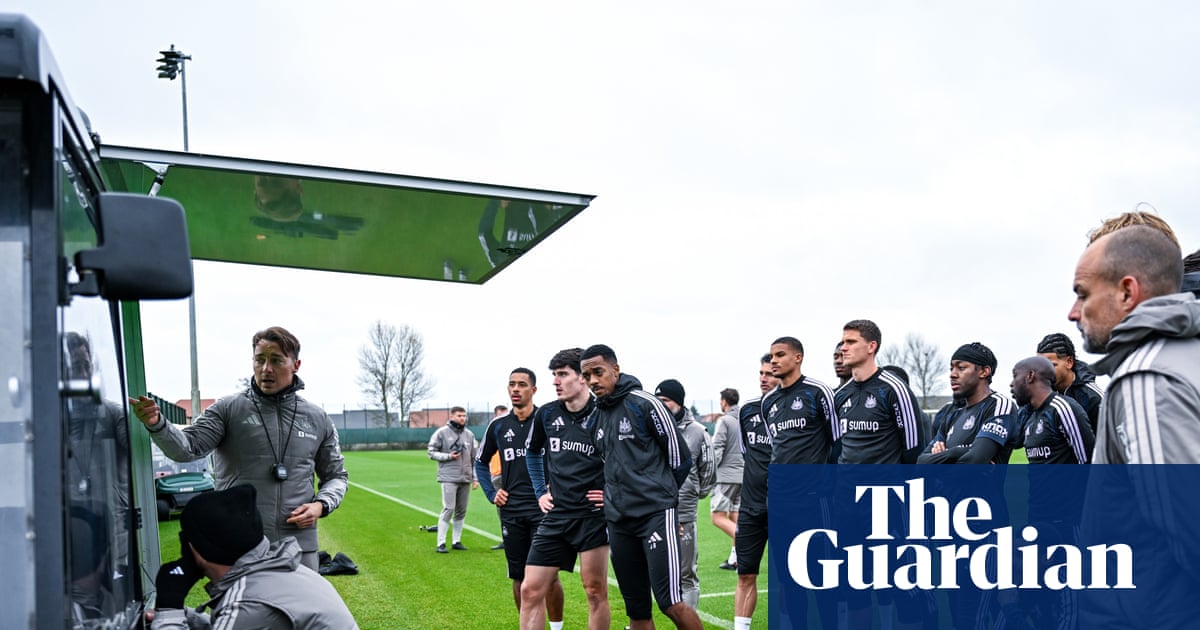
The 14-Match Bleed at St James' Park
Newcastle United have now gone 14 home league matches without keeping a single clean sheet. That miserable sequence stretches back into the previous campaign, establishing an unwanted club record. It is the defining metric of a side whose defensive structure has completely evaporated.
The league standings offer zero comfort. Matthias Jaissle’s side sit 13th in the Premier League table with just 11 points from their opening fixtures. Four defeats across their last five matches in all competitions have turned every matchday into an exercise in high anxiety.
Only months ago, Newcastle supporters were traveling to Barcelona, Paris, and Marseille for glamorous Champions League fixtures. On Saturday, they head to Craven Cottage to face Fulham in a match that many supporters openly treat as a relegation dogfight.
That panic might sound hysterical from the outside for a side in 13th place. Watch the matches, however, and the dread makes absolute tactical sense. Newcastle repeatedly surrender transition opportunities and generate almost nothing in sustained territorial dominance.
The decline started during Eddie Howe’s final season, which sputtered out into a 12th-place finish. Without European revenue to cushion the financial blow, the club has dropped rapidly down the domestic pecking order. As The Guardian reported, Newcastle now travel to west London like a business-class traveler suddenly shoved into a cramped economy seat.
Dogma Meets Reality: The Breakdown of 4-2-3-1
Newcastle paid Al-Ahli a £9.5m release fee to bring Jaissle to Tyneside after Howe resigned three weeks before the season. The 38-year-old tactician arrived with genuine prestige, having won two Asian Champions League crowns with an intense, vertical pressing system. Making that system work in the Premier League, though, has been an entirely different matter.
Jaissle remains stubbornly committed to a 4-2-3-1 formation. Yet his squad possesses neither a natural No 10 to connect the lines nor the dynamic mobility required in a double pivot. When the two holding midfielders get pulled out wide, massive central pockets appear that opponents exploit without resistance.
Without press resistance in central areas, verticality rapidly degenerates into desperation. The midfield gets bypassed rather than utilized. Defenders under pressure stop looking for ground passes and simply hoist hopeful balls into the sky.
The Everton Breakdown and Central Vacuums
That structural flaw was brutally exposed during Monday’s 1-0 home defeat against Everton. Jaissle instructed his players to slice through Everton's defensive block with rapid ground passes. Under pressure, his players panicked and launched aimless long balls instead.
“It was not the plan and that is something you need to clearly mention.”
Jaissle voiced his fury at the media afterwards, criticising his team for abandoning the playbook. But blaming execution misses the broader tactical fault line. If players consistently abandon a manager's instructions, the framework itself is usually detached from their capabilities.
Newcastle have historically looked most dangerous when defending deep and striking on the counter. Jaissle’s aggressive positional scheme forces them high up the pitch, leaving vast spaces behind their backline. Forwards end up isolated, the midfield gets overrun, and opposing teams break through the middle with minimal resistance.
The Balance Sheet Vacuum: £262.9m on Untested Potential
Jaissle inherited a squad hollowed out by financial necessity. As detailed in The Guardian's analysis, Newcastle’s commercial revenues simply cannot keep pace with their domestic ambitions under spending regulations. Sporting director Ross Wilson solved that problem by sanctioning the departures of their three finest players: Anthony Gordon, Sandro Tonali, and Bruno Guimarães.
Ripping out the team's entire creative core in a single summer left an impossible void. That came on the heels of Alexander Isak forcing a £125m switch to Liverpool last year after going on strike. Newcastle lost their most reliable outlets and replaced them with raw hope.
From Howe's Outlays to Wilson's Youth Speculation
This talent deficit traces back to previous mismanagement. Howe routinely hoarded senior talent rather than cashing in when player values peaked. When Isak was finally sold, Howe and his nephew Andy Howe spent that money on an underwhelming haul.
The previous regime sank roughly £225m into Nick Woltemade, Yoane Wissa, Anthony Elanga, and Jacob Ramsey. Not one member of that quartet has emerged as a consistent Premier League game-changer. That legacy left Wilson scrambling to rebuild an aging, lopsided squad on a restricted budget.
Wilson’s response was a radical youth pivot that completely transformed the squad profile. Newcastle spent £262.9m in the summer window on eight players, every single one of them aged 24 or under. The Saudi ownership wanted high-ceiling prospects with resale value, prioritizing theoretical upside over immediate Premier League readiness.
The price tags on those raw recruits were staggering. Wilson committed £51m for Lille forward Matias Fernandez-Pardo, £42m for Hoffenheim winger Bazoumana Touré, and £30m for Monaco midfielder Aladji Bamba. None of them had established any track record in England.
The Experience Deficit and the Cost of Transition
Here lies the fundamental disconnect in Newcastle’s current squad construction. Of the eight players signed in that £262.9m spending spree, only Nico González had ever played Premier League football. Expecting seven unproven young players to adapt instantly while learning a complex tactical system is managerial suicide.
Worse still, only three of those eight signings are regular starters. Only Amar Dedic, González, and goalkeeper Lukas Hornicek have secured consistent spots in Jaissle’s preferred lineup. That leaves over £140m worth of summer talent sitting on the bench or struggling to make matchday squads, offering zero immediate return on investment.
Consider the case of Sean Steur, the gifted 18-year-old midfielder signed from Ajax. Steur possesses the technical vision Newcastle’s midfield desperately lacks, but Jaissle refuses to play him regularly out of fear of physical overload. It is a striking contradiction: the team cannot execute basic possession patterns, yet their best technician is bubble-wrapped on the bench.
Noise, Pressure, and the Fulham Reality Check
When tactical systems malfunction, strange distractions inevitably follow. Dedic made headlines this week after an armed response unit was called to the Northumberland countryside when he was spotted practicing archery. While police accepted the bow and arrow were strictly recreational, the surreal incident captured the chaotic atmosphere currently engulfing St James' Park.
“There’s a lot of storm at the moment.”
Jaissle managed a wry smile when discussing the mounting pressure on Thursday. Chief executive David Hopkinson previously hailed the German as “fire” and a “rock star,” and the board continues to back their man publicly. But executive loyalty wears thin quickly when results crater.
Jaissle insisted his squad held extra shooting practice this week, showing that the dressing room still believes in the long-term vision. That enthusiasm will mean nothing if Newcastle fail to compete physically at Craven Cottage. Modern football does not afford managers infinite patience while they iron out foundational tactical flaws.
Newcastle have traded proven match-winners for speculative balance-sheet potential. When a manager then marries that raw squad to an unforgiving tactical ideology, disaster is the logical outcome. Unless Jaissle abandons his dogmatic approach and adapts to the players at his disposal, this project will slide into a full-scale crisis.