
Arsène Wenger and Gianni Infantino are dismantling football from the top down

The downfall of The Professor
Arsène Wenger used to be the intellectual conscience of modern football. When he arrived at Highbury in 1996, he brought dietary science, passing lines, and strict positional discipline to a division built on long balls and pub culture. Thirty years later, the man once dubbed 'The Professor' is acting as the chief technocrat for FIFA President Gianni Infantino, lending his intellectual authority to bureaucratic overreach and commercial experiments.
Speaking in February on the tenth anniversary of Infantino's accession as FIFA president, Wenger paid tribute to his boss for a 'huge improvement' in world football. It was a bizarre statement from someone who once guarded the integrity of the game so fiercely. Instead of challenging FIFA's expanding calendar and commercial vanity projects, Wenger has transformed into the primary spokesman for the governing body's most controversial maneuvers.
When a figure with Wenger's credibility serves as a shield for corporate restructuring, it alters how governance proposals are parsed by the public. For years, fans assumed Wenger's presence in Zurich meant a football-first mind was checking Infantino's worst impulses. Today, it is increasingly clear that Wenger is either fully aligned with Infantino's commercial roadmap or actively designing the technical rationales behind it.
Private equity and the World Cup share gamble
The push to sell off equity stakes in the World Cup exposed the deep rift between FIFA's executive floor and football's global fanbase. Infantino's plan to offload commercial rights to private equity aimed to generate short-term capital at the cost of long-term operational autonomy. Selling off slices of the game's flagship tournament isn't tactical evolution; it's asset stripping disguised as global development.
Public pushback eventually forced FIFA to pivot and withdraw the proposal after weeks of sustained pressure from supporter groups and national associations. Even prominent commentators who previously defended Zurich's commercial posture were forced into public reversals. Broadcaster Piers Morgan openly admitted
"I was wrong"regarding Infantino's directional stewardship of the international game after the financial blueprint was leaked.
The retreat on World Cup equity sales demonstrates that fan resistance can still stall corporate capture, but the appetite for monetization remains unchanged inside FIFA headquarters. FIFA was forced to retreat, as Daily Mail reported in their scathing assessment of Zurich's inner circle, yet the underlying urge to sell structural control to equity funds persists.
Technocratic cover for commercial expansion
Infantino’s decade at the helm of FIFA has consistently prioritized revenue generation over player welfare or fixture congestion. From expanding the World Cup field to redesigning the Club World Cup into a bloated summer spectacle, every structural change is packaged as democratization. Wenger provides the tactical and technical jargon to justify these decisions, framing schedule expansion as essential for developing nations.
Yet, the reality on the pitch tells a very different story. Players are logging unprecedented minutes across domestic, continental, and international fixtures, leading to visible dips in pressing intensity and late-game execution. Wenger’s failure to call out this physical overload strains his legacy far more than his final, difficult seasons in north London ever did. A coach who once monitored pitch dimensions down to the millimeter now overlooks systemic player exhaustion to support Infantino's expansionist agenda.
The criticism directed at Wenger isn't rooted in nostalgia for his 2004 Invincibles; it's a reaction to watching a football pioneer become an administrative proxy. When Infantino floated private equity investment into international competition, Wenger didn't push back publicly or offer a counter-analysis grounded in player workload. He stayed silent, cementing his status inside Zurich's political apparatus.
The cost of silence at the top
Football does not lack corporate strategists, but it severely lacks independent technical authority at the executive level. Wenger had the stature, intellect, and financial independence to serve as a guardrail against Infantino’s most aggressive commercial schemes. By choosing compliance over critique, he has traded his reputation as a visionary manager for a seat at FIFA's table.
The withdrawal of the equity sale proposal shows that fan groups, journalists, and national bodies can hold governance accountable when motives are laid bare. As Mirror Football highlighted during the fallout, even media figures who initially backed Infantino's administration are recognizing the structural risks posed by Zurich's financial appetite. The fight over who owns the World Cup is far from over.
Infantino will undoubtedly present another monetization model under a different title in the near future. When he does, Wenger will likely be standing next to him, ready to explain why a 48-team, equity-backed tournament structure is actually beneficial for youth development. The Professor spent two decades teaching us how football should be played; it is a tragedy to watch him spend his remaining years showing us how it can be sold.
Gildan Men's Soccer Fan Scarf - Double Layer Knit
The essential accessory for stadium presence and match-day aesthetic.
Frequently Asked Questions
What is Arsène Wenger's current role within FIFA?
Why has Wenger's relationship with FIFA caused controversy?
What was FIFA's plan regarding World Cup commercial rights?
How has FIFA changed the structure of international tournaments?
What impact does fan pressure have on FIFA's decision-making?
More Coverage

Ex-Spurs defender Ramon Vega launches long-shot bid for FIFA presidency
2 weeks, 3 days ago
Top 10: World Football's Biggest Storylines, Scandals, and Shocks of 2026
2 weeks, 4 days ago
Why Man City fans are fighting the entire internet after their guilty verdict
2 weeks, 4 days ago
When even the Swiss abandon you, your FIFA presidency is officially cooked
2 weeks, 6 days ago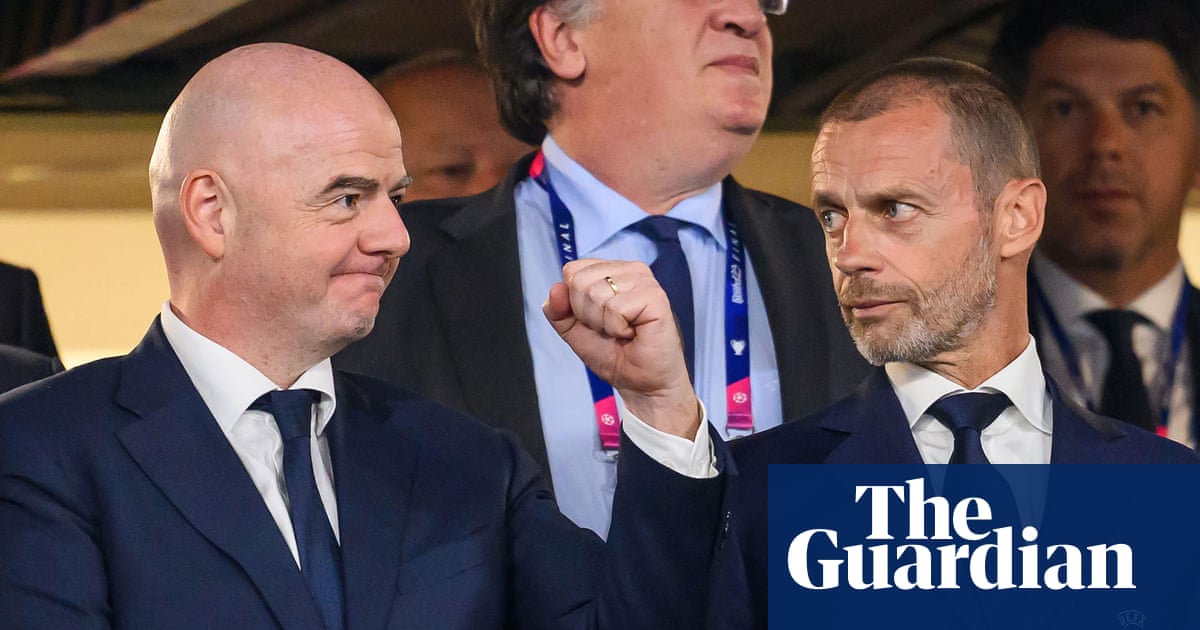
Aleksander Ceferin is right about Infantino, but UEFA has no plan B
3 weeks, 4 days ago
Premier League's £1.8B EFL peace deal is pure survival panic
1 month agoMore Analysis
Ex-Spurs defender Ramon Vega launches long-shot bid for FIFA presidency
2 weeks, 3 days ago
Top 10: World Football's Biggest Storylines, Scandals, and Shocks of 2026
2 weeks, 4 days ago
Why Man City fans are fighting the entire internet after their guilty verdict
2 weeks, 4 days ago
When even the Swiss abandon you, your FIFA presidency is officially cooked
2 weeks, 6 days ago
Aleksander Ceferin is right about Infantino, but UEFA has no plan B
3 weeks, 4 days ago