Rebuilding from the ashes of BOS Nation
When the Boston Breakers suddenly folded after the 2017 season, local women's soccer fans were left without a home. The Breakers had been a staple of the original eight-team NWSL and three precursor leagues, leaving a massive void across New England when they vanished. That long stretch of silence finally ended when the NWSL announced Boston as an expansion city in September 2023 for the 2026 campaign.
Organized supporters did not wait for roster announcements before building their foundation. The Boston Independent Supporters’ Association formed almost immediately after the league's expansion announcement, bringing together local fans to establish a grassroots culture long before kickoff.
That early organization faced an immediate test in October 2024 when the ownership group unveiled its initial branding. The front office launched the franchise under the name BOS Nation FC, accompanied by an embarrassing marketing campaign centered on the slogan "Too Many Balls." The disastrous rollout sparked instant public backlash across the soccer world.
Instead of walking away, the supporters stepped in to salvage the club's identity. As reported by The Guardian, ISA members forced their way into focus groups with team executives, providing direct feedback on why the branding failed and how to rebuild community trust.
That pressure campaign forced management back to the drawing board. Ownership scrapped the initial concept, renaming the franchise Boston Legacy FC and adopting a black and green swan logo. Jammy Torres Millet, who served as the team liaison for the ISA from September 2024 until June 2026, noted that giving fans input created genuine buy-in from day zero.
The ISA structured itself with a formal board of directors and committee roles to handle everything from long-term strategy to managing spreadsheets. Membership chair Anna Esten pointed out that financial independence from the front office gives the group real authority. Because supporters fund their own operations, they can push management on fan needs while keeping their voice authentic.
March 14 and the birth of swan noise
More than two years of preparation culminated on March 14, 2026, when the Legacy played their inaugural NWSL match. Supporters marched into Gillette Stadium in Foxborough behind a marching band from Boston Public Schools, holding "Up the Swans" scarves high above their heads.
Inside the nearly 65,000-seat venue, a crowd of more than 30,000 spectators watched the ISA unfurl a massive display in the supporters' section behind the north goal. The tifo depicted a flying swan wearing a black and green scarf, emblazoned with the message "Our Legacy Takes Flight."
For diehards who spent nearly a decade waiting for a team, seeing players take the pitch released years of pent-up emotion. ISA member Paige Wetzel described the transformation on opening day when years of abstract planning turned into real matchday noise.
“We’d all been building up to this point, and then the players are coming on to the field, and the tifo is up, and it all just starts. After all of the years of planning and not having a team that we had even laid eyes on yet, we actually watched them play.”
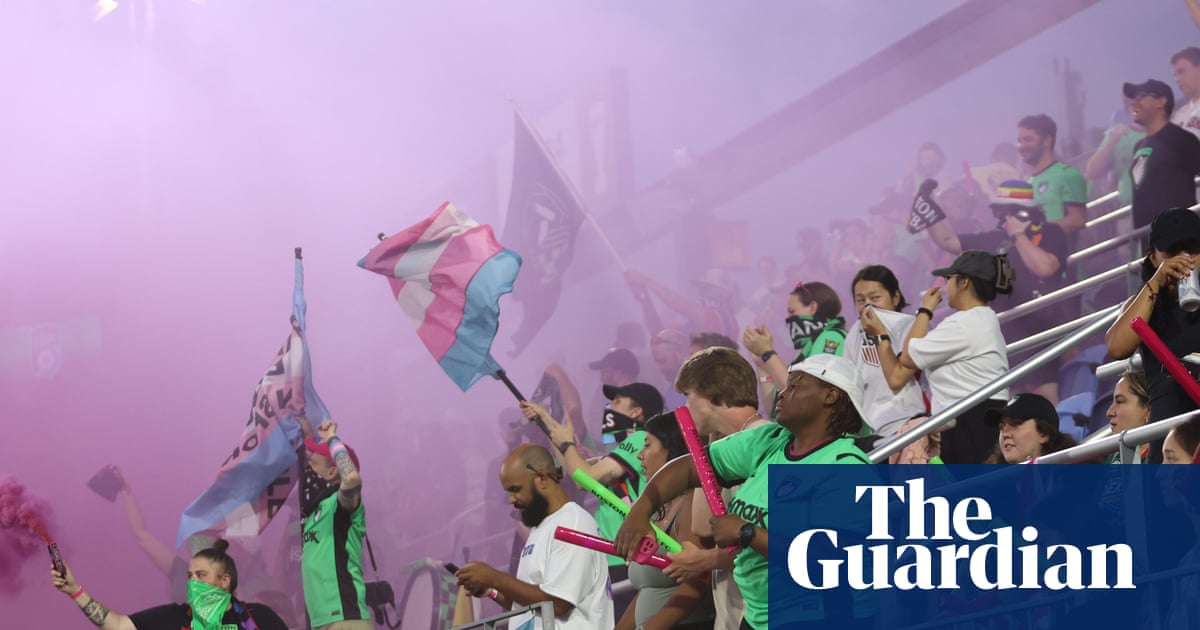
That opening match established the atmosphere that the ISA has brought to every fixture this season. The supporters maintain a continuous wall of noise, using drums, flags, and customized chants tailored to individual roster members.
When goalkeeper Casey Murphy fires goal kicks out of her penalty box, the crowd belts out "Dropkick Murphy," referencing the local punk band that performs "I'm Shipping Up to Boston." The section also flies flags representing the home countries of international players to make newcomers feel at home.
Then there is the honking. Leaders raise megaphones to yell, "If you're not honking, you're not Boston," initiating a rapidly accelerating chorus of human swan noises across the stands. It is loud, bizarre, and intentionally irritating to visiting squads.
Skeptics on Reddit and rival message boards complain that the waterfowl gimmicks are cringey. Visiting fans frequently argue that listening to hundreds of supporters aggressively quacking on match broadcasts makes viewing unbearable.
That criticism completely misses how home pitch advantage works. Building an obnoxious, hostile environment is how an expansion fan base carves out a distinct identity in a crowded Boston sports market.
Tactical reality: 6-12-5, yellow cards, and Dropkick Murphy
While the supporters' section delivers energy every weekend, the team's on-field performance has provided plenty of harsh reality. Expansion clubs routinely face steep learning curves, but Boston Legacy FC endured a particularly brutal start to their debut season.
The squad featured many players new to the NWSL who had limited time to train together before competition began. As a result, Boston opened the season with an 0-5 record, finally managed a draw in their sixth match, and did not earn their first victory until match seven.
As detailed in recent coverage, the Legacy sit third-to-last in the NWSL standings with a record of 6-12-5. Defensive miscommunication and frequent midfield turnovers continue to hinder their tactical growth.
Rather than adopting a timid defensive posture, Boston embraced raw physical disruption. The Legacy currently lead the entire NWSL in yellow cards, using hard fouls and aggressive tackling to disrupt opposing ball movement.
That uncompromising style reflects the aggressive nature of their swan mascot and the city's sports identity. Roster members have made zero apologies for their high foul count, choosing to embrace their role as the league's villain.
Following a match in March, Casey Murphy made the squad's intentions clear to reporters. She stated that regardless of whether Boston wins or loses, the team wants visiting opponents to hate playing against them.
Defender Bianca St-Georges reinforced that mindset when questioned about the team's discipline in May. She insisted that committing fouls is simply who they are and declared that the team is not scared of anyone.
Pundits argue that relying on physical intimidation is a temporary band-aid for deeper structural issues. Accumulating yellow cards risks key suspensions and gives away dangerous set pieces to superior attacking sides.
Yet for a brand-new roster still finding its rhythm, physical confrontation remains an effective equalizer. Dragging technically superior teams into grinding battles gives Boston a puncher's chance every week.
The interstate commute and building real community
Following Boston Legacy FC requires significant travel commitments from its core fanbase. With White Stadium in Boston under construction until 2028, the franchise is forced to operate without a permanent local venue.
The club splits its home matches between Gillette Stadium in Foxborough, Massachusetts, and Centreville Bank Stadium in Pawtucket, Rhode Island. Asking fans to travel across state lines for home fixtures places a heavy burden on supporters.
Critics on local sports radio point out that driving ninety minutes south to Pawtucket hurts attendance among casual city residents. The back-and-forth venue split complicates media coverage and weakens the team's urban footprint.
The ISA has countered these geographic challenges through grassroots coordination. Members organize carpools, charter buses for away trips, and host watch parties at local breweries when the squad travels out of state.
Beyond matchday logistics, the supporters have prioritized building a welcoming environment that differs from traditional men's sports culture. Anna Esten noted that while men's sports environments often gatekeep casual spectators, the ISA welcomes anyone who wants to cheer for the Legacy.
That commitment extends directly into social advocacy work. Before the Legacy ever kicked a ball, the ISA joined the "Trans People Belong" coalition created by NWSL supporters' groups, ensuring Pride and trans flags wave behind the goal at every match.
Meghann Burke, executive director of the NWSL Players Association, noted that supporter groups play a vital role beyond matchday atmosphere. She emphasized that organized fans stand at the intersection of player rights and labor rights, pushing the sport toward greater fairness and accountability.
“They do more than show up on match day; they do even more than create the environment that sets soccer fandom apart, with chants, drums, tifos and smoke. They give the game its sense of belonging and turn it into something people feel and carry with them.”
When White Stadium finally opens its doors in 2028, Boston Legacy FC will have a permanent venue to call home. But as their debut season demonstrates, the real soul of this franchise has already been established by the fans drumming, honking, and travelling across New England right now.