
Franco Baresi redefined defending — and modern football will never see another like him
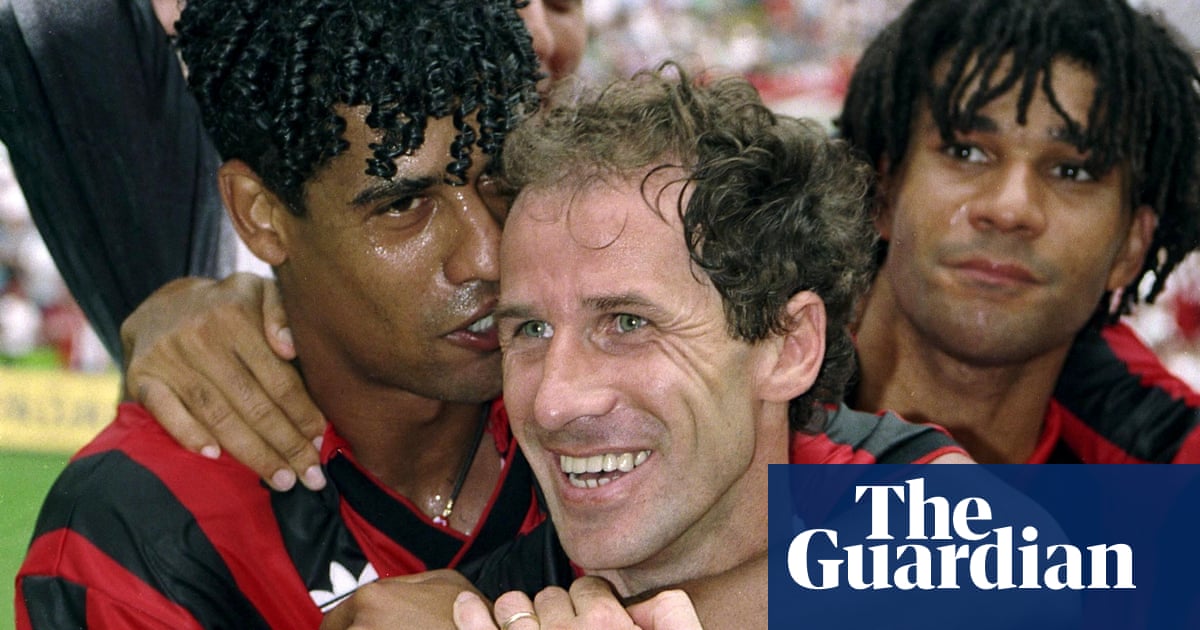
The master of space in an era of pure physical confrontation
Modern defending is obsessed with physical metrics, high lines, and passing out from the back. Yet everything we praise in today's progressive center-backs was pioneered four decades ago by a man who stood just 5ft 9in. Franco Baresi, who passed away at 66 following surgery on a pulmonary nodule, did not just play the sweeper role; he dismantled and rebuilt it entirely.
When Arrigo Sacchi arrived at San Siro in 1987, Italian football was anchored in traditional catenaccio — man-marking, low blocks, and a designated sweeper sitting yards behind the defensive line. Sacchi demanded an aggressive zonal system with a compressed 25-meter block. Baresi was not merely the executor of this system; he was its operational brain. As The Guardian noted, Baresi was the moral and tactical heart of that side, orchestrating the offside trap with a single raised arm that froze opposition attacks in their tracks.
The sheer arithmetic of the Sacchi-Baresi defensive unit remains staggering. Across the entire 1987-88 Serie A campaign, Milan surrendered just 14 goals in 30 league fixtures. Opponents were not defeated by brutal tackles, but by spatial suffocations mapped out in real-time by Baresi’s anticipation.
The 'Piscinin' who stayed loyal through Milan's dark age
Before the trophies and European glory of the late 80s and 90s, there was Serie B. Twice. Rejected by Inter Milan as a youngster in favor of his older brother Beppe, Baresi earned the nickname 'Piscinin' (the little one) upon joining AC Milan. What followed was a masterclass in loyalty that seems completely alien to today's mercenary transfer landscape.
When Milan were relegated to Serie B following the Totonero scandal in 1980, and again on the pitch in 1982, Baresi refused to leave. He took the captain's armband at just 22 years old and anchored the club through its most precarious era before Silvio Berlusconi's takeover altered European football history. By the time he retired in 1997, Baresi had made 719 appearances across 20 seasons, winning six Serie A titles and three European Cups.
Paolo Maldini, who inherited the defensive mantle and played alongside Baresi for over a decade, hailed him as the greatest footballer he ever shared a pitch with. Their partnership remains the gold standard of world football: in 196 matches played together at the heart of Milan's defense, they conceded a mind-boggling total of just 23 goals.
Pasadena 1994: The ultimate demonstration of tactical willpower
If you want to understand Baresi’s genius, look no further than the 1994 World Cup Final in Pasadena. Twenty-five days prior, Baresi had undergone arthroscopic knee surgery after tearing his meniscus against Norway in the group stage. Standard medical recovery called for six weeks minimum. Baresi was back on the pitch in 24 days to face Romário and Bebeto in 100-degree Rose Bowl heat.
Over 120 minutes, a 34-year-old Baresi put on a defensive clinic. He won five aerial duels, made six interceptions, and executed four sliding tackles in open space, repeatedly covering for Gianluca Pagliuca. Italy held Brazil to a 0-0 draw. Cruelly, Baresi blasted his opening penalty over the bar in the shootout, breaking down in tears as Brazil claimed the trophy. It was a brutal outcome, yet that performance remains arguably the greatest individual defensive display in World Cup history.
“The entire history of Milan is in tears,” the club stated following his passing, as reported by The Guardian. Tributes flooded in across the globe, as The Mirror reported, confirming that the game is united in mourning one of its true architects.
The extinct breed of defender
There is a flaw in how modern academies evaluate young center-backs. Physical profile and raw athleticism often take precedence over reading of the game. Baresi would likely be flagged by modern recruiters for his lack of height or top-end recovery sprint speed.
Yet Baresi never needed raw pace because he was already two steps ahead of the forward's thought process. He stepped out of the backline not just to clear, but to start transitions, pioneering the role of the ball-playing libero long before Pep Guardiola brought it into mainstream Premier League discourse. Milan retired his No. 6 shirt upon his departure — a fitting tribute for a player whose vision and elegance will never be replicated.
Men in Blazers Present Encyclopedia Blazertannica: A Suboptimal Guide to World Soccer
The funniest deep-dive into soccer culture you'll ever read.
Frequently Asked Questions
How did Franco Baresi change the sweeper role at AC Milan?
What nickname was Franco Baresi given when he joined AC Milan?
How many goals did AC Milan concede in the 1987-88 Serie A season?
How effective was the defensive partnership of Franco Baresi and Paolo Maldini?
How quickly did Franco Baresi return from knee surgery for the 1994 World Cup Final?
More Coverage

Bournemouth put Milan in a blender and the fan ratings are pure carnage
1 day, 2 hours ago
Arteta must finally change his system to get the best out of Gyokeres
1 day, 15 hours ago
Michael Carrick will not survive until Manchester United host Roma
2 days, 6 hours ago
Goncalo Ramos injury leaves Milan scrambling before Bournemouth
2 days, 9 hours ago
Bournemouth are ready to expose Ruben Amorim's aging AC Milan
2 days, 14 hours ago
Bournemouth are about to test Ruben Amorim's chaotic Milan project
3 days, 1 hour agoMore Analysis
Bournemouth put Milan in a blender and the fan ratings are pure carnage
1 day, 2 hours ago
Arteta must finally change his system to get the best out of Gyokeres
1 day, 15 hours ago
Michael Carrick will not survive until Manchester United host Roma
2 days, 6 hours ago
Goncalo Ramos injury leaves Milan scrambling before Bournemouth
2 days, 9 hours ago
Bournemouth are ready to expose Ruben Amorim's aging AC Milan
2 days, 14 hours ago