The Cafe Handshake That Birthed Replica Kit Culture
Walk into any pub on matchday and you will see supporters wearing synthetic polyester shirts that cost a small fortune. Go back to 1965 and you would see flat caps, woolen coats, and maybe a scarf in team colors. When did supporters stop dressing in everyday clothes and start paying massive sums to look like benchwarmers?
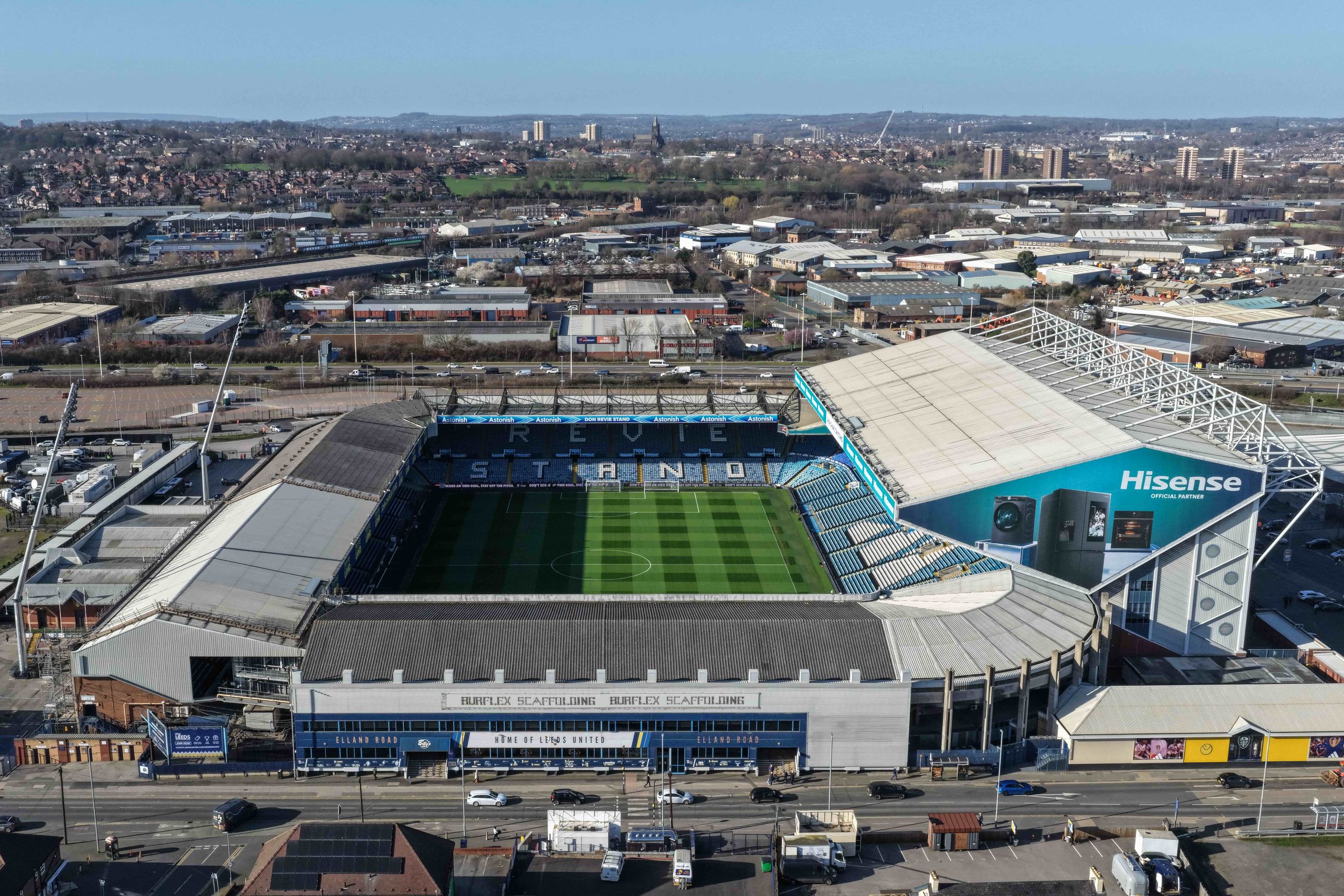
The entire commercial kit industry actually traces back to a chance cafe meeting in 1973. Leeds United manager Don Revie sat down with Bert Patrick, owner of sportswear manufacturer Admiral. The duo struck an informal deal that would reshape football merchandise forever.
Admiral agreed to pay Leeds £7,000 to display the brand logo on the team's shirt and shorts. Revie was pragmatic and searching for financial edges, but he drew a strict line regarding the club's identity.
As Admiral revealed, Revie insisted that the home strip remained untouched.
The home kit, with its pristine all-white ensemble inspired by Real Madrid, was sacrosanct and not up for discussion.The away kit and training apparel, however, were open for redesign.
Admiral launched a brand new away strip by Christmas. They produced a vivid yellow shirt featuring bold blue and white taping down the sleeves—a stylistic novelty never seen before on an English pitch.
The chest displayed the Admiral logo alongside Leeds' new "smiley" crest. Revie introduced that badge to foster a family-friendly image for the club.
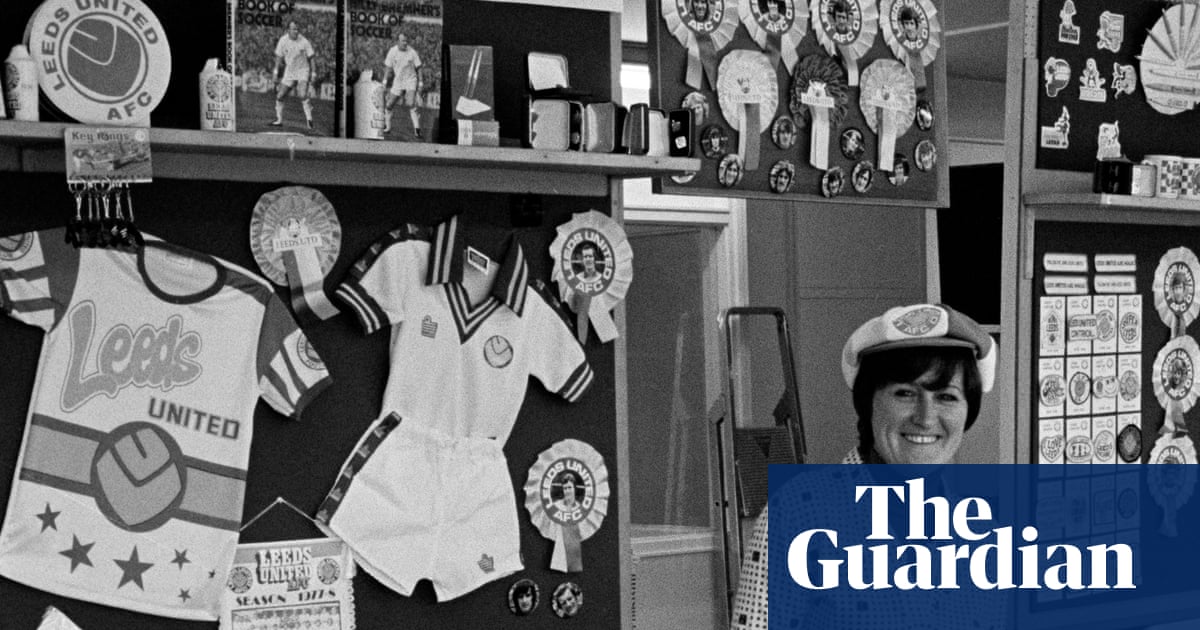
The commercial breakthrough came when Patrick secured copyright to produce replica versions for children. Priced at £5 per outfit, kids across Yorkshire could finally dress identically to their Elland Road heroes.
Before that deal, kit retail was a wild west. The 1968 Design Copyright Act ensured only registered brands could produce a design. Prior to 1968, clubs missed out on revenues while bootleggers operated without restriction.
Tight Sleeves, German Sewing, and Nine-Month Delivery Delays
The Leeds deal sparked a rapid chain reaction. By the 1977-78 campaign, 84 of 92 Football League clubs featured manufacturer logos and sold youth replicas. In Scotland, Umbro sold Rangers and Celtic shirts, while Adidas supplied Aberdeen and Dundee United.
Adult supporters were ignored by official retailers. As The Guardian reported, early sales focused strictly on youth sets. Umbro released "Umbrosets" in 1959 featuring Manchester United, initially endorsed by Sir Matt Busby.
By 1964, striker Denis Law replaced Busby on packaging, endorsing kits for United, Scotland, eight English clubs, and three Scottish teams. Yet clubs remained lazy about marketing, leaving distribution to local sports shops.
Academic research by Christopher Stride, Nick Catley, and Joe Headland confirmed how slow adult adoption was. Scanning crowd photos from the 1960s and 1970s, they found zero adult fans wearing official replica shirts until the mid-1970s.
Even then, replicas only appeared at cup finals. Unbranded shirts appeared on Newcastle fans at the 1974 FA Cup final. Liverpool followers wore them at European Cup finals in 1977 and 1978, while Scotland fans invaded Trafalgar Square in replica tops in 1977.
When adult Manchester United fans wore Admiral gear at the 1979 FA Cup final, tight sleeves betrayed their secret. Grown men squeezed into extra-large youth sizes to wear club colors. Official adult replica kits did not launch until Admiral released England's 1982 World Cup jersey.
Continental Europe took a strange path. Adidas held a Bundesliga monopoly during the 1970s, but refused to produce individual club replicas. Instead, they sold generic blank shirts in primary colors.
German kids bought plain shirts and manually sewed club badges on at home. Adults showing support bought full warm-up tracksuits. It was a bizarre strategy highlighting how inept early sports marketing was.
Ordering a shirt back then was painful. Reading supporter Jon Keen recalled trying to buy his club's official Bukta jersey in autumn 1979. Because no stock existed, local shop Blake's Sports Outfitters placed a bespoke order with Bukta.
The shirt took nine months to arrive, landing on Keen's doorstep in June 1980 after the season ended. Imagine telling a modern supporter expecting next-day delivery that they must wait nine months for a shirt.
Looking back, kit culture reveals corporate greed replacing grassroots charm. While Revie's vision gave kids affordable kit access, modern clubs churn out three overpriced strips every summer. Charging fans eighty quid for polyester is extortion, but nobody wants to return to sewing badges onto plain jumpers.
When Red Cards Save the Match and the Riverside Miracle
While kit debates highlight administrative mishaps, on-pitch disasters can occasionally lead to unexpected victories. Red cards usually doom a team, but football features rare moments where a sending-off triggered a miracle recovery.
The ultimate example occurred during Fulham's Europa League tie against Juventus in March 2010. The Italian giants won the first leg in Turin 3-1. When Juventus scored early at Craven Cottage to lead 4-1 on aggregate with an away goal, Fulham looked finished.
Fulham equalized on the night, but the tie remained tilted toward the visitors. Then World Cup winner Fabio Cannavaro committed a rash foul on goal-bound Zoltan Gera. The referee showed Cannavaro a straight red card, reducing Juventus to ten men.
That dismissal completely flipped the match momentum. Fulham capitalized on the extra space, mounting a furious comeback by the River Thames. They scored three unanswered goals to shock Juventus with a 5-4 aggregate triumph.
The highlight was Clint Dempsey's astonishing looping chip into the top corner. Yet as The Knowledge at The Guardian revealed, Dempsey later admitted to a supporter that
he’d intended a cross to the back postrather than a shot on goal.
Accidental genius or not, Dempsey's misplaced cross completed a legendary European comeback. Cannavaro's red card broke Juventus's shape and gave Fulham the spark needed to attack relentlessly.
A similar story unfolded in 2008 when Barnsley faced Doncaster. Barnsley trailed 1-0 when defender Darren Moore was sent off. Instead of crumbling, ten-man Barnsley scored four unanswered goals to win 4-1.
Doncaster's manager admitted after the match that the red card ruined his side's focus. Getting a defender sent off can serve as the ultimate wake-up call.
Benched Legends, Milan Incompetence, and Quick-Fire Starts
If a red card can accidentally fix a team, poor managerial decisions can destroy even a talented squad. Few examples match the absurdity of Inter Milan's forward rotation during the 2000-01 season.
Early in that campaign, Inter replaced manager Marcelo Lippi with Marco Tardelli. Tardelli installed Alvaro Recoba as Christian Vieri's primary strike partner, leaving world-class talent on the sidelines.
Tardelli routinely benched Hakan Sukur, who finished his career with 51 international goals. He authorized a loan sending Robbie Keane—possessing 68 international goals—to Leeds United. Meanwhile, Ronaldo, holder of 62 international goals, spent the season injured.
That means Inter possessed 181 international goals across three world-class forwards who could not get on the pitch under Tardelli. Benching that much proven international firepower while starting two non-50-goal players is managerial malpractice of the highest order.
Unsurprisingly, Inter stumbled through a chaotic season. Leaving generational goal scorers rotting on the bench or shipping them off on loan remains a cardinal sin.
Compare that selection nightmare to Budapest Honved in the 1950s. Honved fielded Ferenc Puskas, Sandor Kocsis, and Lajos Tichy in the same side. All three eventually joined the elite 50 Goal Club for international football, forming a terrifying attacking line.
Barcelona achieved a similar feat with Lionel Messi, Samuel Eto'o, and Thierry Henry between 2007 and 2009. None of those three had reached 50 international goals while playing together in Catalonia. Eto'o reached his mark in 2011, Henry in September 2009 after moving to Inter, and Messi hit 50 in 2016.
While managers in Milan struggled to deploy star strikers, Huddersfield Town teenager Jamie Spencer showed how to maximize minimal playing time. Making his debut against Doncaster on September 9 in the EFL Trophy, the 17-year-old entered in the 66th minute.
Spencer needed just two touches to make history. His first touch controlled a pass, and his second touch buried the ball into the net. It was a masterclass in efficiency that contrasts with multi-million-pound strikers who struggle over ninety minutes.
From Revie's cafe deal and nine-month mail orders to Fulham's miracle and Tardelli's benched legends, football history proves that the game thrives on weirdness. Commercial greed changed matchday fashion, but unpredictable pitch drama keeps supporters coming back every weekend.