Italy's managerial merry-go-round just hit a new low
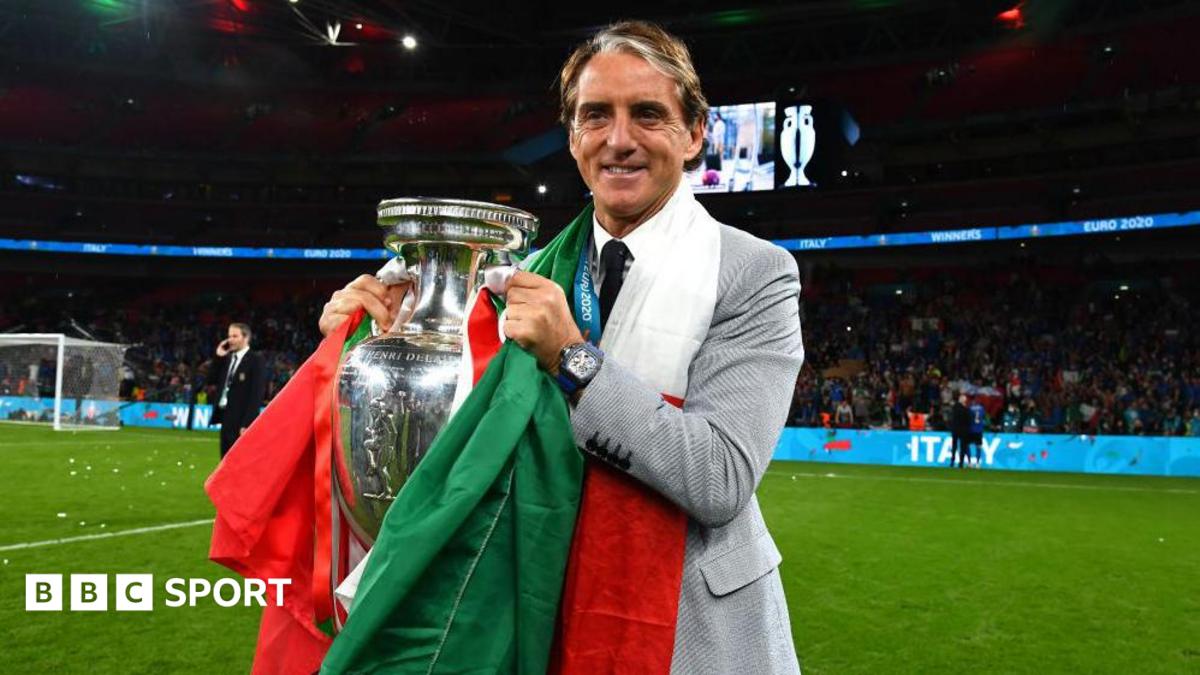
Stop me if you’ve heard this one before. Roberto Mancini is back in the dugout for the Azzurri. Yes, the same guy who left, the same guy who seemingly had no more bridge to cross, is officially returning to manage Italy. It feels like we are living in a glitchy FIFA career mode save where the options ran out of steam.
The timeline exploded yesterday, as the BBC reported, just twenty-four hours after Andrea Pirlo decided he wanted absolutely nothing to do with the circus currently taking place at the federation. To make the soap opera complete, Paolo Maldini walked out the door as technical director on his way out. It is a stunning bit of administrative self-sabotage that would make a relegation-bound side blush.
The pragmatists vs the burning building crew
Social media is currently a battleground between people who think this is a return to a known commodity and people who think the FIGC has officially lost its marbles. The optimists are clinging to the familiarity of his past success. They argue that in a time of institutional chaos, picking a guy who has already held the keys is better than rolling the dice on a tactical novice.
Then you have the rest of us, the ones watching the fire drill unfold in real time. We’re pointing out that resigning from a position is usually a terminal event for a reason. Having to go back to the guy you already moved on from isn't a long-term plan; it’s a symptom of a systemic inability to identify fresh talent in the front office.
Why the Maldini exit is the real story
People keep hyper-focusing on the manager, but the resignation of Paolo Maldini is the real disaster here. You don’t just let a footballing institution like him walk away unless the internal culture is toxic. If the person tasked with overseeing the technical direction of the national team decides he would rather be literally anywhere else, that is a massive red flag for the entire program.
The argument for keeping Mancini is that he inherits a squad that, while underperforming, shouldn’t be this disjointed. But if the locker room leadership hasn’t bought into his second act, we are looking at a messy qualification campaign. Mancini has to prove that his tactical approach hasn't become as stale as the committee that hired him back.
The verdict from the bar stools
Honestly? I’m with the cynics. Bringing back the same manager after he already jumped ship—and after your top technical director quits—is the ultimate sign of a federation out of ideas. It’s lazy. It’s safe. It’s going to fail because the surrounding structure isn't there to actually support him.
We talk about tactical evolution in Europe, how the game has shifted toward high-press, high-intensity transition football since he left. Does Mancini have the legs to keep up with that, or are we just hoping for 2021 nostalgia to magically reappear in 2026? History suggests you can’t force a remix to be better than the original song.
If the team struggles through the first competitive window, you’re going to see the fans turn on the FIGC leadership faster than a striker chasing a breakaway. They’ve burned through their goodwill, they’ve lost their technical brain trust, and they’ve defaulted to the past on a 1-year timeline that keeps the pressure cranked to the absolute maximum.
This isn't about whether Mancini is a bad coach. It’s about the fact that top-tier football isn't about repeating the same sequence of events. It’s about growth, adaptation, and knowing when the chapter is finished. The Azzurri just stapled a new page onto a book that should have been closed months ago.
Read Next