
Leeds tore Newcastle apart, and Daniel Farke's plan is finally clicking
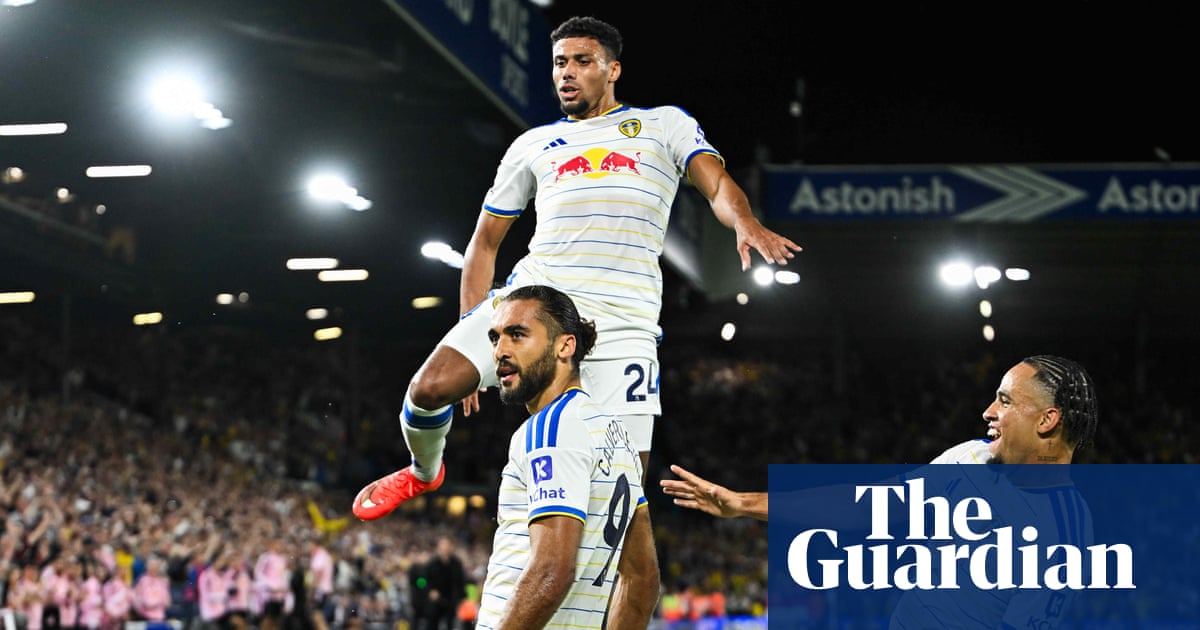
The Night Elland Road Saw Newcastle Chase Shadows
Watch the tape from Monday night and one five-minute sequence after Leeds United went 2-0 ahead reveals everything about the current state of both clubs. Newcastle United were not merely trailing on the scoreboard; they were completely disoriented by Daniel Farke's shape. Leeds circulated possession horizontally across their back line before striking through the half-spaces, leaving Matthias Jaissle's midfield chasing shadows under the floodlights.
The eventual 4-1 result was no fluke or byproduct of lucky set-piece rebounds. Leeds executed a brutal tactical horse-whipping, looking faster, hungrier, and far better organized than their visitors. Farke’s system relied on sharp counter-pressing triggers activated the second possession flipped, forcing Newcastle into panicked long balls that central defenders gobbled up without fuss.
For Jaissle, who inherited the manager's coat from Eddie Howe, Elland Road provided a harsh lesson in Premier League intensity. His Newcastle team lacked vertical compactness, leaving massive gaps between the defensive line and a midfield pivot that was sliced open by crisp third-man combinations. As reported by The Guardian, the German coach looked shellshocked on the touchline after watching his side unravel.
"We couldn’t match the intensity and you see how difficult it can be to win a game in the Premier League."
Jaissle’s admission exposed a defensive flaw that Leeds targeted with surgical precision. Whenever Newcastle attempted to build out from the back, Leeds set an asymmetrical trap, locking Newcastle's full-backs against the touchline and cutting off central passing lanes. The late consolation goal conceded by Leeds did little to alter the overwhelming reality of Newcastle's tactical defeat.
Elland Road under night lights has often produced chaotic friction, but Monday was defined by calm tactical superiority. Leeds did not simply out-run Newcastle; they out-thought them by dictating tempo and dominating central areas. It was a complete performance that transformed Elland Road into an absolute fortress.
During the middle third of the second half, Leeds strung together 24 passes without Newcastle touching the ball. That sequence was not defensive possession for its own sake. Each pass pulled Newcastle's mid-block two yards out of position until a pocket opened between the lines.
When the pass finally cut through, three Leeds attackers flooded the penalty box simultaneously. Newcastle’s center-backs were left stranded without midfield cover. It was high-level positional play executed at breakneck speed.
From Wild Rollercoaster to Structural Stability
To appreciate Monday night's performance, you have to remember the chaos that defined West Yorkshire for over 10 years. Leeds supporters endured a wild decade of owner turmoil, promotional heartbreak, and nerve-wracking relegation scraps. The thrilling peaks of Marcelo Bielsa’s high-altitude press eventually gave way to frantic managerial churn under Thomas Christiansen, Jesse Marsch, Javi Gracia, and Sam Allardyce.
The structural transformation began three years ago when 49ers Enterprises took full control of the club in 2023. Beyond commercial growth and brand development, the ownership group established organizational sanity across football operations. That quiet stability at board level has finally reached the pitch, giving Farke the platform to build a lasting tactical blueprint.
Farke himself presents a fascinating contrast between his off-pitch personality and on-pitch product. While his team plays with aggressive tactical bite, the manager famously prefers celebrating wins with a hot tea and cake on his sofa. He remained determinedly grounded after Leeds leapfrogged Hull City to move into third spot in the Premier League table.
"It’s important we stay humble, down to earth and can’t allow ourselves to be too big-time or too carried away."
Farke's calm post-match words hide a ruthless competitive engine. The underlying metrics show this Leeds side is built to sustain its high league position. Their rest defense structure is far sounder than during the Marsch era, snuffing out opponent counter-attacks before they cross the halfway line.
Smart recruitment has replaced the panic buys of previous transfer windows. Leeds now possess genuine positional depth, allowing Farke to rotate without losing tactical cohesion. Players understand their roles in pressing traps and positional rotations.
Yet no clear-eyed analysis can ignore Leeds' lingering defensive vulnerabilities. Even during their dominant display against Newcastle, a late moment of slack box defense allowed Newcastle to score a consolation. Better opponents will take advantage if concentration drops during late match phases.
Farke's full-backs occasionally advance too early during build-up phases, leaving wide channels exposed. When central transitions fail, opposition wingers can find isolated one-on-one scenarios against Leeds' center-backs. Eliminating those minor tactical leaks remains Farke's next major coaching task.
Farke's Tactical Mechanics and the Road to the Emirates
The ultimate test of Leeds' tactical maturity arrives in two matches' time when they travel to face Arsenal at the Emirates Stadium. Mikel Arteta's side operates with sophisticated positional mechanics and relentless wing overload patterns. Arsenal’s tactical machine, which recently collected a 1-3 away win against Ipswich, will push Farke’s defensive block to its absolute limits.
Arteta has refined Arsenal's build-up patterns into a well-oiled system, though his touchline energy continues to draw scrutiny from refereeing authorities. As highlighted in The Guardian's report on touchline governance, officials are monitoring manager movements outside technical areas. Farke’s quiet touchline presence offers a stark contrast to Arteta's constant animated instructions.
To get a result at the Emirates, Leeds must perfect their transitional switches. Against Newcastle, Farke overloaded the right flank to shift the defensive block before spraying long diagonal balls to the underloaded left wing. That pattern unpicked Jaissle's defense easily, but Arsenal's full-backs recover with far greater physical speed.
The central midfield battle will decide whether Leeds can survive London. When Leeds press high, their defensive line must step up aggressively to compress playing space. If a gap opens between the pressing front three and the back line, Arsenal’s attacking midfielders will exploit it instantly.
Leeds' growth shows their league standing is founded on sound tactical training rather than brief emotional momentum. They possess the patience to unlock deep defenses and the transition pace to hurt possession-heavy rivals. The upcoming match in London will reveal if Leeds are top-four contenders or merely enjoying a fine month.
Winning at the Emirates requires flawless tactical execution over 90 minutes. Farke cannot afford any lapses in rest defense or delayed pressing triggers. Every player must execute their defensive duties with total discipline.
If Leeds maintain their current pressing intensity and spatial discipline, they can unsettle Arsenal's rhythm. The keys are compact spacing, rapid defensive transitions, and clinical finishing when chances arise. Elland Road has found its standard; now Leeds must take it on the road.
Peripheral Noise: Offsides, Referees, and Cartoonish Spurs
Beyond West Yorkshire, the broader Premier League picture offers plenty of tactical dysfunction and absurd headlines. Tottenham Hotspur's ongoing struggles have exposed deep flaws in their offensive setup and squad recruitment. In their Milk Cup 1-0 defeat to Liverpool, Spurs produced an attacking display completely lacking in imagination or structure.
Pundits have mocked Tottenham's forward line, comparing their movement to disjointed cartoon characters operating without a coherent plan. When an attacking unit runs in isolated lanes rather than coordinated patterns, defensive lines face no real threat. Spurs look like a team spending heavily without an underlying tactical vision.
Meanwhile, the endless debate around VAR offside decisions continues to frustrate fans and coaches across the country. Recent controversies regarding whether a player diving inside the penalty box is active have highlighted the flaws of subjective officiating rules. Simply ruling every player inside the penalty box active would eliminate debate and restore straightforward clarity.
Far away from English football's financial fortune, alarming events in Bolivia remind us of the dark pressures existing in global sport. Guabirá head coach Leonardo Egüez stated that goalkeeper Juan Manuel Ferrel received death threats targeting his family prior to a heavy defeat against Club Always Ready. Such disturbing reports demand thorough investigation to preserve the integrity of the game.
Back at Elland Road, Farke and his players remain focused on internal progression. Leeds have built a resilient, tactically sharp team that plays with genuine purpose and direction. The days of administrative chaos are gone, replaced by a club marching forward on solid ground.
Read Next
- Raheem Sterling's guilty plea marks a grim new low in a rapid career decline
- Cyle Larin is turning Southampton's Spygate nightmare into a promotion charge
- Why Arsenal's perfect start hides genuine warning signs ahead of Ipswich
- Mikel Arteta is adopting Sir Alex Ferguson's playbook at Arsenal
- 🏟 EFL Championship 2025-26 — Promotion Race & Play-Off Final Hub
adidas Men's Samba Classic Soccer Shoe
The timeless indoor soccer shoe that became a streetwear icon.
Frequently Asked Questions
What was the final score between Leeds United and Newcastle?
Who is the manager of Newcastle United?
How did Daniel Farke's tactics dismantle Newcastle?
Why was Leeds' 24-pass sequence significant during the match?
What past struggles preceded Leeds United's current stability?
More Coverage

Liverpool lead race to sign Lamine Camara for £60m in January
6 hours ago
Howard Webb's VAR audio exposes the messy truth behind Phil Foden's red card
8 hours ago
Leeds United's 4-1 destruction of Newcastle is no fluke
9 hours ago
Raheem Sterling's guilty plea marks a grim new low in a rapid career decline
10 hours ago
Cyle Larin is turning Southampton's Spygate nightmare into a promotion charge
13 hours ago
Why Arsenal's perfect start hides genuine warning signs ahead of Ipswich
20 hours agoMore Analysis
Leeds United's 4-1 destruction of Newcastle is no fluke
9 hours ago
Cyle Larin is turning Southampton's Spygate nightmare into a promotion charge
13 hours ago
Arsenal survived Sunderland, but PGMOL's new penalty rule is a disaster
1 day, 13 hours ago
Michael Carrick must change Man United's midfield shape for the derby
4 days, 5 hours ago
Noah Okafor quitting Switzerland at 26 has fan groups completely split
5 days, 6 hours ago