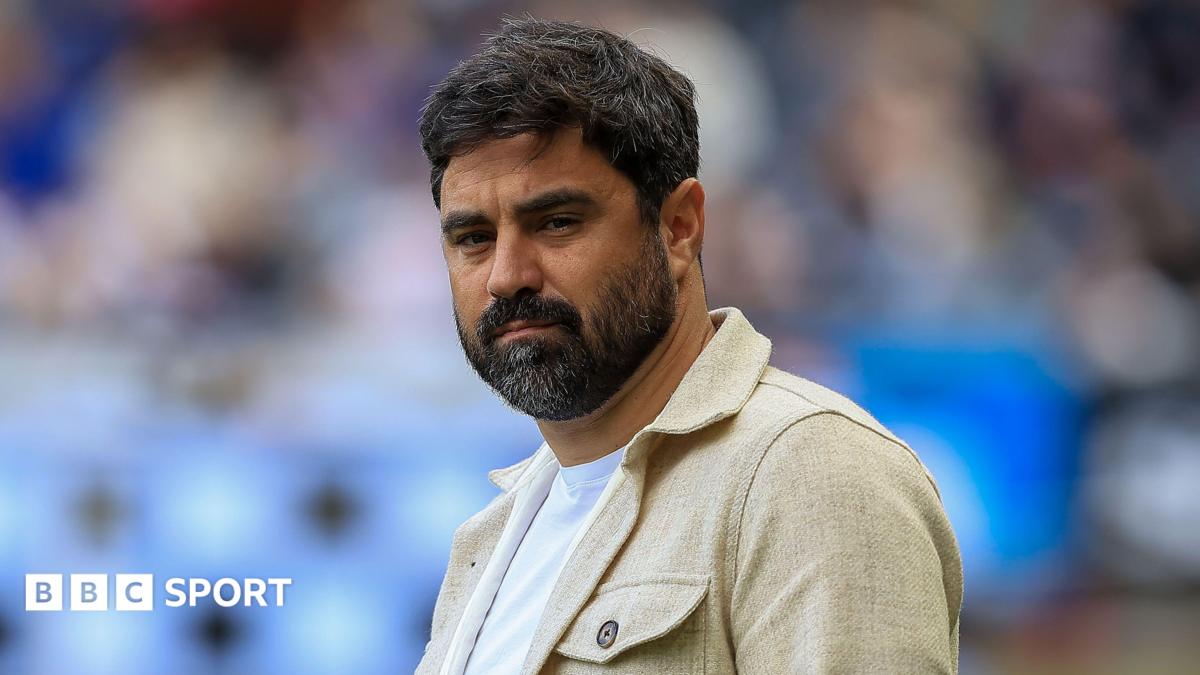
The longest leash in the Championship
Swansea City has tied Vitor Matos to a contract extension running through the summer of 2030. In a league where the average managerial tenure frequently dips below 12 months, locking a coach in for five years is an outlier of the highest order.
The Championship is statistically the most volatile division in English football. Since the start of the 2023-24 season, 18 of the 24 teams have replaced their head coach at least once. Swansea is choosing to ignore this churn, opting instead for a long-term stability model that carries significant financial risk.
Evaluating the math of long-term deals
A five-year deal provides Matos with unprecedented security, but it places a massive burden on the board. If the team finishes in the bottom half of the table for two consecutive seasons, the severance payout required to move on would be punitive. We have seen clubs like Watford or West Brom struggle with the dead-money costs of sacked staff for multiple cycles.
Financial fair play constraints make long-term guaranteed contracts a dangerous game. If Matos cannot translate this agreement into a top-six finish within the next 24 months, the club faces a fiscal wall. The 87th minute of a playoff final is often worth more than five years of mid-table stability in terms of broadcast revenue and parachute payments.
The pressure to perform
Data suggests that clubs in the Championship typically see a performance drop-off when managerial turnover becomes excessive. However, holding a coach for five years assumes a linear trajectory of improvement that almost never happens in reality. Injuries, squad turnover, and scouting misses usually result in a performance plateau by year three.
As the BBC reported, Matos is now committed to the Liberty Stadium for the long haul. His ability to navigate the transition between seasons will be judged against the 1.4 points per game threshold required to remain relevant in the promotion race. Any dip below that standard will turn this contract into an anchor rather than a foundation.
The hidden cost of continuity
The counter-argument is that managers need time to implement a specific tactical identity. Yet, the average shelf life of a tactical system in modern football is barely 18 months before opponents decode the patterns. If Matos does not iterate his approach, he will be coaching an obsolete set of instructions by 2028.
Swansea is betting 100% on the belief that Matos is the exception to the rule. They are ignoring the historical precedent where over 70% of five-year managerial appointments in the second tier end in resignation or termination before the halfway mark. It is a bold, high-stakes move that prioritizes philosophy over the brutal reality of result-based arithmetic.
Read Next
- Mudryk’s return won’t solve Chelsea’s tactical black hole
- Gianni Infantino is turning FIFA into a garage sale
- Wouter Vrancken betting on a tactical overhaul at Tynecastle
- Southampton is sitting on a powder keg and Tonda Eckert knows it
- 🏟 EFL Championship 2025-26 — Promotion Race & Play-Off Final Hub