
Mykhailo Mudryk's return won't magically fix Chelsea's structural mess

The return after twenty months in the cold
Mykhailo Mudryk is finally cleared to play football again after his anti-doping suspension was reduced. For a player who hasn't kicked a ball competitively since November 2024, stepping back into Cobham is a monumental personal milestone. Yet the surrounding narrative that his raw pace will instantly unpick stubborn low blocks is pure fantasy.
Chelsea’s ongoing issues in possession run far deeper than missing one direct winger. During his initial spell at Stamford Bridge, Mudryk averaged just 0.23 expected goals non-penalty per 90 minutes across 46 Premier League appearances. He routinely struggled when opponents denied him space behind the defensive line.
When deep blocks compress the pitch into a 30-yard box, sheer speed becomes secondary to micro-decisions and tight-space combination play. Mudryk’s touch under pressure often let him down, registering a heavy touch or turnover once every 21 minutes in the 2023-24 campaign.
Tactical stagnation in the final third
The core problem for Chelsea isn't a lack of speed on the flanks; it is their sluggish ball circulation in the build-up phase. Watch their 1-1 draw against Everton last spring—they completed 642 passes but generated a meager 0.84 xG. Slow center-back distribution allows opposition defensive blocks to shift laterally without breaking shape.
Plugging Mudryk back into the left channel does not magically increase pass velocity from the midfield pivot. If the ball arrives at his feet while the opposition full-back is already set with double coverage, his main weapon is completely neutralized.
Without overlapping runs from an inverted full-back to draw away the primary marker, Mudryk will face the exact same isolated 1v2 scenarios that crippled his output before the suspension. Expecting a player who missed twenty months of top-flight action to solve complex positional rotations overnight is unfair and tactically naive.
The Rust Factor and Defensive Deficits
Training in isolation with private coaches cannot replicate the intensity of pressing triggers in top-flight football. Mudryk's defensive work rate was already a point of contention, averaging just 1.1 successful tackles per 90 during his last full season. In high-pressing schemes, a late trigger from one winger completely compromises the defensive mid-block.
If he fails to track recovery runs against overlapping full-backs, Chelsea's left channel will be systematically targeted on transition turnover. Opposing managers will actively invite Chelsea to play through Mudryk, trapping him along the touchline before launching rapid counter-attacks through the vacant space behind him.
Mudryk remains an explosive athlete with undeniable upside, but he is a project player who needs months of recalibration. Treating his return as a mid-season tactical quick fix ignores every metric we have gathered since his £88.5m move to West London.
Roku Express 4K+ HD/4K/HDR Streaming Media Player
Stream every Premier League kickoff and World Cup fixture in crisp 4K HDR.
Frequently Asked Questions
How long has Mykhailo Mudryk been away from competitive football?
Why is Mudryk's return unlikely to fix Chelsea's attacking struggles?
What specific technical issues did Mudryk show during the 2023-24 season?
How does Chelsea's build-up play affect Mudryk's effectiveness?
What are the risks of using Mudryk in Chelsea's defensive system?
More Coverage
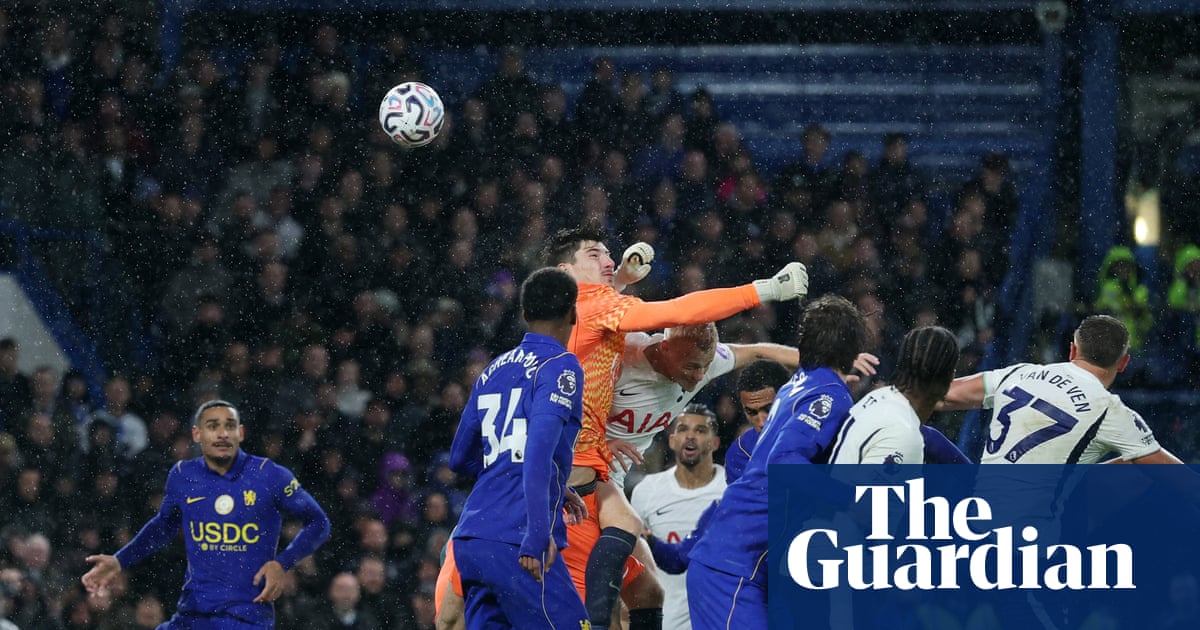
Xabi Alonso overthought Chelsea straight into a Tottenham trap
11 minutes ago
Arsenal face an absolute disaster after their bruising win over Everton
26 minutes ago
Liverpool and Manchester United are walking straight into a Sunday trap
5 hours ago
Hiring an absolute lunatic is the only move Manchester United have left
12 hours ago
Liverpool's January transfer scramble is all about fixing summer mistakes
16 hours ago
Conte and Hurzeler linked as Carrick nears the brink at Man United
16 hours agoMore Analysis
Xabi Alonso overthought Chelsea straight into a Tottenham trap
11 minutes ago
Conte and Hurzeler linked as Carrick nears the brink at Man United
16 hours ago
Bruno Guimarães breaks silence on £75m Arsenal move and Newcastle exit
2 days, 8 hours ago
Arsenal want out of the Viktor Gyokeres business already
3 days, 1 hour ago
Arsenal really tried for Vinicius Jr, but it was always Real Madrid
3 days, 2 hours ago