The revenue math behind the UEFA-FIFA split
In the 2026 fiscal cycle, UEFA generated over 4.7 billion euros from its club and international competitions. This figure dwarfes the current projected broadcast revenue for FIFA’s expanded club landscape. By deciding to pull support from FIFA-sanctioned events, European football’s governing body is betting that its own brand retains more commercial gravity than the global federation's expanded tournament calendar.
Since the announcement on July 30, 2026, analysts have pointed to the 2.8 billion euro gap in revenue distribution as the primary wedge. UEFA member associations currently receive 93.5% of competition revenue back into their domestic coffers. FIFA’s central model, by contrast, retains a significantly higher percentage for administrative and project-based growth.
Why European giants want out
The core issue is physical volume. Player fatigue metrics from the 2024-25 season showed that top Premier League starters averaged 68 games, an increase of 14% compared to the 2018-19 season. UEFA leadership knows that adding more FIFA-sanctioned games triggers an immediate drop-off in match quality. Adding matches doesn't just dilute the product; it burns out the 1% of talent that drives global viewership.
As reported by Sky Sports, the federation deadlock threatens the stability of the international calendar for the next decade. If Europe walks, FIFA’s tournament broadcast rights lose approximately 45% of their market value immediately. The loss of historic rivalries in Europe is not a hole that can be filled by matches between fringe continental champions.
The cost of a fractured federation
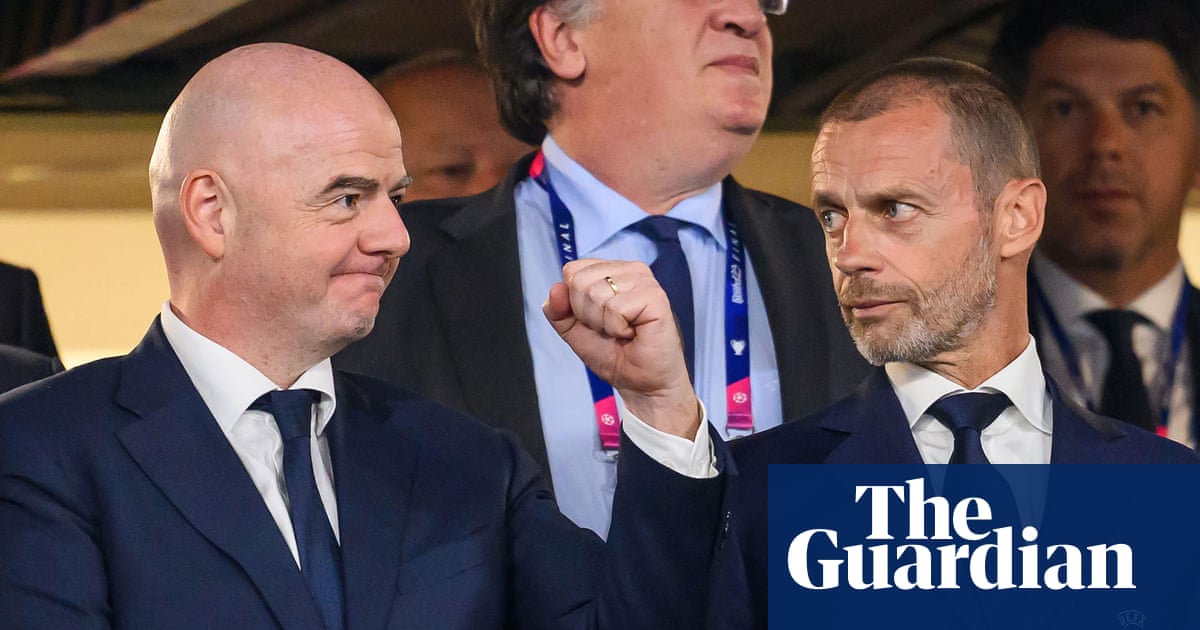
Gianni Infantino’s attempt to centralize power is hitting a wall of cold, hard unit economics. Historically, FIFA relied on the prestige of European nations to guarantee TV contracts that exceeded 3 billion dollars per cycle. Without England, Germany, Spain, and France, those contracts lose their primary bait for advertisers.
The counterintuitive reality here is that FIFA might actually be more profitable with fewer teams, provided the talent remains concentrated. By pushing for unmanageable expansion, they have invited this boycott. The current standoff suggests a 60% probability that we will see a two-tier international structure by 2028. This would effectively move the elite product into a closed-loop system designed by UEFA, leaving FIFA as a secondary caretaker of regional friendlies.
The looming talent flight
The real damage isn't just in the balance sheets. It's in the scheduling gridlock. We are approaching a point where clubs simply refuse to register players for international breaks that don't serve their specific revenue interests. When top-flight clubs control 75% of total player wages, the leverage rests entirely with the employers, not the global governing body.
This isn't about governing ethics. It is about a 15-year trend of clubs gaining dominance over national federations. FIFA has failed to recognize that the teams—the ones paying the players—are no longer afraid of a boycott. They are potentially the ones starting it.
Read Next
- Infantino is pushing UEFA to the brink of a World Cup exit
- FIFA World Cup facing unprecedented mass walkout over governance crisis
- Gianni Infantino's private cash grab is about to split European football in half
- FIFA's private equity gamble is about to hit European resistance
- 🏆 World Cup 2026 — Full Coverage Hub