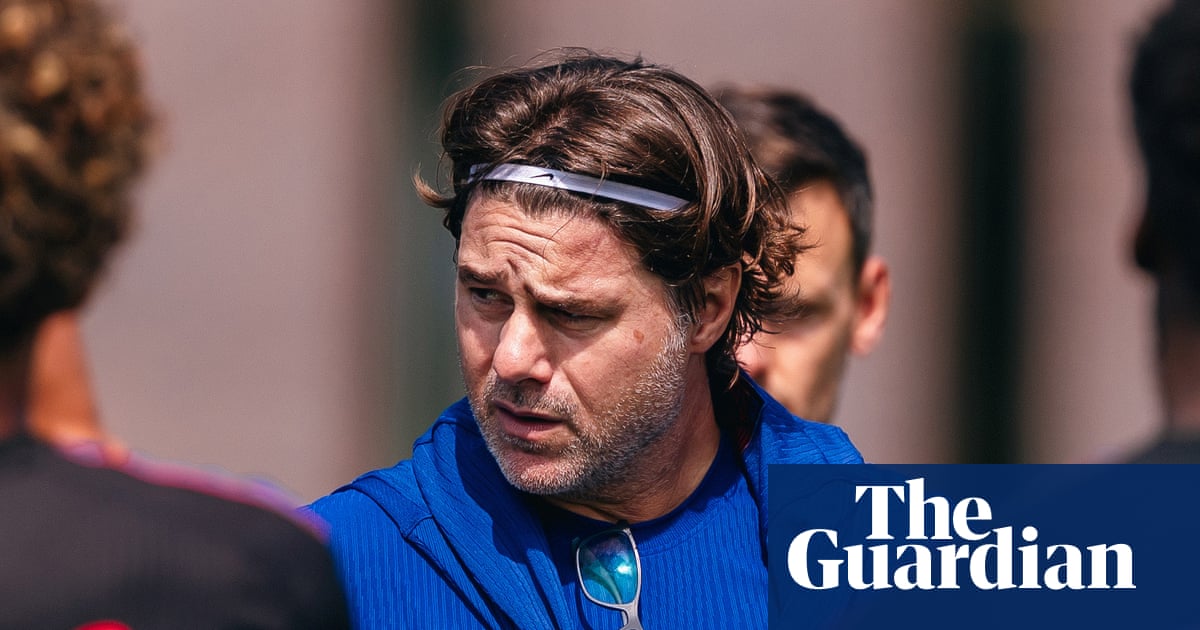
Chelsea's tactical headache: What happens now that Mykhailo Mudryk is back?
The return of an forgotten variable
Mykhailo Mudryk is technically a Chelsea player again as of July 31, 2026. After a doping-related suspension that kept him off the pitch since late 2024, the Ukrainian international has had his four-year ban significantly reduced following a successful appeal. As reported by the Daily Mail, the FA and WADA have reached an agreement that allows him to rejoin the squad for their pre-season tour in Hong Kong immediately.
For a team that has undergone massive structural changes in his absence, Mudryk is essentially a phantom signing. He has not kicked a ball in competitive football for roughly 20 months. While his return offers Chelsea depth, the tactical reality of his integration is grim.
The evolution of Chelsea's front line
Chelsea's attack has moved on. The current iteration of the Blues, fronted by the tactical intelligence of Cole Palmer—who recently noted his own physical struggles during a difficult 2025/26 campaign—operates with a fluidity that Mudryk historically lacked. Palmer’s presence, often paired with new arrivals like Morgan Rogers, creates a specific demand for technical chemistry in tight spaces.
Mudryk’s profile, by contrast, is one of raw linear acceleration. In the 2023/24 Premier League season, his highlight reels were built on transition moments, but his positional discipline in possession-heavy structures was often suspect. Finding a tactical role for a player who has spent nearly two years away from the professional game is an immense challenge for any manager.
His return is a complication, not a solution. In a modern squad where pressing triggers are synchronized to the millisecond, having a player who has been physically isolated and detached from the club’s tactical shifts creates a defensive vulnerability. It is unlikely he will slot back into a high-pressing system without significant risk to the team’s spacing.
The price of the detour
Mudryk’s hiatus also raises the uncomfortable subject of development stagnation. A young winger in the most vital years of his progression has been effectively sidelined since his last appearance in December 2024. Even if he arrived at Cobham with pristine fitness levels, the mental toll and the loss of match-sharpness are significant.
The media reports that Mudryk spent part of his suspension working in a charity shop are an interesting footnote, but they do little to replace the high-intensity minutes required at the Premier League level. As Football365 noted, the FA's decision to resolve these proceedings marks a formal end to a chaotic period for the winger. Yet, looking at the squad sheet, one has to ask where he fits.
Tactical incompatibility
Chelsea’s current configuration relies on technical security. When you look at the shot maps and pass completion rates of the modern Blues front line, the emphasis is on rotation and finding pockets of space behind the opposition's midfield line. Mudryk’s game is about stretching the pitch vertically. While that offers a plan B, it often isolates him from the creative hub centered around players like Palmer.
There is also the matter of his internal morale. A player returning from such a long exile is prone to forcing his impact on the game, leading to poor shot selection and high turnover rates. Watching him play in Hong Kong will reveal whether his raw speed remains his primary asset or if he has matured into a more refined footballer. The reality is that for a club of Chelsea's ambitions, they cannot afford passengers.
The club has confirmed his availability via their official channels, and he is expected to integrate into training immediately. However, the expectation should be tempered. A 20-month layoff is a lifetime in professional football. To expect a seamless transition into a top-four contending side is naive.
Ultimately, Chelsea is currently betting on cohesion and consistency. Mudryk represents a volatile, unknown factor. Unless he shows immediate improvement in his decision-making within the final third—a recurring critique of his play prior to the ban—he risks becoming a peripheral figure in a squad that has moved on without him.
Roku Express 4K+ | Streaming Media Player 4K/HDR with Smooth Wireless Streaming and Roku Voice Remote Pro
Your front-row seat to every Premier League and 2026 World Cup broadcast.
Frequently Asked Questions
When can Mykhailo Mudryk return to playing for Chelsea?
How long was Mykhailo Mudryk banned from football?
Why did Mykhailo Mudryk's doping ban get reduced?
What tactical challenges does Mudryk's return present for Chelsea?
What did Mykhailo Mudryk do during his suspension?
More Coverage

Liverpool and Manchester United are walking straight into a Sunday trap
4 hours ago
Hiring an absolute lunatic is the only move Manchester United have left
12 hours ago
Liverpool's January transfer scramble is all about fixing summer mistakes
16 hours ago
Conte and Hurzeler linked as Carrick nears the brink at Man United
16 hours ago
Bukayo Saka ruled out for up to eight weeks with torn quad
16 hours ago
October 24 has a bizarre habit of destroying football giants
20 hours agoMore Analysis

Arsenal want out of the Viktor Gyokeres business already
3 days, 1 hour ago
Arsenal's crisis deepens while London City redefine WSL pressing
2 weeks, 5 days ago
London City's Spurs blowout and Chelsea's win set a fiery WSL pace
2 weeks, 6 days ago
Romeo Lavia is back, but Chelsea's midfield situation remains a high-wire act
3 weeks, 4 days ago
Sarina Wiegman dropping Toone and Kelly is a massive gamble for the Lionesses
3 weeks, 4 days ago