
Gianni Infantino is turning FIFA into a venture capital portfolio

The private equity takeover of the beautiful game
Gianni Infantino’s tenure at the helm of FIFA has long felt like a slow-motion car crash, but his latest play for private investment is the breaking point. Selling equity in the global game transforms football from a sport into a ticker symbol. When the head of the world governing body spends his time courting venture capitalists rather than protecting the integrity of domestic leagues, we have lost the plot.
The proposal reported by the Mirror confirms a shift that has been lurking in the shadows for years. Infantino views the World Cup not as a cultural event to be stewarded, but as an asset to be liquidated for short-term liquidity. Once you invite private equity into the boardroom, you cannot simply ask them to leave when the decisions stop being about the sport and start being about the dividends.
The math behind the madness
Let’s talk about incentives. Private equity firms chase returns, usually on a 5 to 7 year horizon. Football is a long-term game built on multi-generational loyalty, youth development that takes a decade to bear fruit, and calendar stability that spans generations. These two cycles are fundamentally incompatible.
If the 2026 World Cup is the testing ground for this model, we are witnessing the commercialization of an international institution at the expense of its constituency. Selling a stake implies a seat at the table for financiers who have zero obligation to the grassroots level. Does a hedge fund manager care if ticket prices for a group stage match between two unranked nations skyrocket? They care about the yield of the broadcast rights across 211 member associations.
The case for a regime change
Critics often say that global football is too big to fail. That hubris is exactly why Infantino has felt comfortable pushing limits for this long. We have seen automated reasoning models struggle with noise, yet Infantino’s internal logic seems perfectly tuned to maximize his own political capital at the cost of the game's actual substance. He is effectively leveraging the brand of international football to subsidize his own staying power.
The decision-making process at FIFA under his watch lacks transparency, favoring closed-room deals over democratic consensus. When one person controls the leverage points of a billion-dollar entity, the checks and balances evaporate. The member associations are currently enabling a system that prioritizes commercial scaling over the stability of the sport. It is time for a genuine challenge to his authority before the damage to the structure of professional football becomes irreversible.
A pattern of institutional capture
Look at the trajectory of FIFA’s recent expansionary efforts. We have seen an obsession with bloated tournament formats and a reliance on complex, often automated administrative strategies that mask a vacuum of governance. Much like the Reasoning Denoiser research points out, when you generate enough noise instead of actual value, you eventually lose the plot entirely.
Infantino is a master of distracting the public with new tournaments while he quietly dismantles the traditional financial insulation of the sport. Every time a new competition is announced, he isn't innovating—he is expanding the surface area for his new private equity partners to monetize. The fans are the product here, and the product is being traded to the highest bidder. If there is no pushback from the national associations soon, the game we recognize today won't exist in a decade. It will be a hollowed-out collection of television content packages, managed by people who have never stepped on a pitch in their lives.
adidas Men's Tiro 21 Track Pants
The iconic global uniform for soccer training and casual matchday style.
Frequently Asked Questions
What is the primary criticism of Gianni Infantino's financial strategy?
Why are private equity firms considered incompatible with football?
What is the risk of giving private equity a seat on FIFA’s board?
How has FIFA’s decision-making process changed under Infantino?
What does the author suggest regarding FIFA's future?
More Coverage

Ex-Spurs defender Ramon Vega launches long-shot bid for FIFA presidency
2 weeks, 3 days ago
Top 10: World Football's Biggest Storylines, Scandals, and Shocks of 2026
2 weeks, 4 days ago
When even the Swiss abandon you, your FIFA presidency is officially cooked
2 weeks, 6 days ago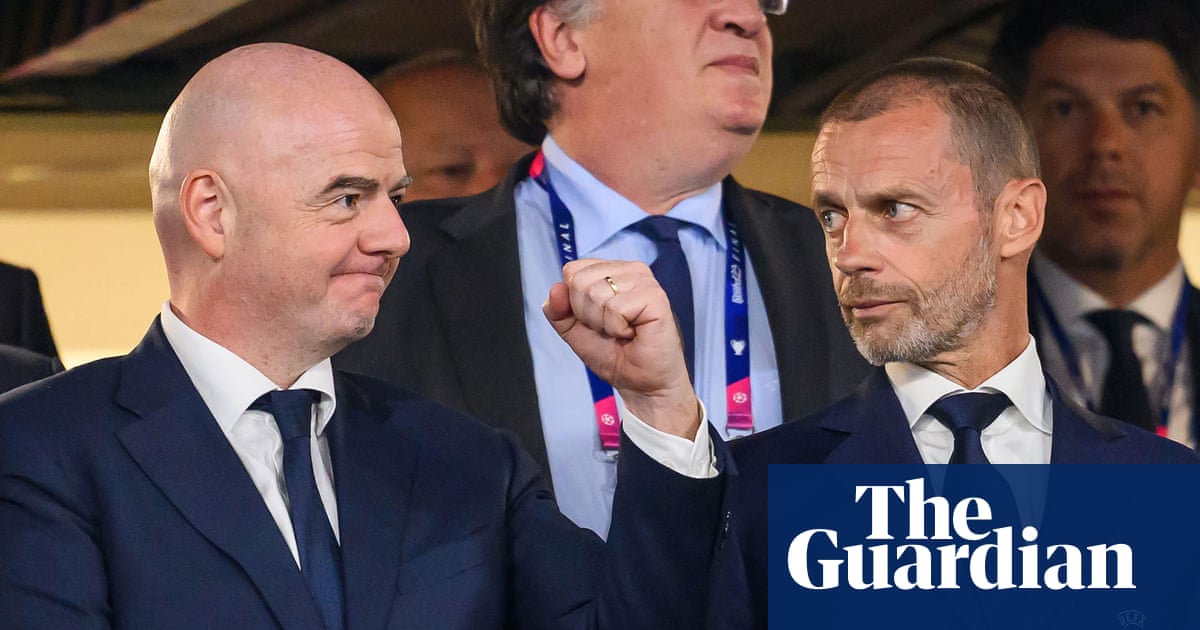
Aleksander Ceferin is right about Infantino, but UEFA has no plan B
3 weeks, 4 days ago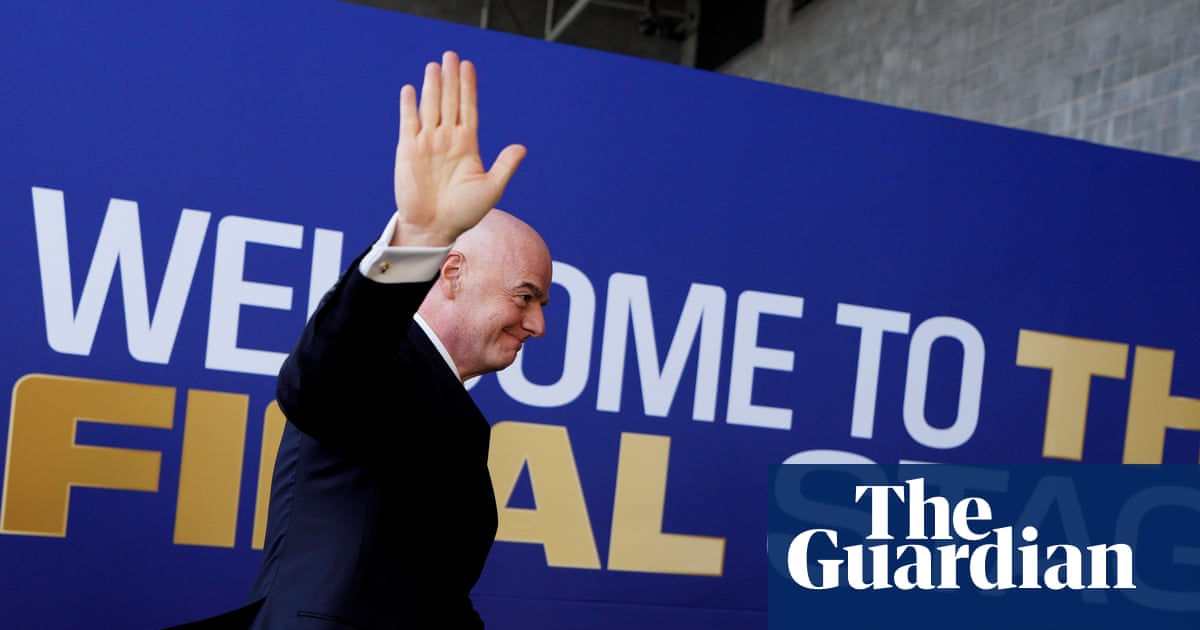
Folarin Balogun transfer picture grows murky after FIFA World Cup row
1 month ago
Gianni Infantino is backing down after his FIFA privatization plan collapsed
1 month agoMore Analysis
Ex-Spurs defender Ramon Vega launches long-shot bid for FIFA presidency
2 weeks, 3 days ago
Top 10: World Football's Biggest Storylines, Scandals, and Shocks of 2026
2 weeks, 4 days ago
Northern Ireland Turning Into 2004 Chelsea Is Peak Nations League
2 weeks, 5 days ago
When even the Swiss abandon you, your FIFA presidency is officially cooked
2 weeks, 6 days ago
Aleksander Ceferin is right about Infantino, but UEFA has no plan B
3 weeks, 4 days ago