
Why Arsenal cannot afford another Anfield collapse this weekend

The Highbury hangover and the Anfield mental block
Arsenal enter Sunday in the worst psychological condition imaginable for a trip to Merseyside. Getting knocked out of the League Cup on penalties at Highbury by League Two Fleetwood is not an unlucky bounce of the ball. It is an indictment of squad depth, structural arrogance, and tactical execution under pressure.
Fleetwood arrived with a textbook low block and asked Arsenal to break them down through congested central corridors. Arsenal responded with sluggish horizontal ball circulation, failing to create overloads or isolate defenders in wide areas. When the match drifted to penalties, the fourth-tier side played with calm certainty while the top-flight hosts froze.
Now comes the ultimate reality check. Arsenal have not won a Premier League fixture at Anfield since September 2012. That miserable run spans more than 14 years, surviving multiple tactical rebuilds and title challenges.
Anfield does not care about domestic reputation or technical pedigree. The ground feeds on hesitation, punishing any side that takes extra touches in their defensive third. If Arsenal bring their midweek lethargy to Merseyside, the contest will be over before the interval.
Liverpool arrive with an entirely different posture. Their midweek League Cup shootout victory over Chelsea at Anfield was gritty, intense, and tactically disciplined. They managed the game states effectively, restricted Chelsea's central progression, and maintained composure when the tie went to spot-kicks.
That contrasting midweek experience matters immensely for Sunday. Liverpool understand how to suffer without losing their structural shape, whereas Arsenal showed alarming fragility the moment Fleetwood disrupted their passing rhythm. Momentum in football is often fleeting, but psychological baggage leaves unmistakable marks.
Tactically, Liverpool will target Arsenal's build-up phase with aggressive wide pressing traps. By cutting off passing angles into the defensive pivot, Liverpool force opposing defenders to play hopeful long balls into contested channels. Fleetwood showed that Arsenal struggle when forced to play vertical direct football under duress.
Arsenal must alter their spacing if they want to survive this test. Spreading the pitch wide without committing bodies into the box will play directly into Liverpool's defensive structure. To break the Merseyside curse, Arsenal need rapid third-man combinations and immediate counter-pressing to stop Liverpool's transition runners.
Failure here would do serious damage to Arsenal's season. Dropping points at Anfield is common, but capitulating after a midweek disaster against fourth-tier opposition signals a deeper structural flaw. The pressure on north London is suffocating.
Liverpool will not offer second chances. Their pressing triggers are fine-tuned, and their home crowd transforms even routine throw-ins into territorial suffocations. Arsenal will either display rare tactical maturity or add another chapter to their Anfield misery.
The spatial dynamics between Arsenal's central midfielders and their full-backs will dictate how much control they can establish. If the full-backs push high without adequate defensive cover, Liverpool will exploit the wide channels on the break. Arsenal cannot afford the positional indiscipline that Fleetwood repeatedly exposed on Tuesday.
Set-piece execution will also play an outsized role in deciding Sunday's outcome. Arsenal generated numerous corner kicks against Fleetwood but failed to convert territory into high-probability scoring chances. At Anfield, where open-play chances are notoriously scarce, wasting dead-ball deliveries is a recipe for defeat.
Carrick's tactical tightrope at Stamford Bridge
Saturday's early kickoff at Stamford Bridge offers zero relief for Michael Carrick. A rough week for the Manchester United manager does not get any easier with an away test against a wounded Chelsea side. Both clubs find themselves at a delicate junction where tactical clarity is desperately required.
Carrick's side continues to look disjointed between phases. The gap between United's midfield double-pivot and their forward line remains far too wide, leaving their attackers isolated and their defenders exposed to direct runners. When opponents bypass United's initial press, Carrick's back line drops excessively deep, conceding dangerous territory at the edge of the box.
Chelsea will view this fixture as an immediate opportunity for redemption. Dropping out of the League Cup on penalties at Anfield stung, but their overall shape and territorial dominance against Liverpool showed positive patterns. They move the ball with purpose and possess players capable of exploiting defensive disorganisation.
As The Guardian's weekend sports coverage highlighted, Carrick travels south with mounting scrutiny hanging over his setup. United cannot afford to sleepwalk through the opening twenty minutes in west London. Conceding early at Stamford Bridge usually forces visiting sides into wild open transitions that Chelsea love to exploit.
The tactical battle in the half-spaces will decide this contest. Chelsea excel at dragging opposing full-backs inward before hitting overlapping runners into vacated wide areas. If United's wide players fail to track back diligently, Carrick's full-backs will find themselves hopelessly outnumbered.
United's central progression needs urgent repair. Too often under Carrick, possession becomes sterile sideways passing between the two centre-backs, waiting for a passing lane that never opens. Without quicker vertical passes into advanced pockets, United will simply feed Chelsea's counter-attack.
Carrick's management of in-game shifts has also raised legitimate questions. When games turn chaotic, his tactical interventions tend to be reactive rather than proactive. Waiting until the seventieth minute to adjust defensive lines against a high-tempo Chelsea side will prove fatal.
Chelsea enter with their own physical fatigue after a demanding midweek shootout on Merseyside. Playing intense minutes at Anfield drains legs and minds, creating potential vulnerabilities in defensive transition late in matches. United must test Chelsea's recovery speed by sustaining pressure rather than retreating into a passive shell.
If Carrick sets up with conservative mid-block positioning, he invites disaster. Chelsea have the technical quality to pick through defensive structures that lack pressing intensity. United need to be brave on the ball, contest second balls in midfield, and disrupt Chelsea's rhythm from the opening whistle.
A defeat at Stamford Bridge would amplify doubts about Carrick's tactical authority. Football moves quickly, and patience at elite clubs disappears with consecutive poor showings. This match is a direct referendum on whether Carrick can organise an elite defensive block under pressure.
United's defensive transition against Chelsea's wide overloads will require flawless communication between the centre-backs and the shielding midfielder. In recent matches, United have been guilty of ball-watching, allowing runners from deep to arrive completely unmarked. Chelsea will punish that exact lack of spatial awareness.
For Chelsea, the primary objective is converting territorial superiority into decisive goals. Against Liverpool, they created promising opportunities inside the box but lacked the cold efficiency needed to finish the tie in normal time. Against a fragile United back line, Chelsea must be clinical from the first whistle.
The 3pm tactical board: Brighton's test and the pyramid's rise
The traditional 3pm slate features a compelling clash of styles when Manchester City host Brighton. City at home remain the ultimate tactical stress test for any visiting side. Their relentless territorial squeeze and positional fluidity force opponents into desperate defensive scrambling.
Brighton, however, never compromise their build-up principles. They will invite City's first line of pressure deep inside their own defensive third, baiting tackles before releasing vertical line-breaking passes into midfield. When executed cleanly, that strategy can turn City's high defensive line into a massive liability.
The danger for Brighton lies in the razor-thin margin of error. One misplaced pass against City's coordinated pressing traps leads directly to a high-turnover shot. It is a daring tactical approach that requires flawless technical composure under relentless pressure.
City's rest defence will need to be immaculate to prevent Brighton from springing counter-attacks. If City's full-backs invert into central midfield, they must win defensive duels immediately upon losing possession. Letting Brighton turn and run at retreating centre-backs is the quickest way to concede at the Etihad.
Elsewhere on Saturday afternoon, the Premier League fixture list showcases fascinating stylistic clashes across the country. Leeds travel to Bournemouth in a match defined by vertical transition speed and aggressive ground duels. Brentford host Nottingham Forest in a contest that will almost certainly be decided on second balls and set-piece execution.
The presence of Coventry hosting Sunderland and Ipswich traveling to Hull illustrates the fascinating evolution of the top-flight ranks. These fixtures demonstrate how modern tactical systems have spread throughout English football. Structural organisation and clear transition mechanics are no longer the exclusive property of traditional elite sides.
Coventry and Sunderland both build their tactical framework around disciplined medium blocks and swift counter-attacks. Neither side wastes touches in defensive areas, preferring direct distribution to wingers who can isolate full-backs one-on-one. Their clash represents modern structural pragmatism at its sharpest.
Ipswich's visit to Hull presents another intriguing tactical matchup. Both sides rely on coordinated pressing triggers to disrupt opponent build-up play, turning opposition goal kicks into attacking opportunities. It will be a battle of pressing efficiency and box defending.
At Bournemouth, Leeds will face a high-octane pressing unit that thrives on forcing errors along the touchline. Leeds must avoid playing predictable lateral passes in their own defensive third, where Bournemouth love to spring their wide traps. Quick ball circulation through central midfield will be mandatory for the visitors.
Brentford and Nottingham Forest will provide an intense physical contest defined by aerial battles and box protection. Both sides pride themselves on defensive compactness and dangerous set-piece routines, making this match a tactical grind where one moment of dead-ball brilliance could decide the outcome.
These matches remind us that tactical sophistication exists across every tier of English football. Modern coaching has raised baseline collective organisation to impressive levels. Any team that lacks a defined plan with and without the ball will be punished mercilessly on Saturday afternoon.
Derby dynamics and the psychological toll of spot-kicks
The late Saturday match brings a London derby between Tottenham Hotspur and Crystal Palace. Both sides experienced slow starts to their league campaigns, but their trajectories have diverged sharply over recent weeks. Spurs arrive with momentum following two consecutive league victories, while Palace are reeling from back-to-back defeats.
Tottenham's turnaround stems from improved offensive rhythm and sharper counter-pressing in the opposition half. Their full-backs are pushing higher to create overloads, allowing their attacking midfielders to operate between the lines without heavy congestion. That structural clarity has restored confidence across their squad.
Crystal Palace, by contrast, look tactically scrambled. Consecutive losses have exposed severe deficiencies in defensive transition, with their midfield failing to track runners during defensive recovery phases. When Palace lose the ball high up the pitch, their centre-backs are left completely unprotected against direct counters.
Palace cannot afford another passive defensive display in north London. If they sit on the edge of their penalty area and let Spurs dictate the tempo, the pressure will eventually break them. Palace must find a way to disrupt Spurs' rhythm through combative midfield pressing and direct attacking outlets.
As previewed by The Guardian, the contrast in form makes this derby a fascinating psychological study. Spurs have rediscovered their attacking bite, whereas Palace are searching for basic defensive stability. In a local derby, tactical discipline often matters far more than raw emotion.
The weekend also brings high-stakes action in the Women's Super League on Sunday afternoon. Third-placed London City Lionesses host second-placed Manchester City at the CopperJax Community Stadium in Bromley, in a fixture that will reveal whether the London side are genuine championship contenders. Meanwhile, league leaders Chelsea travel to Charlton aiming to protect their position at the top of the table.
London City Lionesses have built their impressive campaign on rigid defensive structure and clinical finishing in transition. Facing Manchester City's intricate passing network and high possession share will demand supreme tactical concentration over ninety minutes. A victory for the hosts would disrupt the established hierarchy in the WSL.
Chelsea's visit to Charlton offers a different kind of tactical challenge. Leading the league on goal difference leaves no margin for sloppy performances or missed chances. Chelsea's attacking width and territorial dominance make them heavy favourites, but local derbies always present stubborn defensive blocks that require patient dissection.
Looking across the entire weekend, the unifying tactical thread is the psychological fallout from midweek cup drama. Knockout football leaves emotional scars and physical weariness that inevitably bleed into league fixtures. How teams recover from penalty shootouts often defines their tactical resilience for the following month.
Liverpool absorbed the pressure against Chelsea and advanced, reinforcing their belief in high-stress moments. Chelsea fought admirably at Anfield but must now channel their disappointment into disciplined execution against Manchester United. Arsenal, meanwhile, must confront the reality of their Highbury surrender to Fleetwood before walking into the most intimidating ground in the country.
For Michael Carrick, Stamford Bridge represents a crossroads. Another disjointed performance will invite intense tactical skepticism, whereas a disciplined away victory could steady the ship. Football at this level does not offer gentle learning curves.
Sunday at Anfield will provide the ultimate tactical drama. Arsenal cannot hide behind possession statistics or claim moral victories if they crumble once again on Merseyside. Breaking a streak that dates back to 2012 requires courage, tactical precision, and an absolute refusal to be intimidated by the occasion.
As detailed across The Guardian's matchday reporting, this weekend is packed with high-stakes fixtures where tactical preparation meets psychological pressure. When the final whistle sounds on Sunday evening, the table will reflect more than just points won and lost. It will expose which clubs possess authentic structural depth and which ones crumble under tactical adversity.
Read Next
- Carrick's truce with Bruno Fernandes won't save Man United at Chelsea
- Michael Carrick is running out of road at Manchester United
- Liverpool vs Arsenal has Sunday all to itself — and nowhere to hide
- Liverpool want Lamine Camara after Chelsea stole a march on Alex Scott
- ⭐ UCL 2026 — Champions League Quarter-Finals Hub
EA SPORTS FC 24 - Standard Edition
The definitive football gaming experience to build your dream squad.
Frequently Asked Questions
When did Arsenal last win a Premier League match at Anfield?
What happened in Arsenal's midweek League Cup match against Fleetwood?
How did Liverpool perform in their midweek League Cup fixture?
How will Liverpool tactically target Arsenal's build-up play?
What tactical adjustments must Arsenal make to succeed at Anfield?
More Coverage

Why Zion Suzuki makes Aston Villa a nightmare matchup for Fulham
an hour ago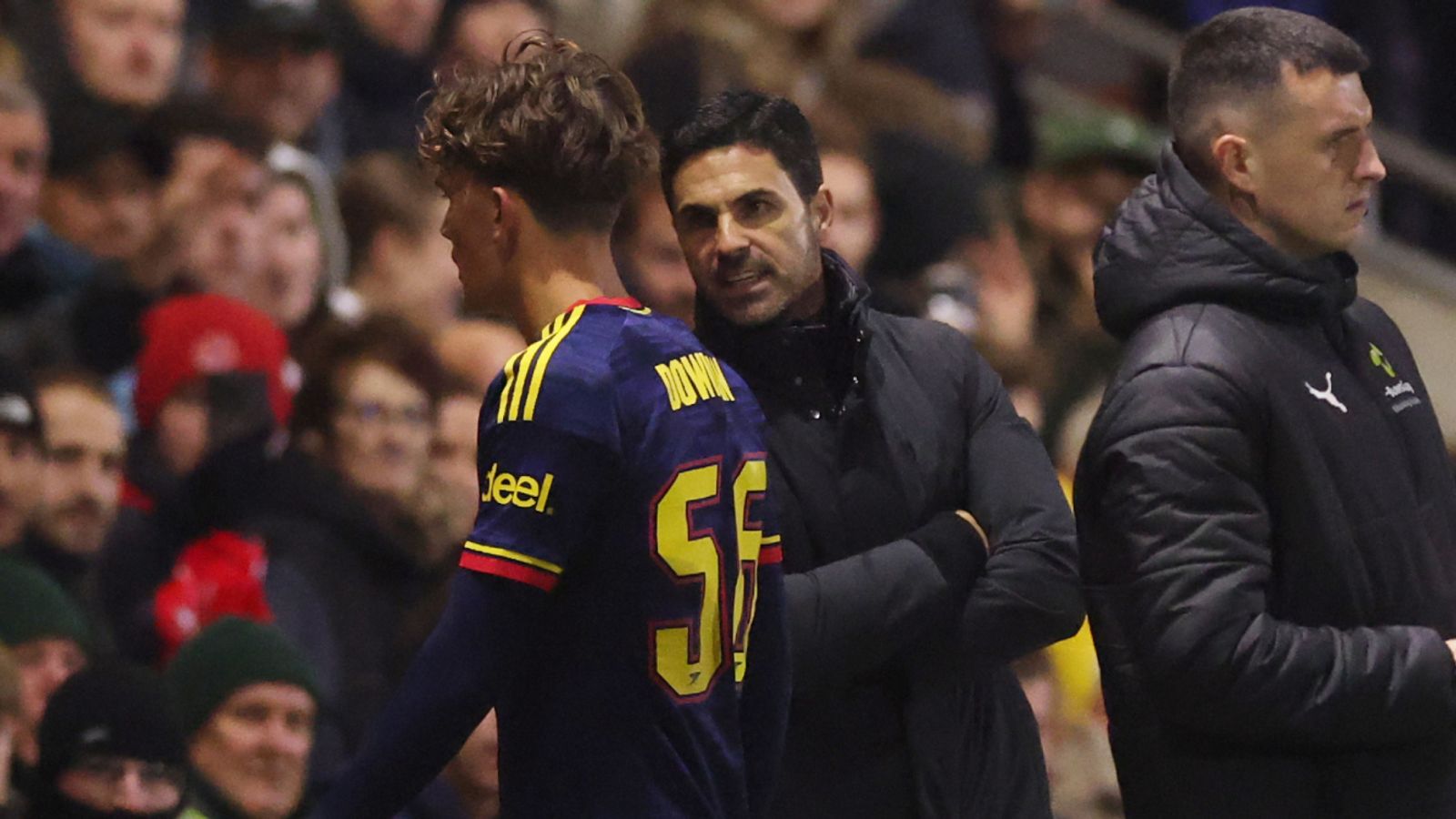
Arsenal crashed out to Fleetwood and Mikel Arteta is done playing nice
2 hours ago
Michael Carrick needs to stop playing scared and unleash United's kids
3 hours ago
Aston Villa have unlocked Nicolas Jackson and Fulham are in real trouble
6 hours ago
CAF just admitted its four-year AFCON experiment was a complete mistake
6 hours ago
10 moments that turned Man United's collapse into a runaway content empire
10 hours agoMore Analysis
Arsenal crashed out to Fleetwood and Mikel Arteta is done playing nice
2 hours ago
Michael Carrick is running out of road at Manchester United
11 hours ago
Arsenal have a £154m dilemma and no margin left for error
11 hours ago
Why rivals think Chelsea will win the £90m race for Alex Scott
21 hours ago
Chelsea are fifth in the table, but the underlying numbers tell a grim story
21 hours ago